
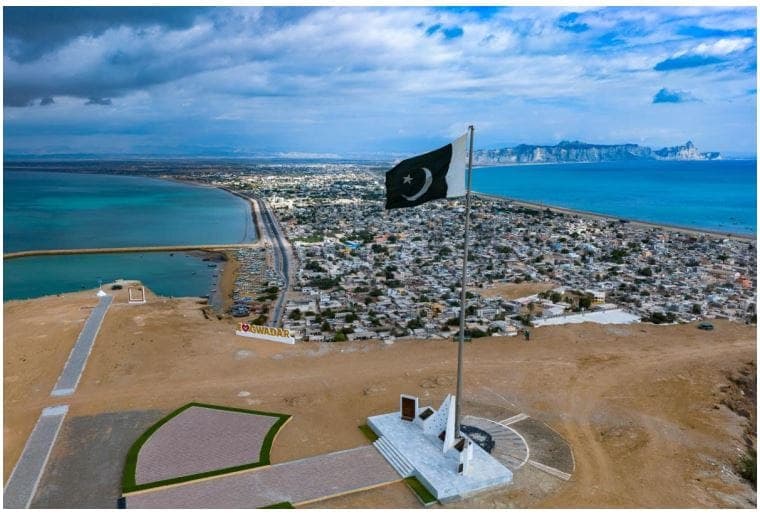
Whenever I mention that I am travelling to Balochistan, the most common response I receive is: “Be safe.” Such is the narrative we often hear in the media and across social platforms. Yet I often wonder how many people expressing this concern have actually travelled to Balochistan to see the reality for themselves. My sincere suggestion is simple: go and see—because seeing is believing.
Yes, the security situation exists, but that is far from the whole story. Over the years I have visited Balochistan many times and have always found it an extraordinary region rich in history, culture, and tradition. On this occasion I happened to be in Gwadar for work, but inclement weather gave me some free time. I decided to explore and write these reflections simply as a traveller.
Arrival in GwadarLanding at Gwadar International Airport, one is greeted by a strikingly large terminal building rising out of the surrounding wilderness. Its design immediately reminded me of some airports I had seen during my time in China—modern, functional, and ambitious. While not massive, it is certainly far larger than what one might expect for a city with only three weekly flights from Karachi.
The airport is clearly underutilised, yet the potential is evident. With even a few additional connections—from Islamabad, Quetta, or Oman—Gwadar could begin to realise its promise as a regional hub. The Gwadar Port too is yet to reach its zenith, but the opportunities for trade and transshipment remain immense.
Through Gwadar TownDriving through Gwadar city, I noticed many newly built homes belonging to affluent locals or investors from Karachi. Interestingly, the town has very few mud dwellings; most houses are now solid, permanent structures.Despite its growing infrastructure, Gwadar still feels like a classic coastal town—relaxed, unhurried, and deeply connected to the sea. Locals spend much of their leisure time along the shoreline. When the East Bay Expressway was constructed between the town and the sea, residents initially protested because it obstructed their traditional access to the water. The solution was thoughtful: large underpasses were built so fishermen could still bring their boats close to their homes.
Towards the Iranian BorderOur next journey took us towards the Gabd Border Terminal with Iran, about 80 kilometres away along a smooth highway running between the Arabian Sea to the south and the distant Siaji mountain range to the north.
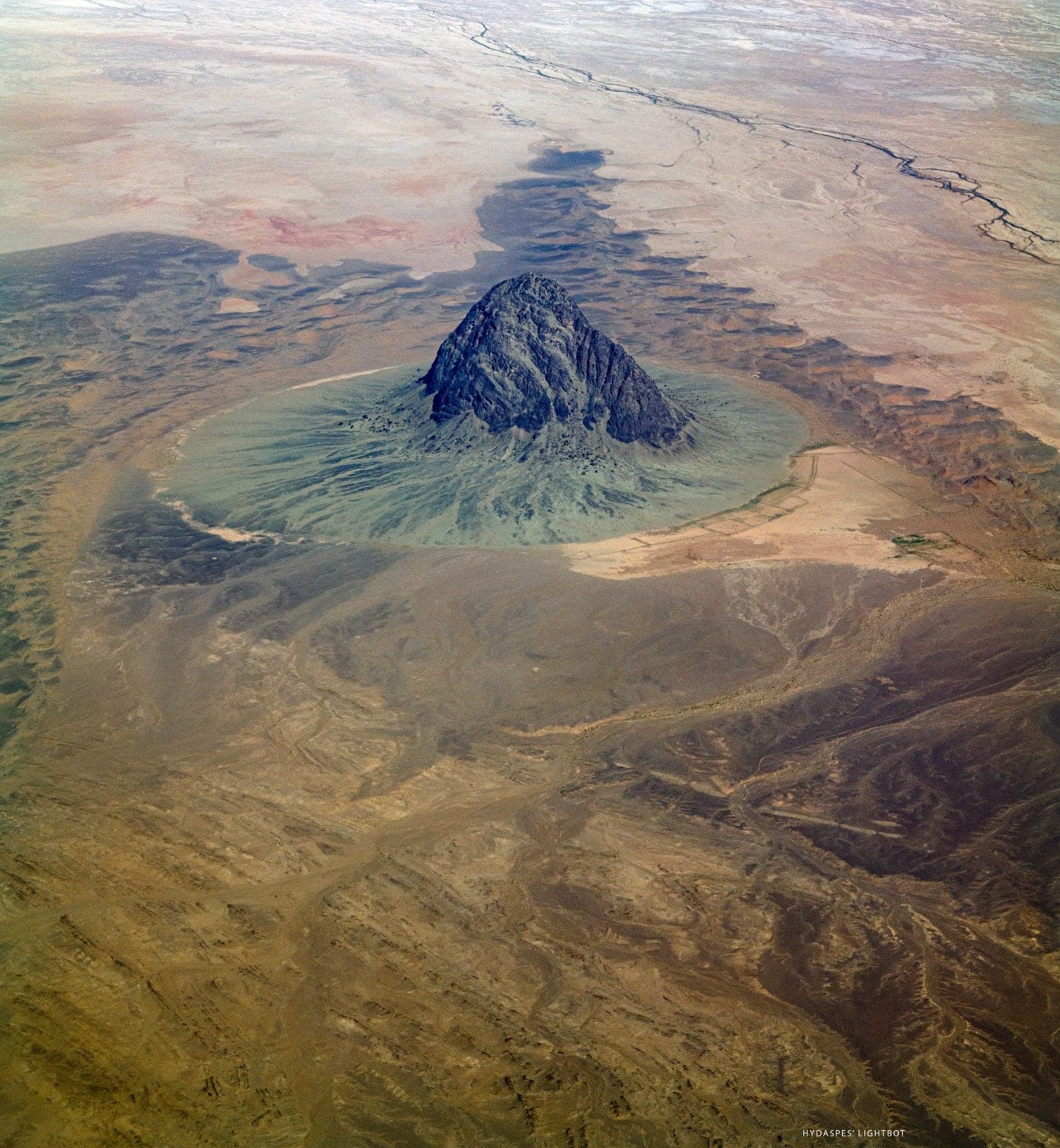
The landscape is stark yet beautiful—vast desert plains punctuated by dramatic mud canyons. Along the road we encountered numerous pickup trucks carrying blue fuel containers, locally called “Zambads.” These typically transport fuel arriving by sea from nearby coastal areas such as Jiwani.
Standing here, only 40 kilometres from Iran and hundreds of kilometres from Pakistan’s major cities, it becomes clear that regional trade makes practical sense. Rather than transporting everything from faraway urban centres, cross-border economic activity—when properly regulated—can sustain local livelihoods and strengthen the region.
Gabd BorderGabd itself is a modest border village. As we approached the crossing, the Iranian flag flew at half-mast, and my spontaneous thought was one of quiet gratitude that Pakistan has remained distant from the turmoil affecting parts of the region.
Life on the Pakistani side felt calm and routine. Numerous vehicles waited patiently for trade operations to resume after recent rains had damaged a bridge. Observing the scene, I could not help but reflect on the significant economic potential this area holds if infrastructure and trade mechanisms are further developed.
Gwadar’s Deep HistoryGwadar is not merely a modern strategic port; it is a place deeply rooted in history. The broader Makran region traces human activity back thousands of years.
Gwadar’s name in Balochi is often interpreted as “Gateway of the Winds.” Over centuries it has witnessed many civilisations: from the Achaemenid Empire under Cyrus the Great, to Alexander the Great’s admiral Nearchus, and later the Mauryan Empire. During the early Islamic period the region became part of expanding Muslim frontiers, and in 711 CE Muhammad bin Qasim brought it under Islamic rule.
The town later passed through various hands—from the Mughals to the Safavids—and even experienced Portuguese incursions during the age of maritime exploration. In 1784, Gwadar was granted to the Sultan of Oman by the Khan of Kalat. Pakistan finally purchased it from Oman in 1958, and it formally became part of the country on 8 December 1958, now commemorated as Gwadar Day.
Gwadar still retains fascinating historical structures. The Omani Fort, built in the late 18th century, once served as the administrative centre during Omani rule. Restored in 2007 and currently undergoing further renovation, it is being developed into a museum showcasing Gwadar’s heritage.
Another remarkable site is the Indo-European Telegraph Office, built in 1860. Few realise that this building once served as a critical communications link between British India and London, transmitting messages through Morse code and submarine cables. Constructed from chiselled yellow Karachi stone, it stands as a reminder of Gwadar’s historical importance in global communications.
Nearby lies Char Padago, meaning “standing on four pillars.” This elevated British-era rest house once offered officers sweeping views of the sea and sky. Today it has immense potential to become a tourist attraction with cafés, artisan markets, and cultural spaces.
Then there is the Portuguese Tower, a fascinating relic likely used for signalling and coastal defence during early European maritime activity in the Arabian Sea.
Gwadar’s Old TownOne of the most captivating experiences came while walking through the old walled town. Within a small area I saw an Ismaili Jamat Khana, a mosque, and a Hindu temple standing peacefully close to one another—an enduring symbol of the region’s pluralism.
The narrow lanes, pastel-coloured houses, and stone architecture reminded me of coastal towns in southern Europe. Yet much of this historic quarter now stands in neglect. With careful restoration, it could easily become a pedestrian heritage district filled with cafés, handicraft shops, and cultural spaces, breathing life into Gwadar’s past while supporting local livelihoods.
Sunset in GwadarNo visit to Gwadar is complete without witnessing its sunset over the Arabian Sea. Many gather along Marine Drive, while others prefer quieter vantage points. I chose to end my day at the historic Jinnah Lodge (the former Governor’s House), watching the sun descend slowly into the vast horizon.
ReflectionsGwadar offers immense potential—not only in trade and infrastructure, but also in what I often call Blue Tourism. With its history, coastline, and unique cultural landscape, the region could become a major destination if supported by thoughtful planning.
One practical step would be to invite tourism operators, travel writers, and industry stakeholders to Gwadar through conferences or familiarisation visits. Connecting them with local transport, resorts, and heritage sites could help create the ecosystem needed to bring Gwadar into Pakistan’s mainstream tourism narrative.We often discuss tourism in conference rooms far from the places themselves. Perhaps the real question is simpler:
How many of us have actually visited Gwadar?