
Field guides / Sindh / Dadu / Gorakh Hill Station
Field guide · Nature
Dadu
Dadu District · Sindh, Pakistan
Gorakh Hill Station
Sindh's only hill station at around 1,700 m in the Kirthar range, cool plateau air and rare winter frost.
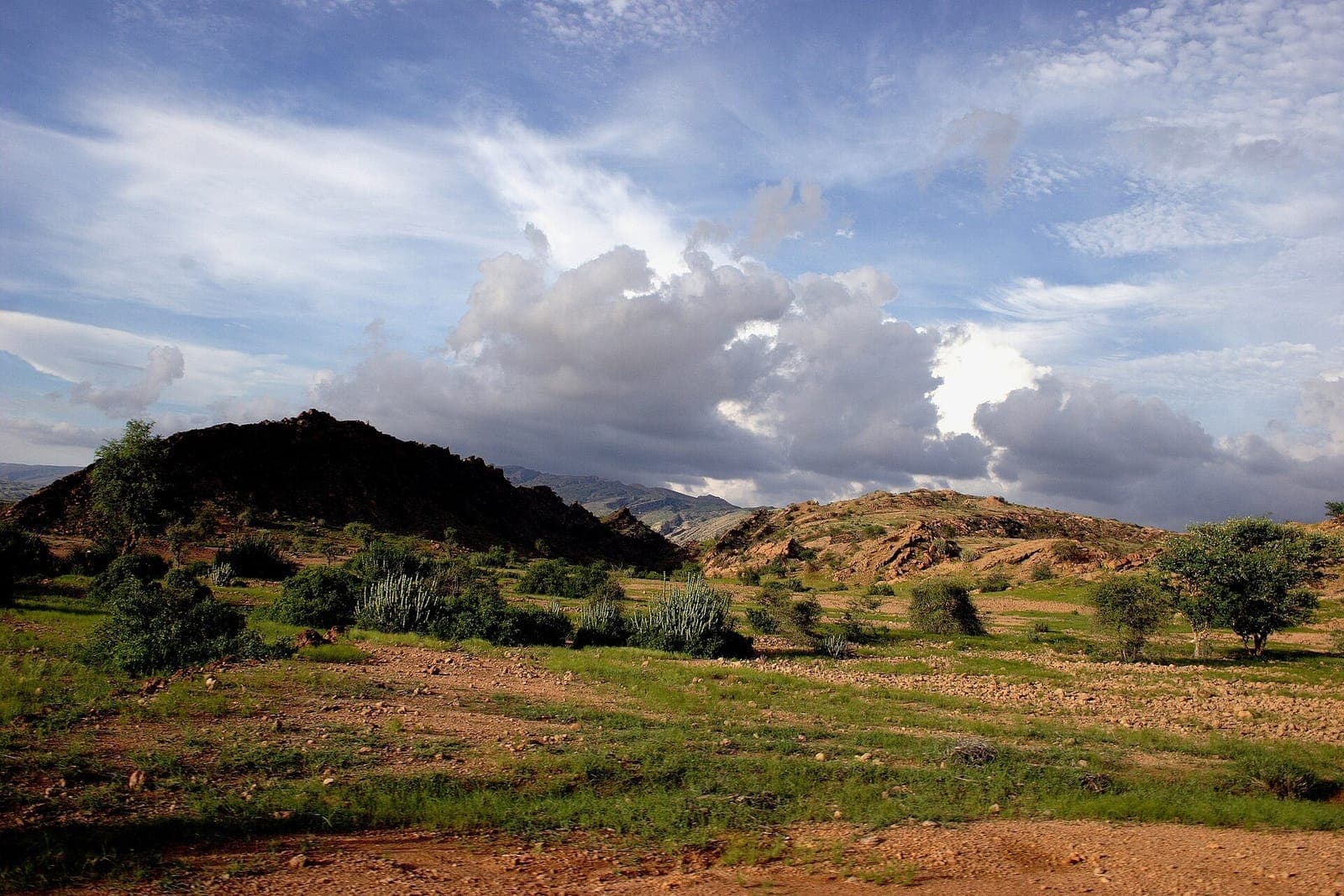
Gorakh Hill Station is Sindh's only hill station, a plateau in the Kirthar range roughly 95 km from Dadu and around 500 km from Karachi, with reported elevations ranging from about 1,734 m up to 2,342 m depending on the source and the exact point measured. Established as a tourist destination in 1989, it takes its name from Gorakhnath, a Hindu saint associated with Shiva in Sindhi tradition, a Sindhi-Balochi linguistic layering typical of the wider Kirthar region. Summer nights here turn genuinely cool and winter can bring sub-zero temperatures and occasional frost, a striking contrast to the punishing heat of the Sindh plains just a few thousand feet below.
Quick facts
- Where
- Kirthar range, Dadu District, Sindh
- Altitude
- Usually given as about 1,734 m (higher points nearby)
- From Dadu
- About 94 km north-west
- From Karachi
- About 420–500 km depending on route
- Climate
- Below 20 °C in summer; sub-zero nights in winter
- Last stretch
- 4×4 climb from Wahi Pandhi
Why go
- ✦Sindh's only hill station, established 1989
- ✦Elevation of roughly 1,700-2,300 m
- ✦Rare winter frost and sub-zero nights
- ✦Named for the saint Gorakhnath
- ✦Sunrise over the Kirthar ridgelines
About
Gorakh Hill is Sindh's only hill station: a plateau in the Kirthar range of Dadu District, about 94 km north-west of Dadu city. Its height is usually given as about 1,734 m, with higher points nearby. While the Sindh plains regularly pass 40 °C in summer, the plateau stays below about 20 °C and can drop below freezing on winter nights, a contrast that has made it a popular escape since it was developed for visitors in 1989. The name is linked to Gorakhnath, a saint of the Shaiva tradition.
Geography and Surroundings
The plateau rises from the base village of Wahi Pandhi, at the foot of the Kirthar range near the Balochistan border. The approach from Karachi is long, around 420–500 km depending on route, and the last climb is a steep, switchbacking track for 4×4 vehicles; a new road has been under construction.
What Visitors Will See
- Sunrise over the Kirthar ridgelines
- A cool, open plateau high above the Sindh plains
- Wide views over the Kirthar range
- Frost on winter mornings
- Night skies far from city lights
Why Visit
Gorakh is the one place in Sindh where you can feel mountain air: cool nights, frost in winter and a sunrise over ridge after ridge of the Kirthar range. Facilities are basic and the approach demanding, which keeps it quiet.
Climate and Seasons
October to February brings the coolest, clearest air, with occasional frost and near-freezing nights at the top. Summer stays mild by Sindh standards, generally below 20 °C, and the area gets about 300 mm of rain a year.
How to Reach
Drive from Karachi or Hyderabad to Wahi Pandhi, which takes most of a day, then make the steep 4×4 climb to the plateau with an experienced driver. Start early, carry water and warm clothes, and plan to stay overnight: a same-day round trip leaves little time on top.
Responsible Travel
Facilities on the plateau are basic: bring what you need, carry your waste back down and keep to established tracks.
Interesting Facts
- Sindh's only hill station
- Usually given as about 1,734 m high
- Can fall below freezing on winter nights
Gorakh Hill Station in pictures
Photos: Aareez Asif · CC BY-SA 4.0 · Ayazan57 · CC BY-SA 4.0 · Asad.aman83 · CC BY-SA 4.0 · Shahrukhphotoart · CC BY-SA 3.0 · Arbi099 · CC BY-SA 4.0 · Iqran Rasheed · CC BY-SA 4.0 · Allah Dad Rind · CC BY-SA 4.0 · Yousif Aziz · CC BY 3.0. Each photo's own credit and licence link is shown when you open it.
Planning tip
Best Time to Visit, October to February for the coolest, clearest air; winter occasionally brings frost and near-freezing nights at the top, while summer stays a relatively mild, for Sindh, below 20°C.
Getting there, A long drive from Karachi or Hyderabad to Wahi Pandhi, then a steep 4x4 climb to the plateau on a track that is being gradually upgraded by the Sindh government but currently rules out normal cars. Travel with an experienced driver and start early.
Allow, An overnight is best given the long approach, a same-day round trip leaves little time on the plateau itself.
What to Do
Questions travellers ask
+Where is Gorakh Hill?
In the Kirthar range of Dadu District, Sindh, about 94 km north-west of Dadu city. It is Sindh's only hill station.
+Can you drive to Gorakh Hill in a normal car?
The final climb from Wahi Pandhi is a steep 4×4 track, so go with an experienced driver in a suitable vehicle and start early.
+How cold does Gorakh Hill get?
Summer temperatures generally stay below 20 °C, a rare escape from the Sindh heat, and winter nights can drop below freezing, sometimes with frost.
+When is the best time to visit Gorakh Hill?
October to February for cool, clear air and sunrise views over the Kirthar ridges; summer is pleasant on top compared with the plains below.
+How high is Gorakh Hill?
Usually given as about 1,734 m, though some sources quote higher points on the plateau of up to around 2,300 m.
+Is Gorakh Hill in Sindh?
Yes, in the Kirthar range of Dadu District, Sindh, about 94 km north-west of Dadu city.
Nearby
Straight-line distance from Gorakh Hill Station, within 5 km.
Nothing else genuinely close by (within 5 km of Gorakh Hill Station) is published yet.