
Field guides / Balochistan / Hinglaj Mata Temple
Field guide · Heritage
Hinglaj Mata Temple
Major Hindu pilgrimage site in the Hingol landscape near the Makran coast.
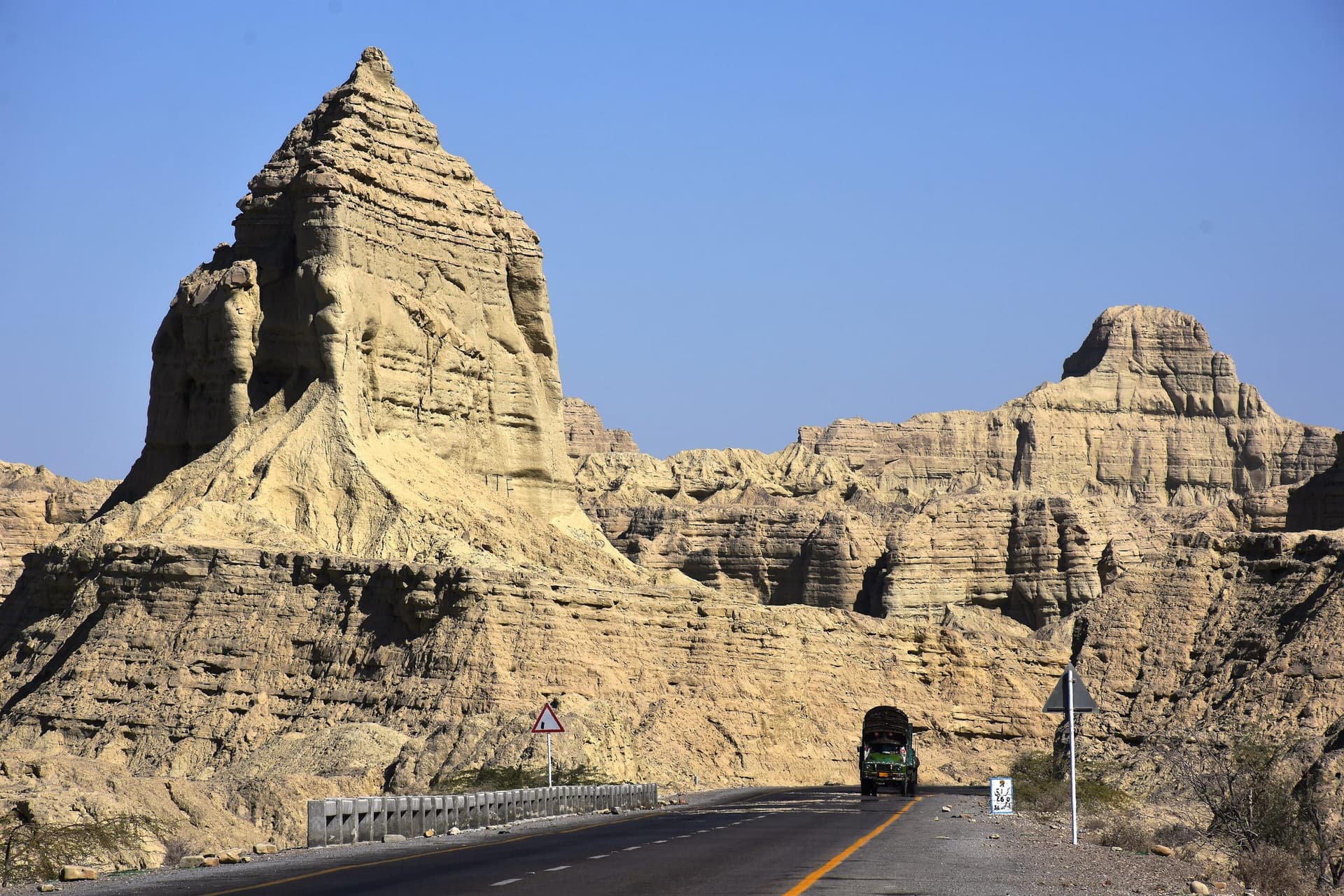
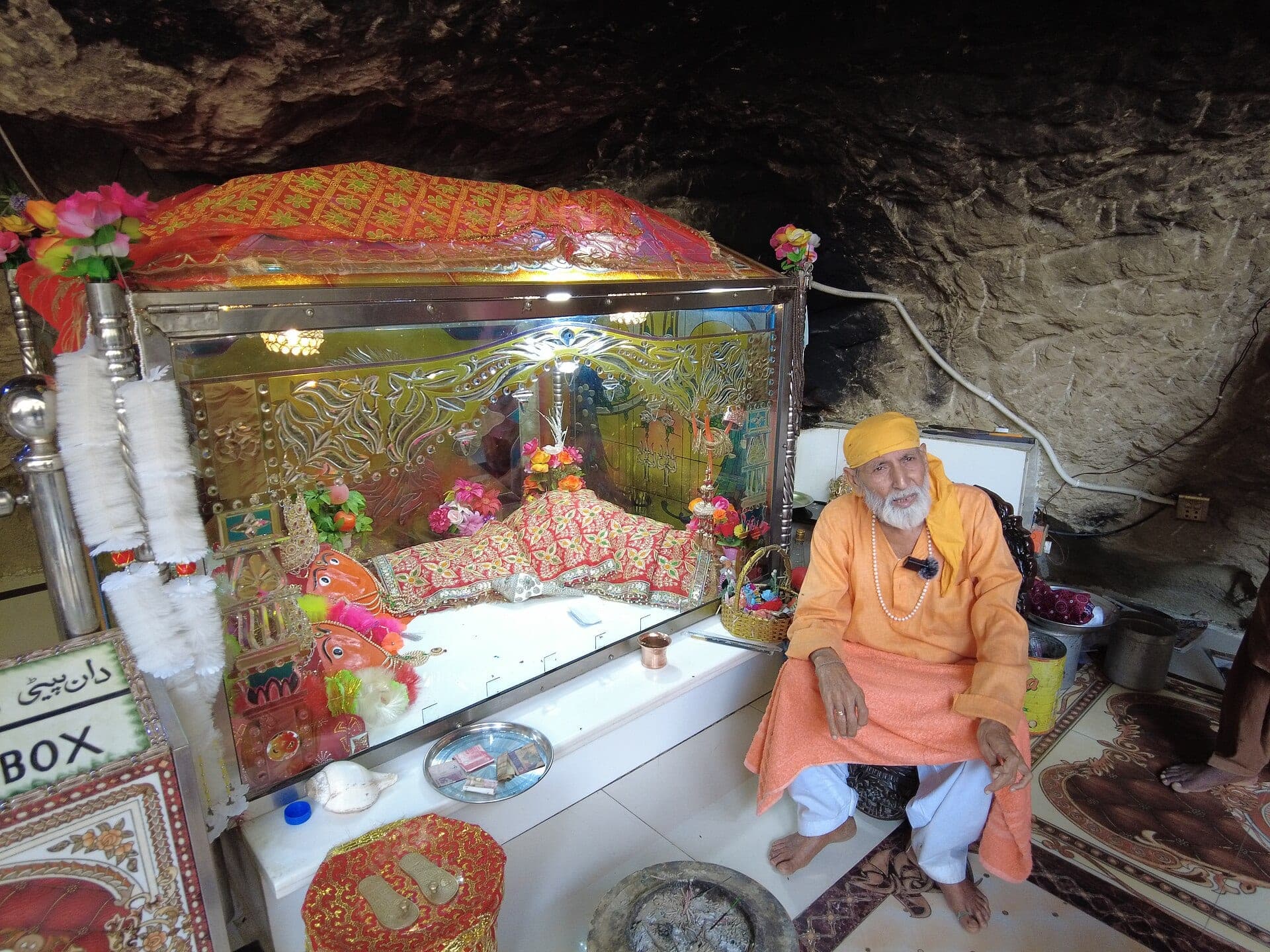
Hinglaj Mata (Hinglaj Devi) is one of the most sacred Hindu temples in Pakistan and a Shakti Peetha, a site where, in tradition, part of the goddess Sati fell to earth. It sits in a low cave in the Kheerthar range within Hingol National Park, on the bank of the Hingol River, surrounded by the surreal Makran badlands. Each spring the Hinglaj Yatra brings thousands of pilgrims across the desert to the shrine, in what has become the largest Hindu pilgrimage in Pakistan, a journey that traditionally includes climbing the nearby Chandragup mud volcanoes.
Why go
- ✦A revered Shakti Peetha shrine
- ✦Cave temple in the Hingol gorge
- ✦The Hinglaj Yatra pilgrimage
- ✦Chandragup mud-volcano ritual
- ✦Dramatic Makran badland setting
A Goddess in the Desert
The shrine is unusual, not a built temple but a natural cave holding a small stone image of the goddess, daubed with vermilion, set against the raw rock of the gorge. Its remoteness and the journey required to reach it are central to its sanctity; pilgrims regard the hard desert crossing as part of the devotion.
The Yatra
Once a difficult expedition, the Hinglaj Yatra now draws thousands of pilgrims from across Pakistan and beyond each spring, and is celebrated as a symbol of the country's Hindu heritage and of communal harmony in Balochistan. Witnessing it is extraordinary, but it is a religious occasion, visitors should be respectful and unobtrusive.
Chandragup and the Setting
The pilgrimage traditionally begins at the Chandragup mud volcanoes, which devotees climb to make offerings before proceeding to the cave. The whole site sits within Hingol National Park's badlands, so a visit naturally combines spiritual, geological, and wilderness experiences in one of Pakistan's strangest landscapes.
Planning tip
Best Time to Visit, October to March for the climate; the main Hinglaj Yatra pilgrimage usually falls around April. Outside the yatra it is quiet and atmospheric.
Getting there, Within Hingol National Park off the Makran Coastal Highway, about 250 km from Karachi. The shrine is reached by a track off the highway through the river gorge; visiting with a guide or as part of a Hingol tour is easiest.
Allow, Part of a Hingol day or overnight; the temple itself is a short visit but the setting deserves time.
What to Do
Nearby
Straight-line distance from Hinglaj Mata Temple, within 5 km.