
Loading…
Field guides / Khyber Pakhtunkhwa / Pir-Dara (Gokand)
Field guide · Heritage
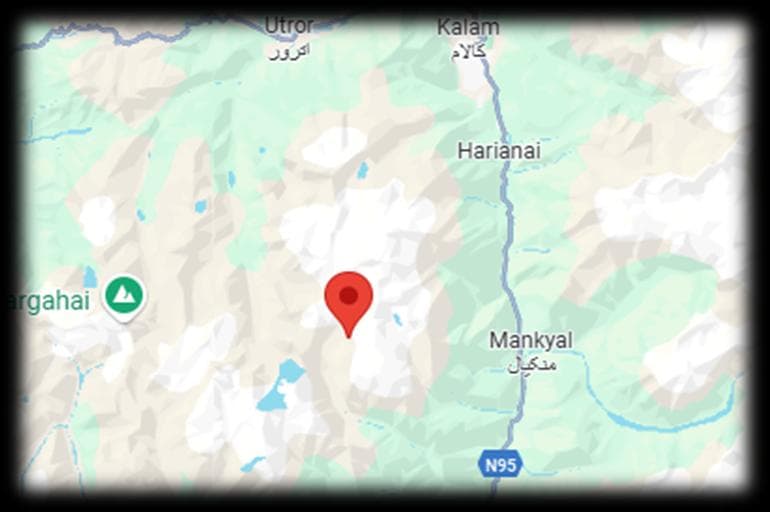
Pir-dara, located in Gokand, Buner district, Khyber Pakhtunkhwa, Pakistan, lies directly opposite Top-dara, on the right bank of the Gokand stream.
The site was mentioned by Aurel Stein (1930), who noted reports of ancient dwelling ruins, although he could not personally visit it due to time constraints. Modern researchers later confirmed the presence of terrace-like structural remains spread across a hillock locally known as Dherai. Unfortunately, due to landowner restrictions, detailed surveys of the site were not possible. Oral traditions shared by locals mention a historical spring, whose water was channeled towards Dheraikhwa, and remnants of large stone pieces, likely linked to a historical water mill, indicating ancient water management infrastructure. The presence of huge stones and terraces supports the site’s significance as a possible Buddhist monastic complex or ancient settlement. The site's historical depth remains underexplored due to lack of formal excavations.
Why go
Pir-dara's ancient structural remains persist but remain unstudied, with landowner restrictions blocking even basic archaeological surveys of the terraced hillock. The KP Directorate of Archaeology & Museums has made no effort to negotiate access, conduct remote sensing, or legally protect the site—leaving its potential monastic or settlement history to decay under unchecked neglect.
Planning tip
Best Time to Visit, Year-round; confirm local conditions and any festival dates before travel.
Getting there, In or near Buner, Khyber Pakhtunkhwa; confirm current local access before visiting.
Straight-line distance from Pir-Dara (Gokand), within 30 km.