
Field guides / Sindh / Shah Jahan Mosque, Thatta
Field guide · Heritage
Shah Jahan Mosque, Thatta
A 17th-century Mughal mosque famed for its tilework and remarkable acoustics, part of Thatta's UNESCO-listed heritage.
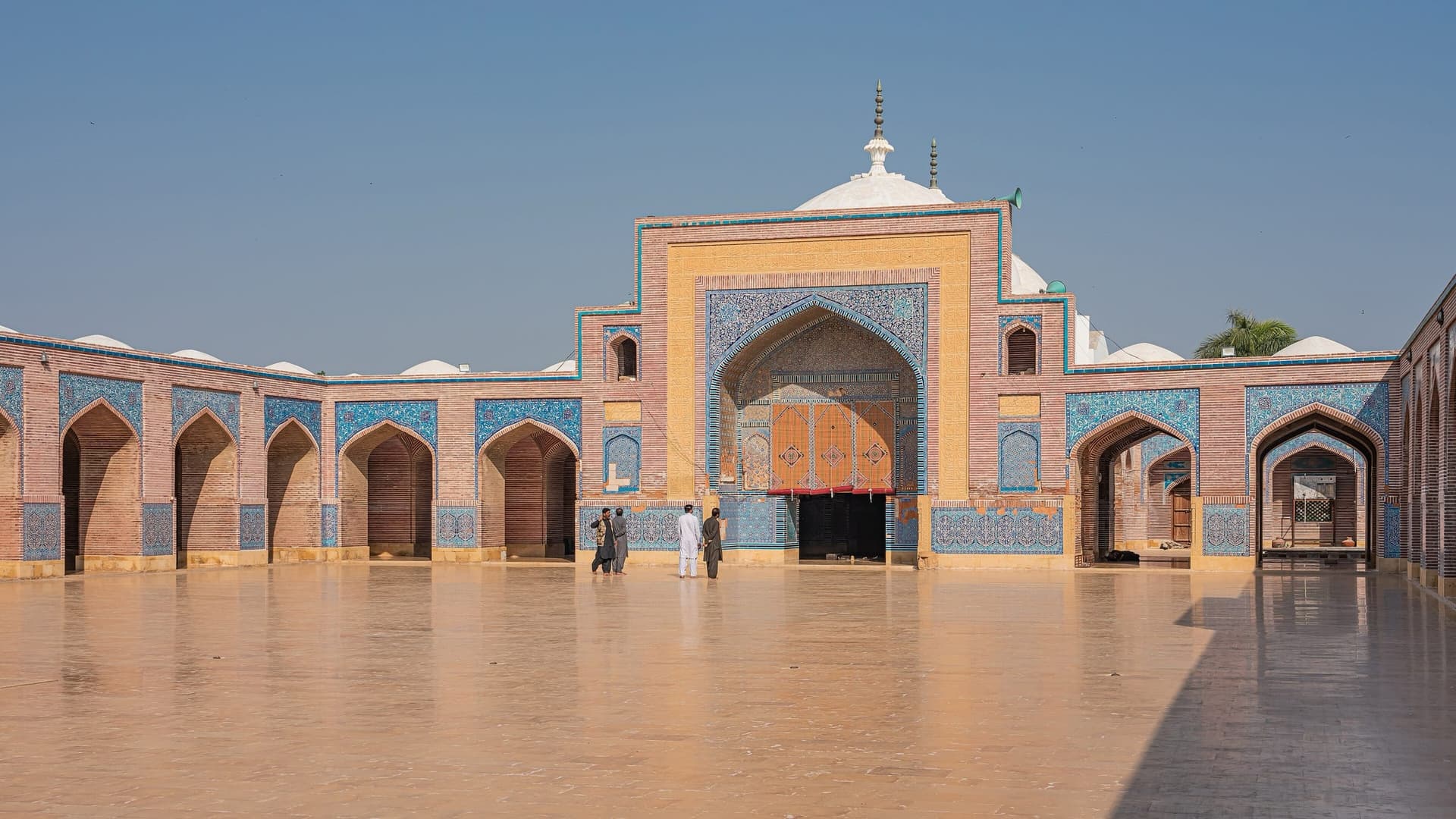
The Shah Jahan Mosque at Thatta is a 17th-century Mughal masterpiece, built between 1644 and 1647 as a gift from Emperor Shah Jahan to the people of Thatta, partly, tradition holds, in gratitude for the hospitality shown to him there during an earlier period of exile, and partly to help the city recover from a devastating storm in 1637. It is famed for the most elaborate tilework of its kind in the subcontinent, with Persian Safavid-influenced glazed tiles in blue, turquoise, and white covering its 93 domes, and for acoustics so precise that a voice raised above roughly 100 decibels at one end of the dome carries clearly to the other, sermons and prayers reach the entire hall without amplification. It anchors Thatta's UNESCO-recognised heritage alongside the nearby Makli necropolis.
Why go
- ✦93 tiled domes, built 1644-1647
- ✦Most elaborate Mughal-era tilework in the subcontinent
- ✦Acoustics that carry a single voice across the prayer hall
- ✦Persian Safavid and Timurid tile influence
- ✦On UNESCO's tentative World Heritage list since 1993
A Gift from an Emperor
Shah Jahan commissioned the mosque during his own reign, reputedly out of gratitude to Thatta for sheltering him during an earlier falling-out with his father, Emperor Jahangir. The building went up remarkably fast for its scale and decoration, just three years, a pace made possible by drawing on tile-making traditions that Mughal campaigns in Central Asia had brought back toward Samarkand and the Timurid world.
Tilework and Acoustics
The mosque's defining feature is its tilework: glazed blue, turquoise, and white tiles arranged across its 93 small domes in patterns that shift with every angle of light, a direct descendant of Persian Safavid and Timurid ceramic traditions rather than the red-sandstone-and-marble vocabulary of Mughal architecture further east. Almost as remarkable is the acoustic design, the domed chambers are engineered so that a preacher's voice at one end of the building is audible at the other without any need for amplification, a detail worth testing quietly for yourself if the hall is empty.
Plan It with GreenPak
Dress modestly and visit outside prayer times for the calmest experience. Use Plan a trip to build a full Thatta day around the mosque, the vast Makli necropolis, and Keenjhar Lake, all reachable on one route from Karachi.
Planning tip
Best Time to Visit, November to February; Thatta's summers are intensely hot, often exceeding 40°C with little shade around the mosque's open courtyards.
Getting there, About 100 km east of Karachi (roughly two hours) in eastern Thatta, the former 16th- and 17th-century capital of Sindh, easily paired with the Makli necropolis and Keenjhar Lake on the same route.
Allow, An hour or two at the mosque alone; a fuller half-day combined with Makli.
What to Do
Nearby
Straight-line distance from Shah Jahan Mosque, Thatta, within 5 km.