
Field guides / Punjab / Badshahi Mosque
Field guide · Heritage
Badshahi Mosque
UNESCO tentative site and landmark of Islamic and Mughal heritage in Lahore.
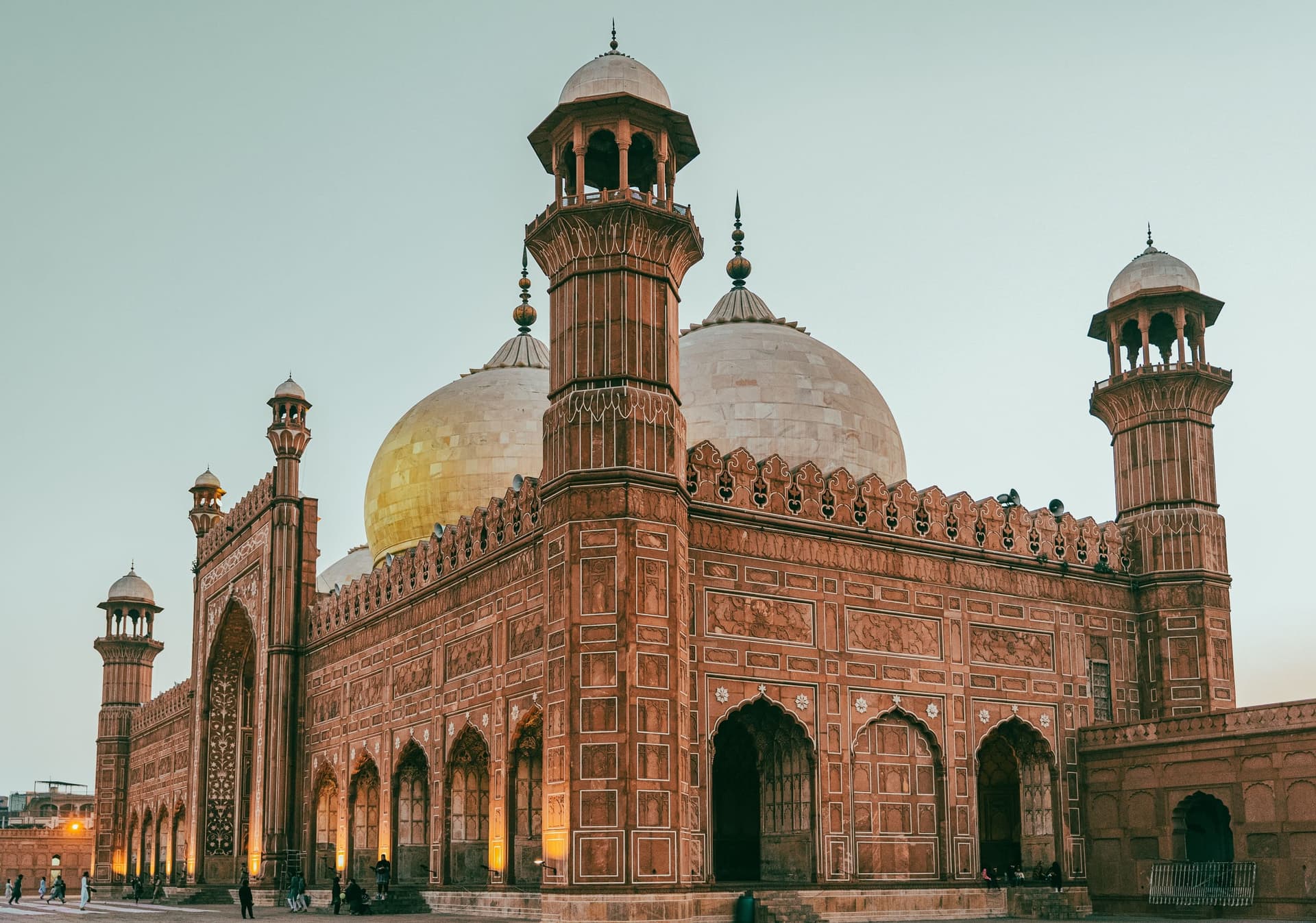
The Badshahi Mosque is the grand Mughal statement of Lahore, a vast composition of red Mughal sandstone and white marble built in 1673 by the emperor Aurangzeb, and for over 300 years the largest mosque in the world. Its courtyard alone holds tens of thousands of worshippers, and its silhouette of three marble domes and four soaring minarets, facing the Lahore Fort across the Hazuri Bagh, is the defining image of the old city. It remains an active mosque and the spiritual and architectural heart of the Walled City.
Why go
- ✦One of the largest mosques on Earth
- ✦Mughal red-sandstone and marble architecture
- ✦Courtyard for tens of thousands of worshippers
- ✦Faces Lahore Fort across the Hazuri Bagh
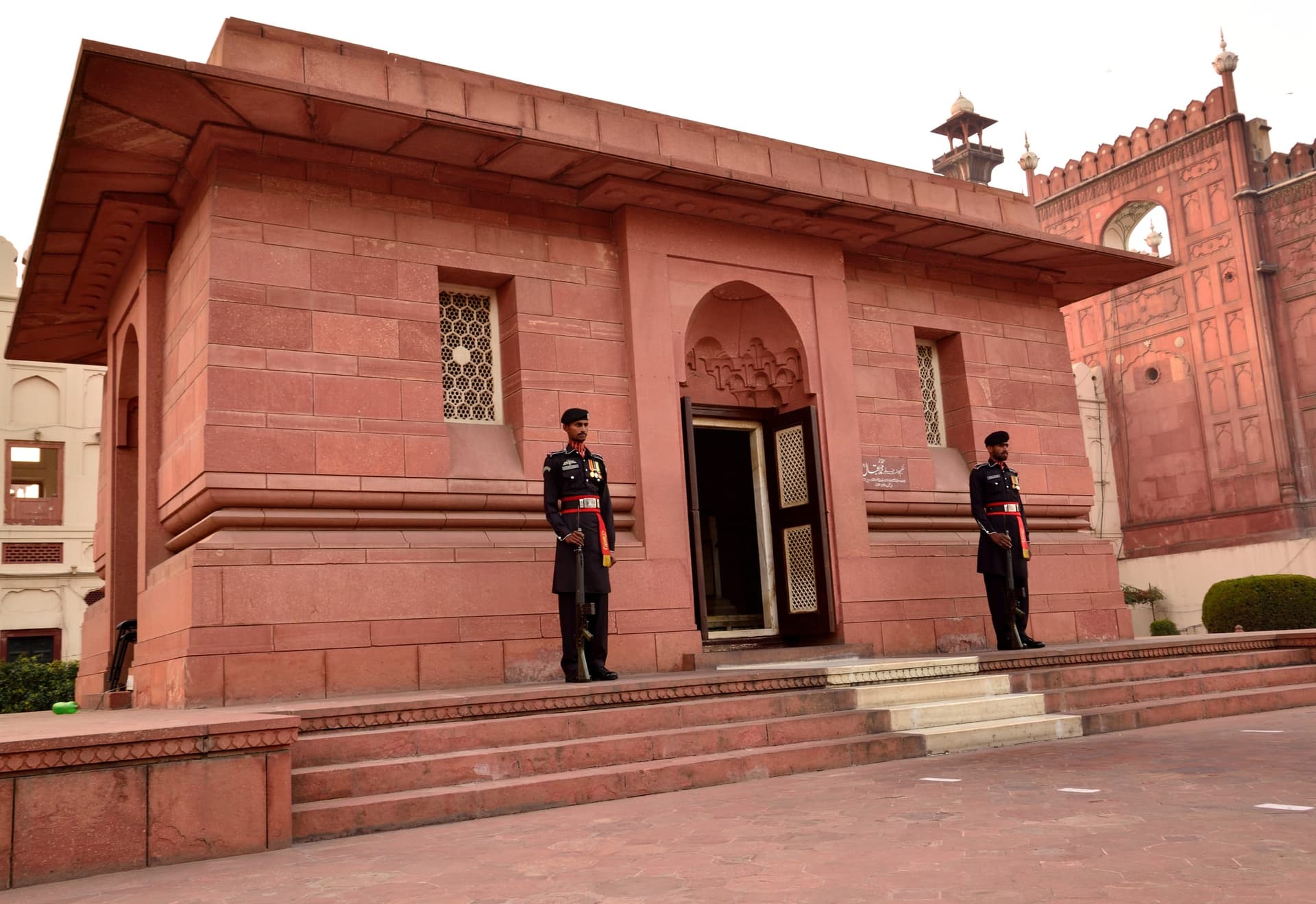
- ✦Tomb of Allama Iqbal alongside
Aurangzeb's Masterpiece
Commissioned by the last great Mughal emperor and completed in just two years, the Badshahi Mosque was conceived as an imperial counterpart to the Jama Masjid of Delhi. The carved red sandstone, the bulbous marble domes, and the symmetry of the great courtyard show the Mughal style at its most confident, built at the very moment the empire reached its widest extent.
Visiting Respectfully
This is a living place of worship, so modest dress is required: shoulders and legs covered, shoes removed at the entrance, and a headscarf for women. Sightseers should avoid the five daily prayer times and Friday midday. The marble courtyard gets blisteringly hot underfoot in summer, go early or late.
Around the Mosque
The mosque anchors a cluster of monuments: Lahore Fort and its Sheesh Mahal across the Hazuri Bagh, the tomb of the poet-philosopher Allama Iqbal just outside the steps, the Roshnai Gate, and the Walled City beyond. Climb to a Fort Road rooftop restaurant at dusk for the classic view of the floodlit mosque over a Lahori dinner.
Planning tip
Best Time to Visit, October to March for comfortable sightseeing. Fridays, Ramadan, and the two Eids bring enormous congregations, extraordinary to witness but very crowded.
Getting there, In the heart of the Walled City, directly opposite Lahore Fort. Pair it with the fort, the Hazuri Bagh, the Roshnai Gate, and the famous Fort Road food street in a single walking day.
Allow, One to two hours inside; a half to full day combined with the fort and the old city.
What to Do
Nearby
Straight-line distance from Badshahi Mosque, within 5 km.