
Field guides / Punjab / Taxila: UNESCO World Heritage Site
Field guide · Heritage
Taxila: UNESCO World Heritage Site
UNESCO-listed archaeological landscape with strong Gandhara and Buddhist heritage.
Taxila is the great archaeological landscape of ancient Gandhara, a UNESCO World Heritage Site located in Taxila, northwest of Islamabad, where the Buddhist, Persian, Greek, and Central Asian worlds met for over a thousand years. From roughly the 6th century BCE to the 5th century CE it was a renowned centre of learning, often called one of the world's earliest universities, and a crossroads on the trade routes between the subcontinent and Central Asia. It is not a single ruin but a constellation: three successive city sites, dozens of Buddhist monasteries and stupas, and one of the finest archaeological museums in South Asia.
Why go
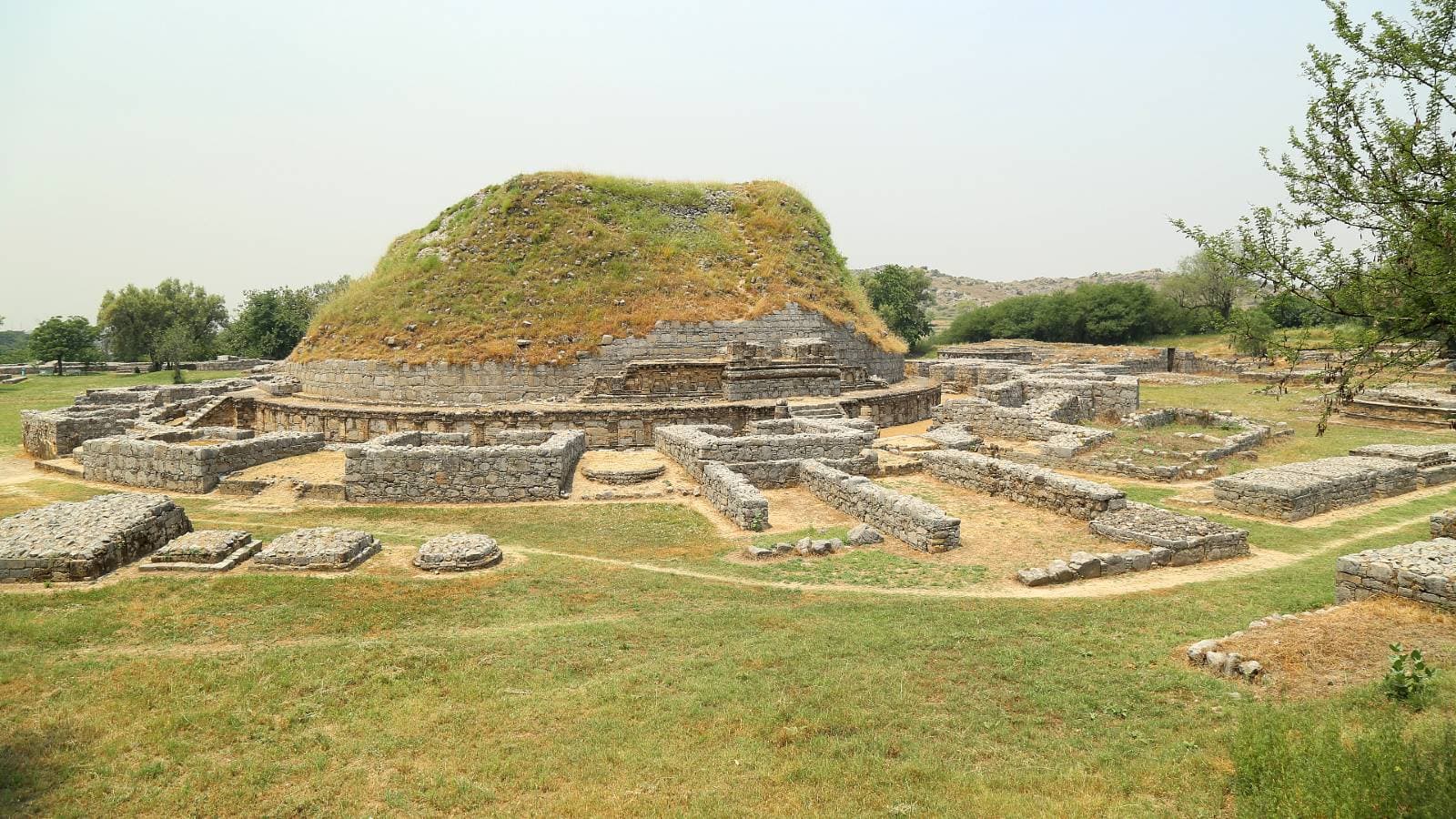
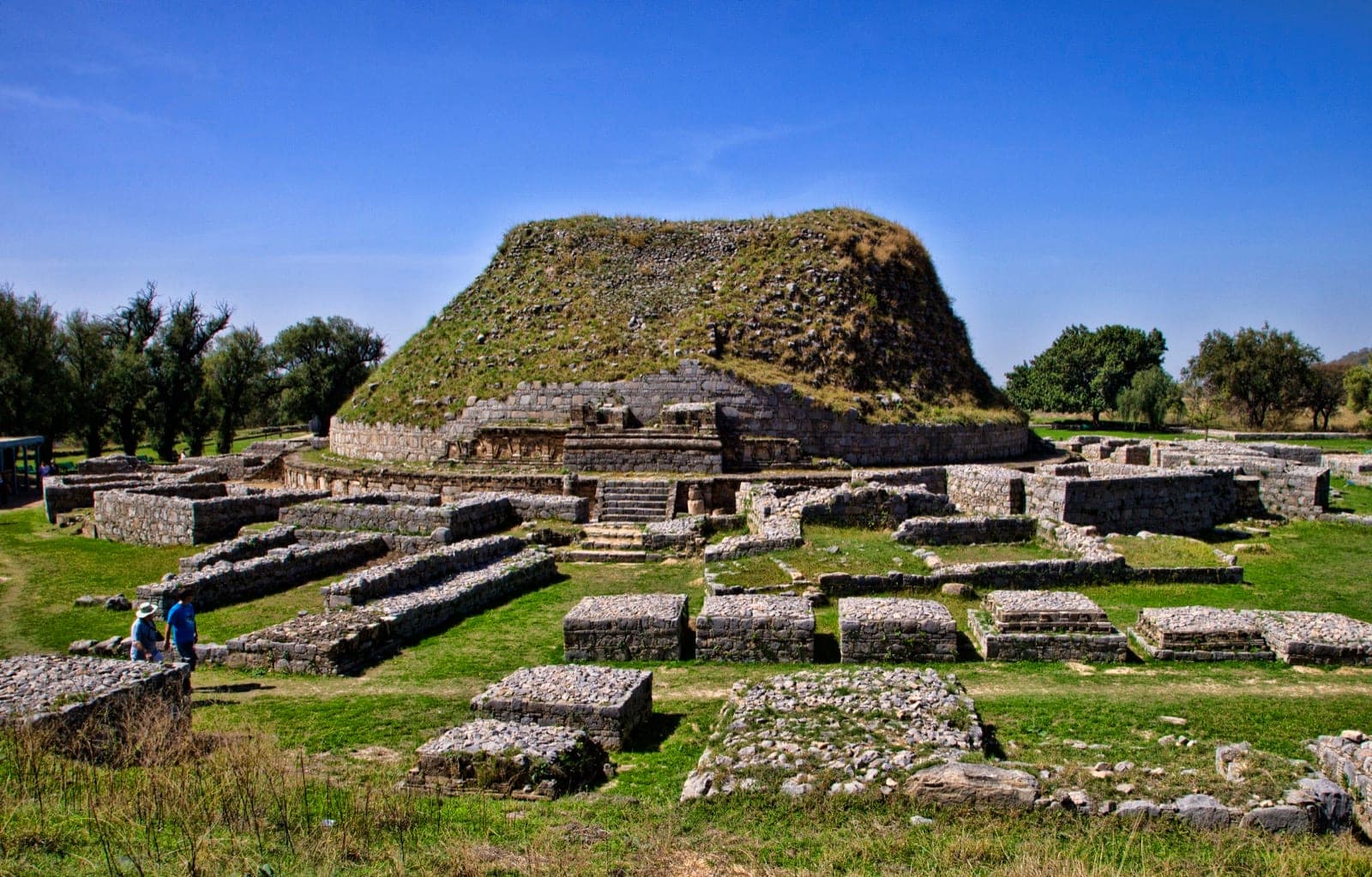
- ✦Dharmarajika Stupa, Mauryan-era Buddhist complex
- ✦Jaulian monastery, best-preserved, with stucco figures
- ✦Sirkap, Greek-planned grid city
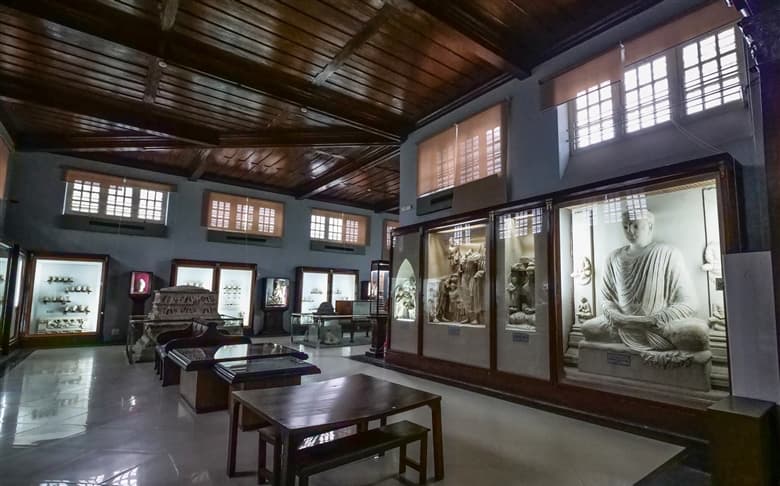
- ✦Taxila Museum, superb Gandhara collection
- ✦Greco-Buddhist Gandharan sculpture
A Crossroads of Civilisations
Few places have been ruled by so many worlds. Taxila passed through Achaemenid Persian control, was reached by Alexander the Great in 326 BCE, became a Mauryan Buddhist centre under Ashoka, then an Indo-Greek and finally a Kushan city. Each layer left its mark, the Persian and Greek city plans at Bhir Mound and Sirkap, the Buddhist stupas and monasteries of the Kushan golden age. The result is a single site where you can walk through a thousand years of cultural fusion.
The Buddhist Monasteries
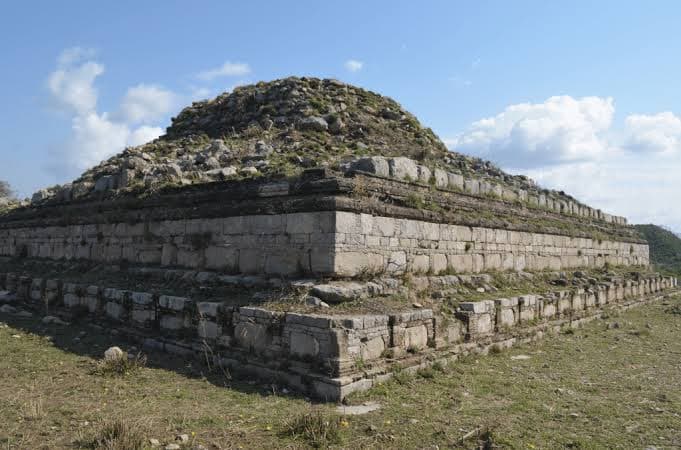
The monastic sites are Taxila's highlight. Dharmarajika, founded in the Mauryan period, centres on a massive stupa ringed by chapels and monks' cells. Jaulian, on a hilltop, is the best-preserved, its courtyard still lined with the stucco Buddhas and bodhisattvas of the Gandhara school, including the famous 'healing Buddha' with a hole at the navel that pilgrims once touched. Mohra Muradu, in a quiet fold of hills, has a beautifully complete miniature votive stupa.
Monastic Outposts & Outer Ruins
Beyond the central loop lie several high-value archaeological sites: the fortress-like third city of Sirsukh (built by Kushan king Kanishka); the Bhamala Stupa situated on a scenic ridge overlooking Khanpur Lake, famous for its unique cruciform structure; and Jinna wali Dheri, renowned for its delicate Gandharan wall paintings. The smaller complexes of Pipplan and Badalpur provide further insight into the everyday lives of the region's ancient monks.
The Museum
The Taxila Museum is essential context, not an afterthought. Its Gandhara collection, schist Buddhas, bodhisattvas, narrative reliefs, gold and silver objects, and everyday artefacts from the excavations, shows the unmistakable Greco-Roman influence on early Buddhist art: classical drapery and faces on figures of the Buddha. See it first, then walk the sites with the sculpture in your mind's eye.
Planning tip
Best Time to Visit, October to March offers the most comfortable weather for exploring the archaeological sites. During warmer months, visitors should plan an early-morning visit and carry drinking water.
Getting there, About 35 km northwest of Islamabad, an easy 45-minute drive, making it the most accessible major heritage site in Pakistan. The Taxila Museum is the natural place to begin.
Allow, A full day to do the museum, Sirkap, Jaulian, and Dharmarajika justice; half a day for a focused visit.
What to Do
Nearby
Straight-line distance from Taxila: UNESCO World Heritage Site, within 5 km.