
Field guides / Punjab / Shrine of Bahauddin Zakariya
Field guide · Heritage
Shrine of Bahauddin Zakariya
The 13th-century Sufi mausoleum that crowns Multan's old fort mound, heart of the “City of Saints”.
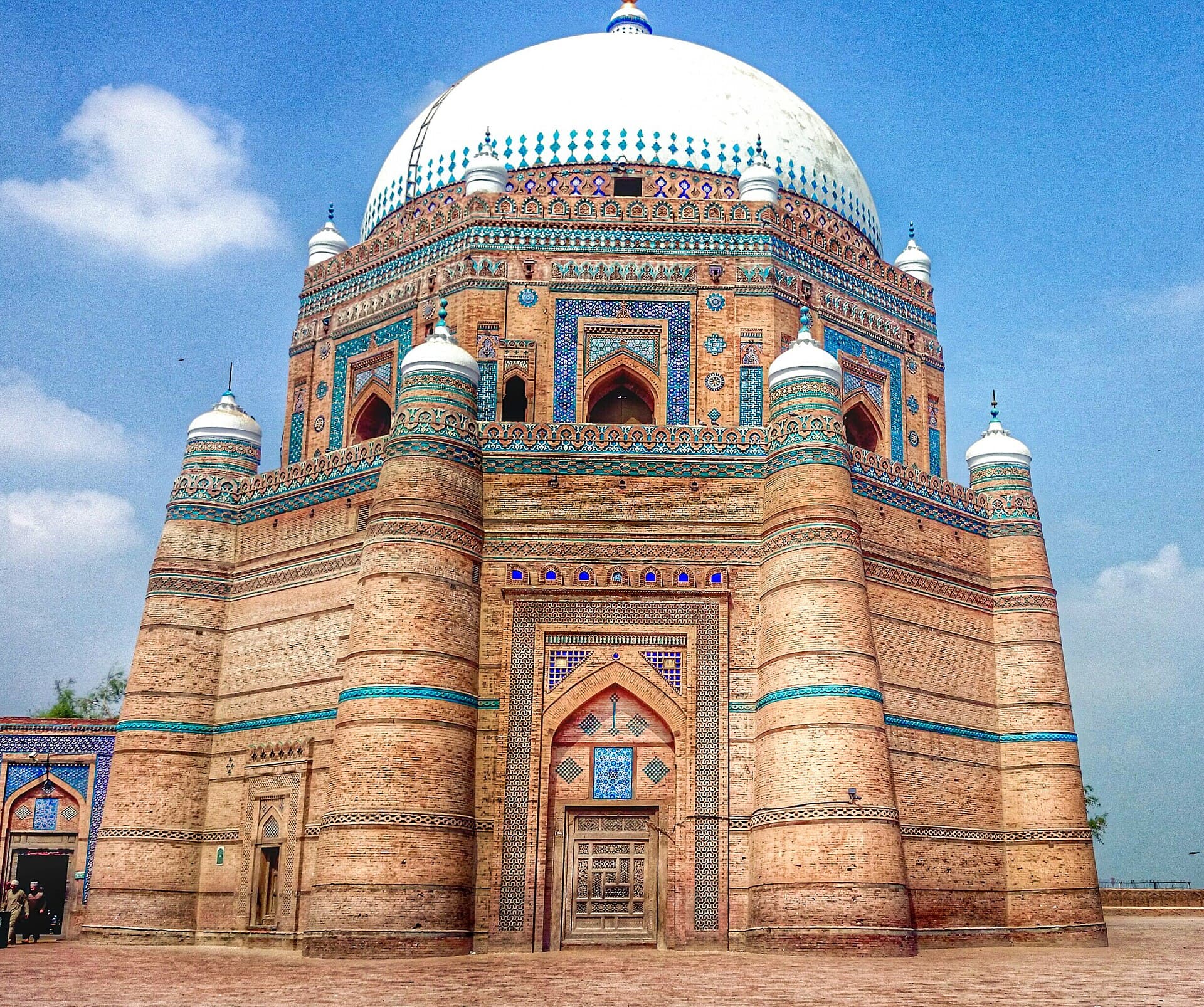
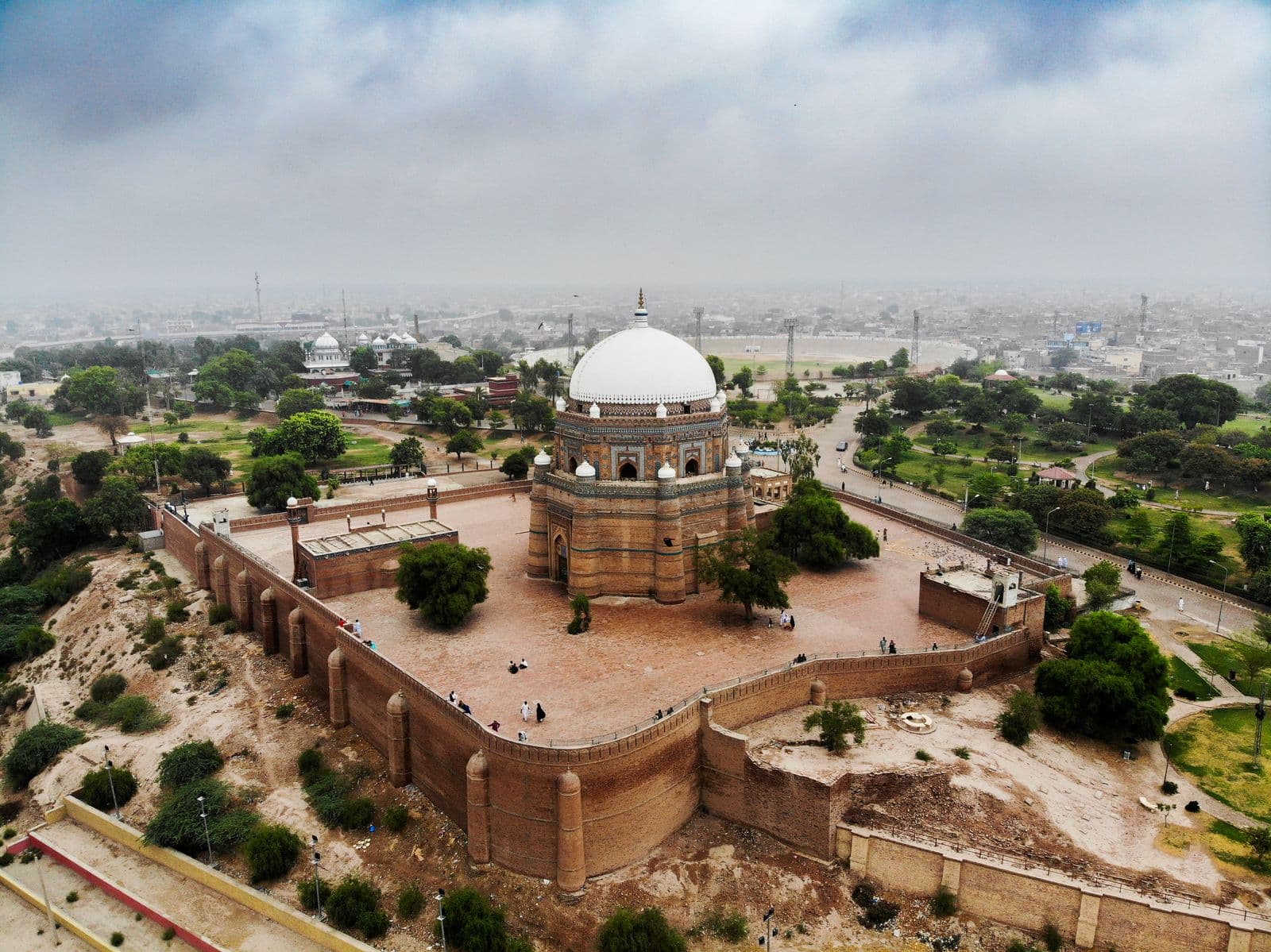
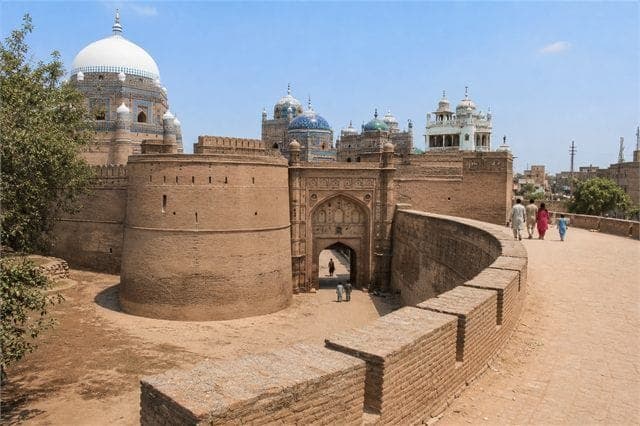
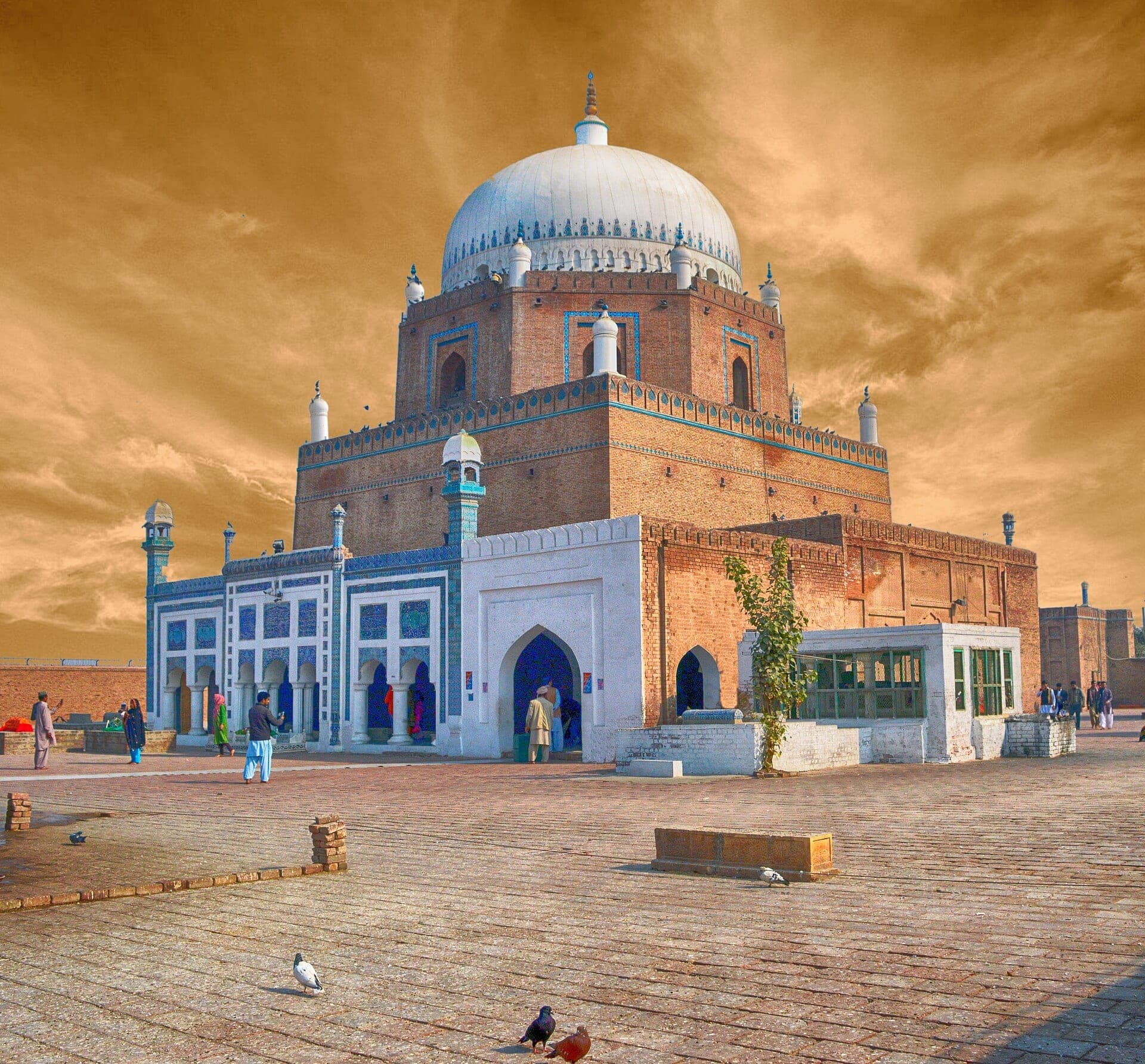
The shrine of Bahauddin Zakariya crowns the old fort mound in Multan, a 13th-century Suhrawardi Sufi mausoleum at the heart of a city so dense with saints' tombs it is known as the “City of Saints”.
Why go
- ✦13th-century Sufi shrine
- ✦Multan old fort mound
- ✦City of Saints
- ✦Suhrawardi order
History & Architecture
Bahauddin Zakariya studied under the Sufi master Abu Hafs Umar Suhrawardi in Baghdad, who reportedly cut his training short after just seventeen days, judging him ready, and sent him home to found a khanqah in Multan. The shrine was built in 1262, six years before his death, and, unusually for a dervish, Zakariya paid for it himself. Its two-tiered brick mausoleum became the architectural prototype for shrines across southern Punjab, and its glazed blue tilework, brought by Central Asian craftsmen active in the region, was among the earliest use of the technique that later defined the Multan style.
On the Ground
Dress modestly and follow shrine etiquette, shoes off, heads covered. The tiled domes and the surrounding tomb-scape are the draw, especially in low evening light.
Plan It with GreenPak
Use Plan a trip to build a southern-Punjab heritage loop through Multan's shrines and on toward Cholistan and Derawar.
Planning tip
Best Time to Visit, November to March; Multan's summers are among the hottest in the country. Urs days bring large, devotional crowds.
Getting there, In Multan's old fort area, reachable by air or motorway from Lahore and Karachi; combine with the Shah Rukn-e-Alam tomb nearby.
Allow, An hour or two around the shrine complex.
What to Do
Nearby
Straight-line distance from Shrine of Bahauddin Zakariya, within 5 km.