
Field guides / Baltistan Division / Shigar / Central Karakoram National Park
Field guide · Nature
Baltistan Division
Shigar District · Gilgit-Baltistan, Pakistan
Central Karakoram National Park
UNESCO tentative site; Pakistan's largest protected high-mountain area with glaciers and K2 approaches.
Central Karakoram National Park is the largest national park in Pakistan and one of the highest-altitude protected areas on Earth, a vast wilderness of more than 10,000 square kilometres encompassing the greatest concentration of high peaks and long glaciers outside the polar regions. Within its boundaries stand K2, Broad Peak, the Gasherbrums, and the Trango Towers, drained by the Baltoro, Biafo, and Hispar glaciers. It is the arena for the country's greatest mountaineering and trekking, and a refuge for snow leopard, ibex, and Himalayan brown bear.
Why go
- ✦Four of the world's 8,000 m peaks, including K2
- ✦The Baltoro, Biafo, and Hispar glaciers
- ✦Trango Towers and Masherbrum
- ✦Snow leopard and ibex habitat
- ✦The Biafo-Hispar 'Snow Lake' traverse
A Concentration of Giants
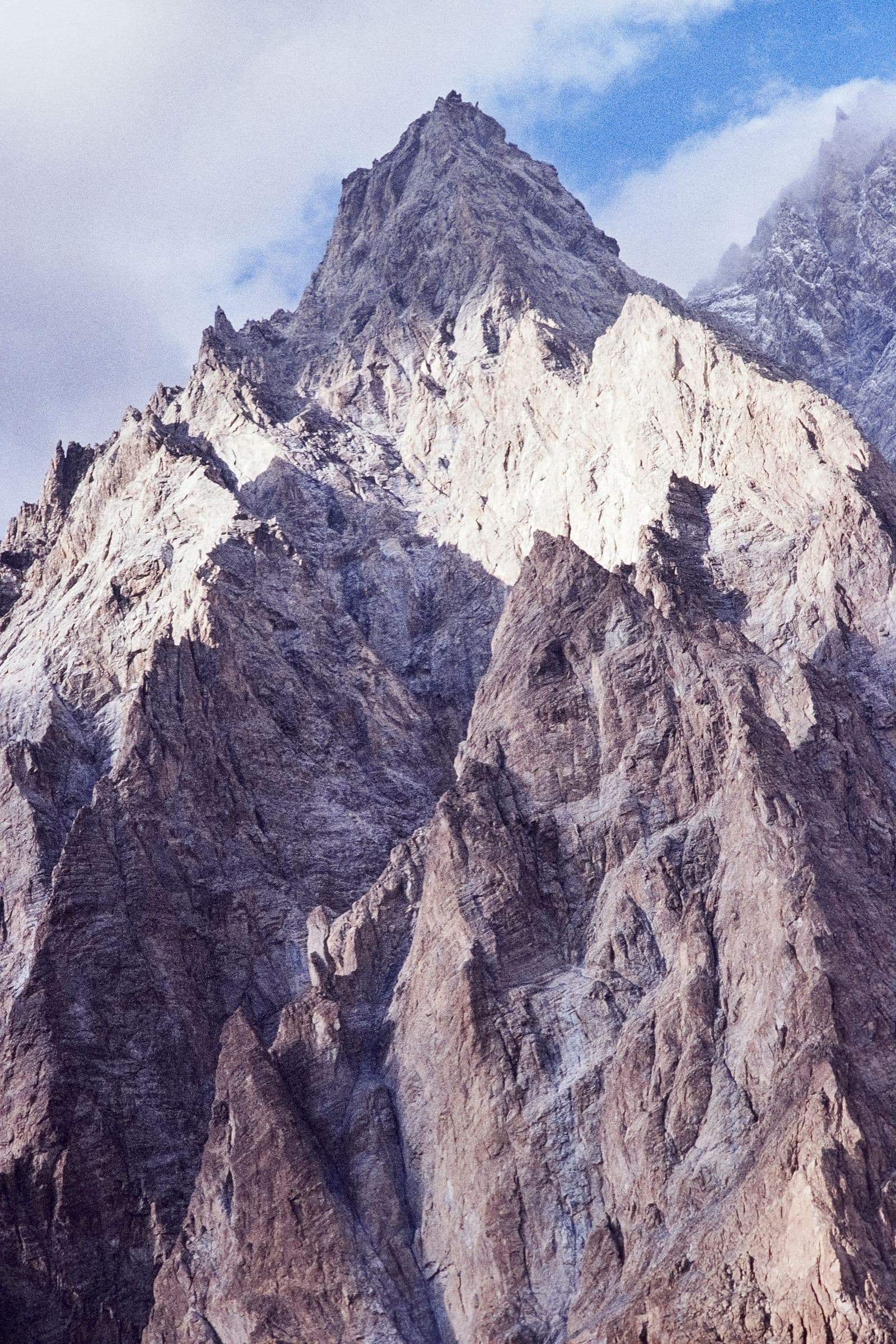
Nowhere else packs so many enormous mountains into one protected landscape. The park contains K2 (8,611 m), Broad Peak, Gasherbrum I and II, and a forest of granite spires, fed by some of the longest glaciers on the planet. For trekkers and climbers it is simply the greatest high-mountain wilderness in Asia.
Treks and Expeditions
The classic routes all lie within the park: the Baltoro trek to Concordia and K2 Base Camp, the Gondogoro La crossing into Hushe, and the committing Biafo-Hispar glacier traverse over Snow Lake. All require permits, registered guides, and porter support arranged through licensed operators, this is serious, remote terrain.
Wildlife and Conservation
Beyond the rock and ice, the park protects rare high-altitude wildlife including snow leopard, Himalayan ibex, blue sheep, and brown bear, managed in partnership with the mountain communities who hold traditional rights here. Responsible trekking, carrying out waste, respecting local rules, is part of keeping this fragile ecosystem intact.
Planning tip
Best Time to Visit, June to September for trekking and climbing, when the glaciers and high camps are accessible. The park is effectively closed to expeditions outside the short summer window.
Getting there, The main gateway is Skardu, reached by air from Islamabad or overland on the Karakoram Highway. From Skardu, jeep tracks lead to the trailhead villages of Askole (for the Baltoro) and Hushe (for Masherbrum and Gondogoro La).
Allow, Treks within the park run from a week to three weeks or more; even reaching the trailheads from Skardu takes the better part of a day.
What to Do
Nearby
Straight-line distance from Central Karakoram National Park, within 5 km.
Nothing else genuinely close by (within 5 km of Central Karakoram National Park) is published yet.