
Field guides / Gilgit-Baltistan / Haramosh
Field guide · Mountains
Haramosh
A 7,409 m summit east of the Indus, in the mountain area between Gilgit and Skardu, with a dramatic 1957 expedition history, a rarely visited climbing objective above the glaciers of the Haramosh La.
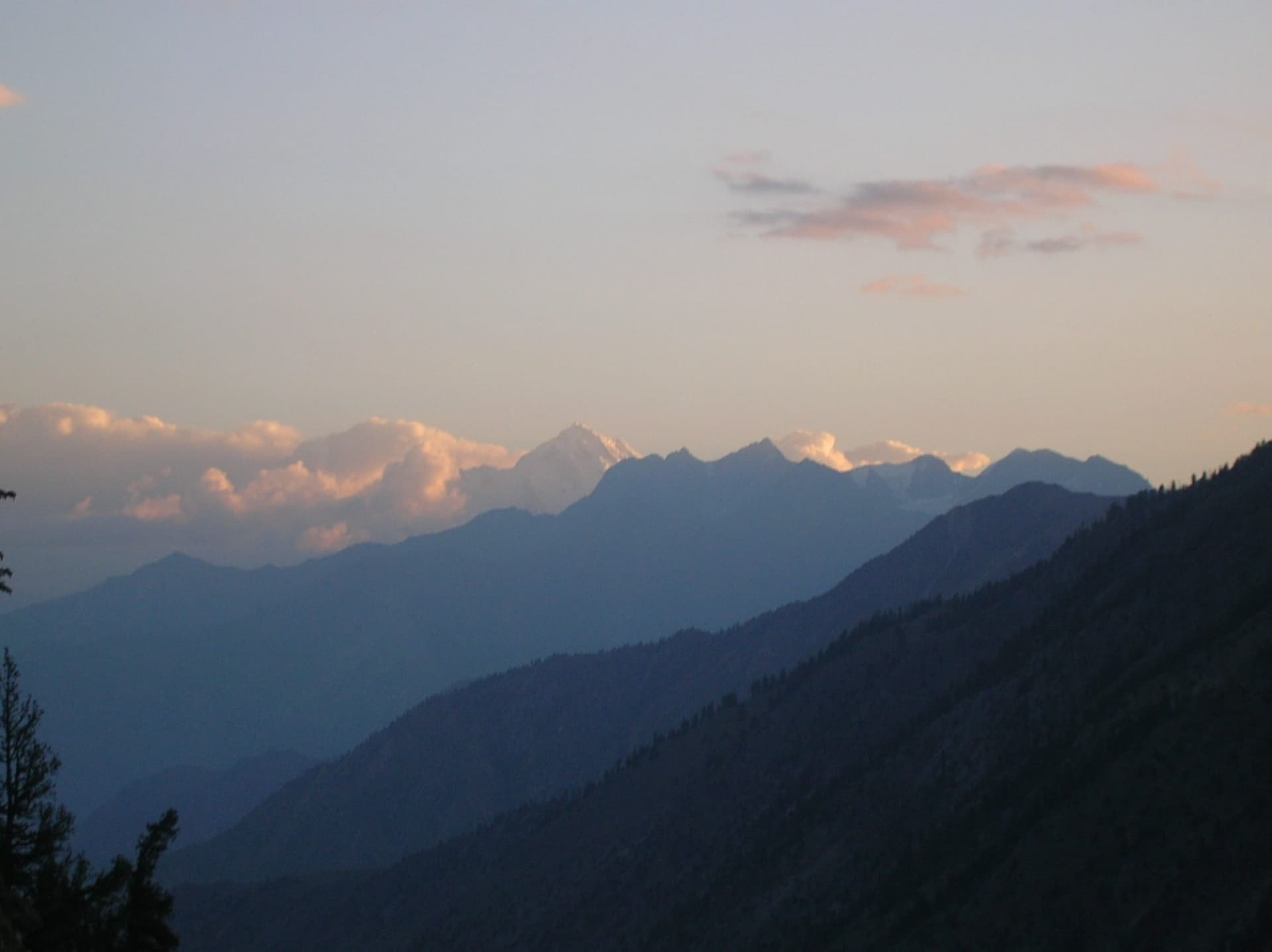
Haramosh is a 7,409 m Karakoram giant rising east of the Indus near Gilgit, a steep, serious mountain that towers over the Haramosh valley and the route toward Skardu. It sees far fewer visitors than its famous neighbours: there is no trekking-tourist base camp circuit here. The peak is best known in mountaineering history for the 1957 'Haramosh tragedy', when a British party's deceptively simple reconnaissance ended in two deaths and a desperate rescue, later recounted in the classic 'The Last Blue Mountain'. For travellers, Haramosh is a dramatic backdrop from the Gilgit-Skardu road and the gateway to the wild, lightly trodden Kutwal valley trek.
Why go
- ✦7,409 m Karakoram summit
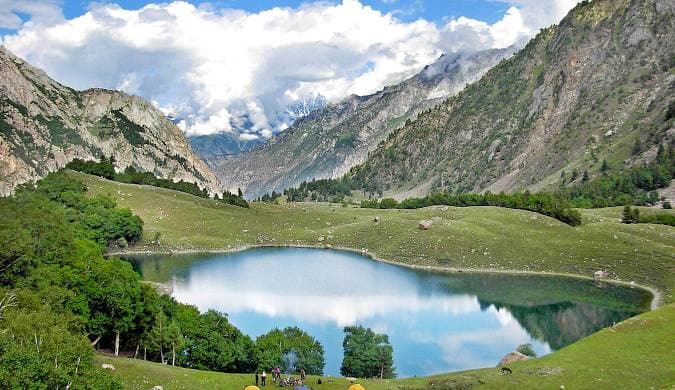
- ✦Kutwal Lake and the Haramosh valley trek
- ✦Setting of 'The Last Blue Mountain' (1957)
- ✦Dramatic views from the Gilgit-Skardu road
- ✦Lightly visited, genuinely wild terrain
A Mountaineer's Mountain
Haramosh's fame rests on tragedy. In 1957 an Oxford University expedition, scouting the peak, was caught when two members were swept into a snow basin; the attempts to reach them cost two lives and became one of mountaineering's most harrowing survival stories, told by survivor Ralph Barker in 'The Last Blue Mountain'. The summit itself was first climbed in 1958 by an Austrian-German team. It remains a rarely attempted, technically demanding objective.
The Kutwal Valley Trek
For trekkers, Haramosh's reward is the Kutwal (Haramosh) valley on its northern side, a wild, beautiful, and little-visited approach leading to alpine pastures and Kutwal Lake beneath the Haramosh and Mani peaks. It is a committing route over rough ground with no tourist infrastructure, suited to fit trekkers travelling with a guide, porters, and full camping support rather than to casual walkers.
Seeing Haramosh
You do not need to trek to appreciate Haramosh. The massif is one of the great sights of the Gilgit-Skardu road, especially where the highway runs close to the Indus with the peak's ice walls rising to the east. For most travellers a clear-day view from the road, or a short detour toward the valley mouth, is the practical way to take in this less-trodden Karakoram giant.
Planning tip
Best Time to Visit, June to September for valley trekking and the clearest mountain views; the high routes are snowbound outside summer.
Getting there, The Haramosh massif sits between Gilgit and Skardu. Trekking approaches start from villages such as Sassi off the Gilgit-Skardu road; reaching the Kutwal valley and Kutwal Lake requires a guide and porters.
Allow, Roadside views need no planning; the Kutwal Lake trek is a multi-day wilderness route for fit, experienced trekkers.