
Field guides / Baltistan Division / Ghanche / Khaplu Palace
Field guide · Heritage
Baltistan Division
Ghanche District · Gilgit-Baltistan, Pakistan
Khaplu Palace
A restored 19th-century royal palace in the Ghanche valley, a model of Baltistan heritage conservation and a heritage stay.
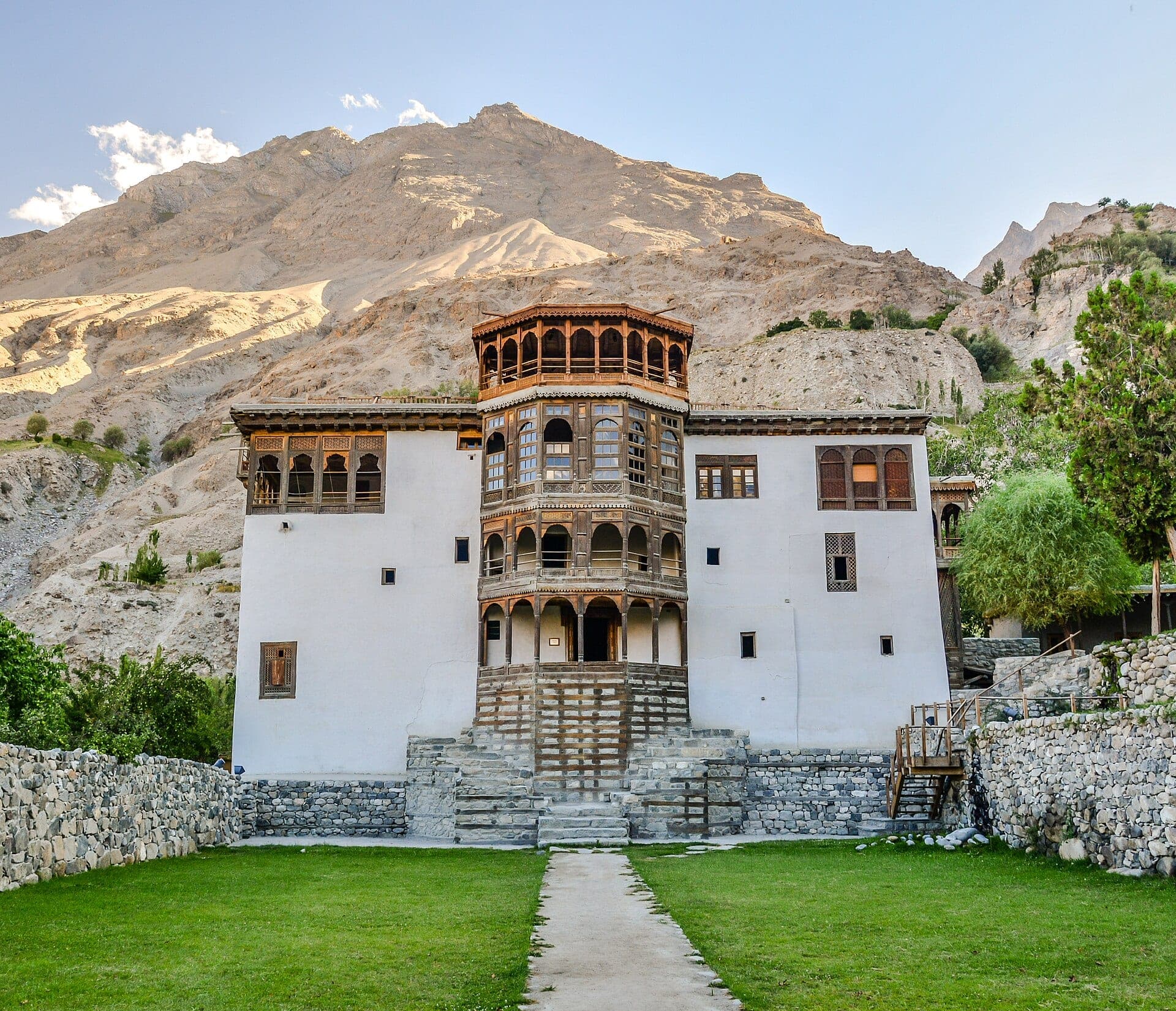
Khaplu Palace, known locally as Yabgo Khar, the 'fort on the roof', is a restored 19th-century royal residence in the Ghanche valley east of Skardu, built in 1840 by Raja Daulat Ali Khan after the Dogra rulers of Jammu, who had captured the region, moved the seat of government away from an older nearby fort. The four-storey palace, raised from timber, mud brick, and clay-and-soil mortar, blends Tibetan, Kashmiri, Ladakhi, Balti, and Central Asian influences, a testament to Khaplu's position at the crossroads of several mountain cultures. Between 2005 and 2011 it underwent a painstaking restoration by the Aga Khan Trust for Culture, and today operates as a Serena heritage hotel alongside a museum on Baltistan's history and culture.
Why go
- ✦19th-century royal residence, Yabgo Khar
- ✦Aga Khan Trust for Culture restoration (2005-2011)
- ✦Tibetan, Kashmiri, and Central Asian architecture
- ✦Museum of Baltistan history and culture
- ✦Serena heritage hotel
A Royal Seat Rebuilt
The palace replaced an older fort when the Dogra conquest forced a change of government seat in the mid-19th century, and it served as the residence of the Rajas of Khaplu for generations afterward. By the early 2000s the timber structure had deteriorated badly; the six-year Aga Khan Trust for Culture restoration that followed is now held up as a model project in the wider Aga Khan Historic Cities Programme, reviving traditional Balti building techniques alongside the architecture itself.
Inside the Palace
Carved wooden balconies, latticed windows, and courtyards open onto views of the surrounding peaks, and the ground-floor museum sets out Baltistan's layered history, Tibetan Buddhist roots, the arrival of Islam, and centuries of trade across the high passes. Staying overnight, rather than just visiting for an hour, is the only way to experience the palace in the quiet of early morning before day-trip groups arrive.
The Khaplu Valley Beyond
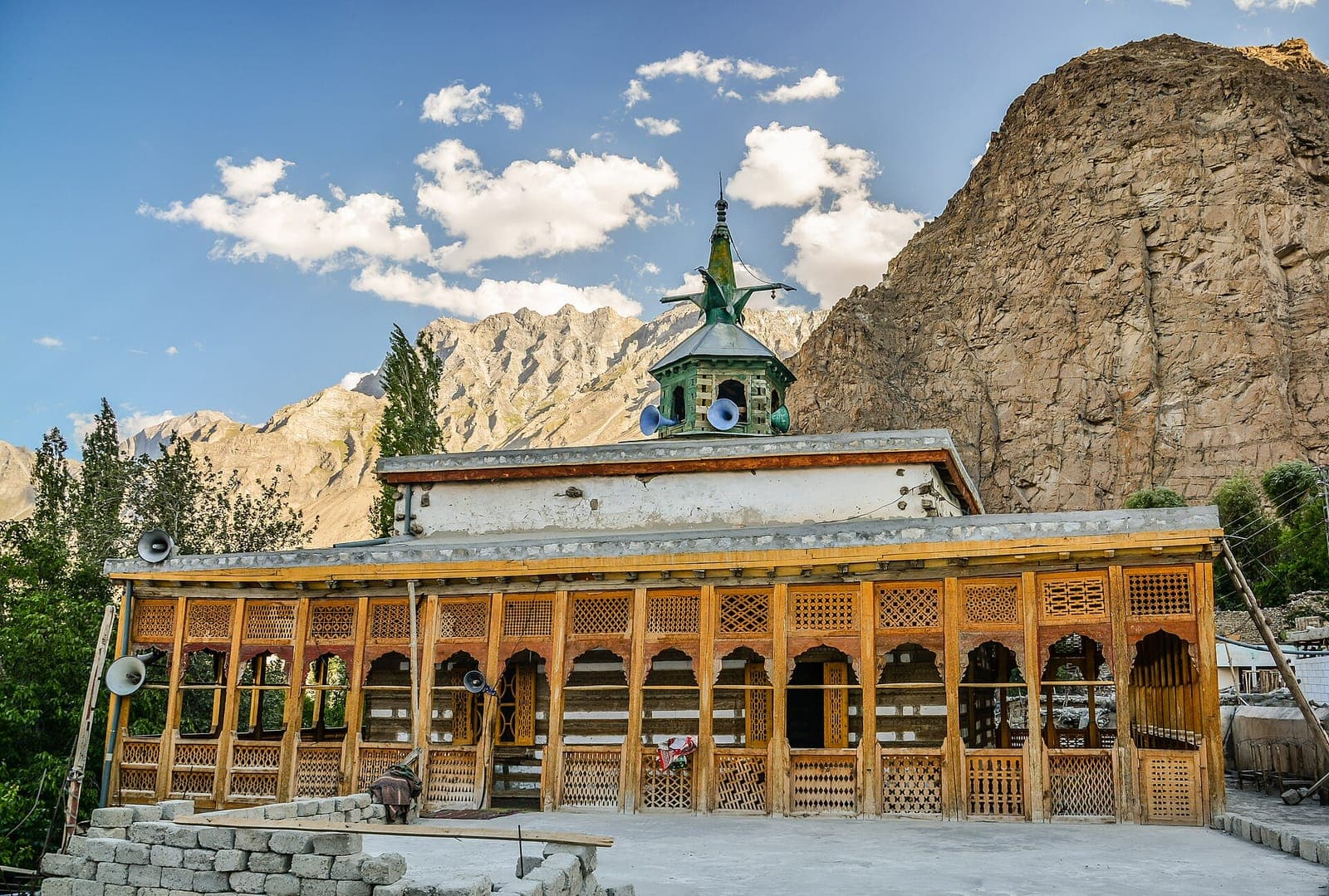
The valley around the palace offers gentle walks, old mosques and khanqahs, and the onward road toward Hushe and the Masherbrum trailheads, Khaplu is a natural staging point for treks deeper into eastern Baltistan.
Plan It with GreenPak
Use Plan a trip to combine Khaplu with Skardu, Shigar, and the deeper Baltistan valleys on a single itinerary.
Planning tip
Best Time to Visit, May to October for open valley roads; the Khaplu valley is green and mild in summer, with the palace at its most atmospheric in the soft light of early morning and evening.
Getting there, Roughly 100 km from Skardu (about three hours) along the Shyok River, a scenic drive into upper Baltistan through smaller villages and orchards.
Allow, A night at Khaplu is worthwhile; allow more to explore the surrounding valley.
What to Do
Nearby
Straight-line distance from Khaplu Palace, within 5 km.