
Field guides / Punjab / Salt Range & Katas Raj / Khewra Salt Mine
Field guide · Nature
Jhelum
Jhelum District · Punjab, Pakistan
Khewra Salt Mine
UNESCO tentative Salt Range landscape and one of the world's best-known salt mines.
The Khewra Salt Mine is the second-largest salt mine in the world and one of the oldest, worked since the armies of Alexander the Great noticed their horses licking the rocks here in 326 BCE. Tunnelled into the Salt Range hills of the Punjab, it produces the famous pink Himalayan salt and draws visitors into a surreal underground world: vaulted chambers, brine pools, and sculptures carved from glowing salt blocks, including a small mosque built entirely of pink salt bricks. A narrow-gauge train carries visitors into the heart of the mountain.
Quick facts
- Where
- Khewra, Pind Dadan Khan Tehsil, Jhelum District, Punjab
- From Islamabad / Lahore
- About 160 km from each
- Size
- Second-largest salt mine in the world; about 40 km of tunnels
- Inside
- About 18–20 °C all year
- Main tunnel
- Developed in 1872 by mining engineer H. Warth
- Visitors
- Up to about 250,000 a year
Why go
- ✦Second-largest salt mine on Earth
- ✦Pink Himalayan salt at the source
- ✦Mosque and sculptures carved from salt
- ✦Underground brine pools and chambers
- ✦The narrow-gauge entry train
Into the Mountain
Visitors enter on a small electric train that trundles along the main adit deep into the hillside, emerging into a sequence of illuminated chambers. Highlights include the salt-brick Badshahi Mosque replica, glowing in pink and white, the still brine pools that mirror the carved ceilings, and miniature models of famous landmarks built from salt.
History in the Rock
Local tradition traces the mine's discovery to Alexander's campaign, but systematic mining dates from the Mughal era and was industrialised under the British, who built the tunnel system still in use. The salt itself was laid down over 600 million years ago when an ancient sea evaporated, geology you can literally taste on the walls.
Salt and Wellness
Khewra has leaned into its salt with a small underground clinic where the salt-rich air is promoted for respiratory therapy, alongside shops selling lamps, cookware, and edible pink salt carved on site. It makes an easy, all-weather family stop on a Salt Range day combined with Katas Raj or Kallar Kahar.
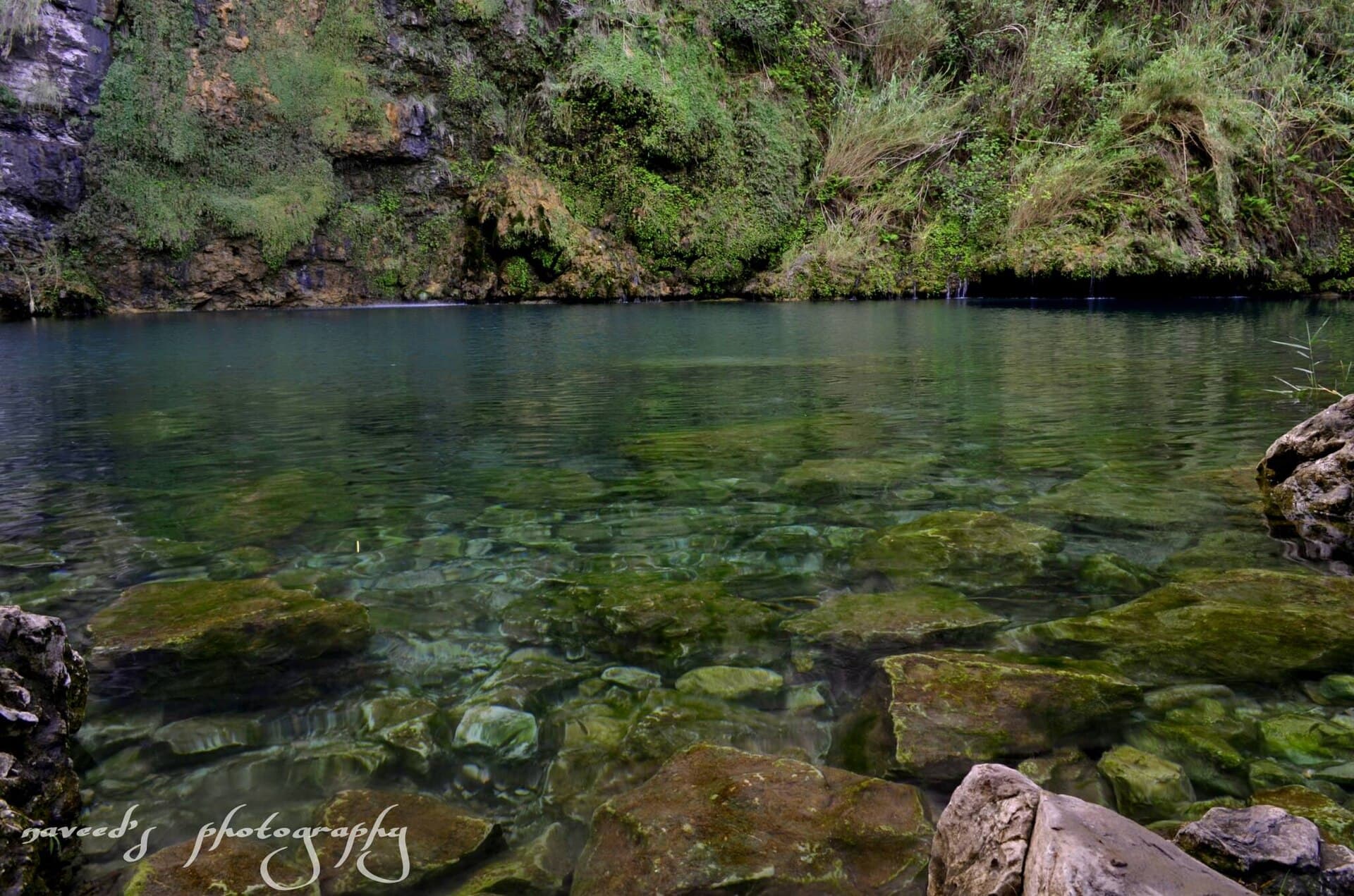
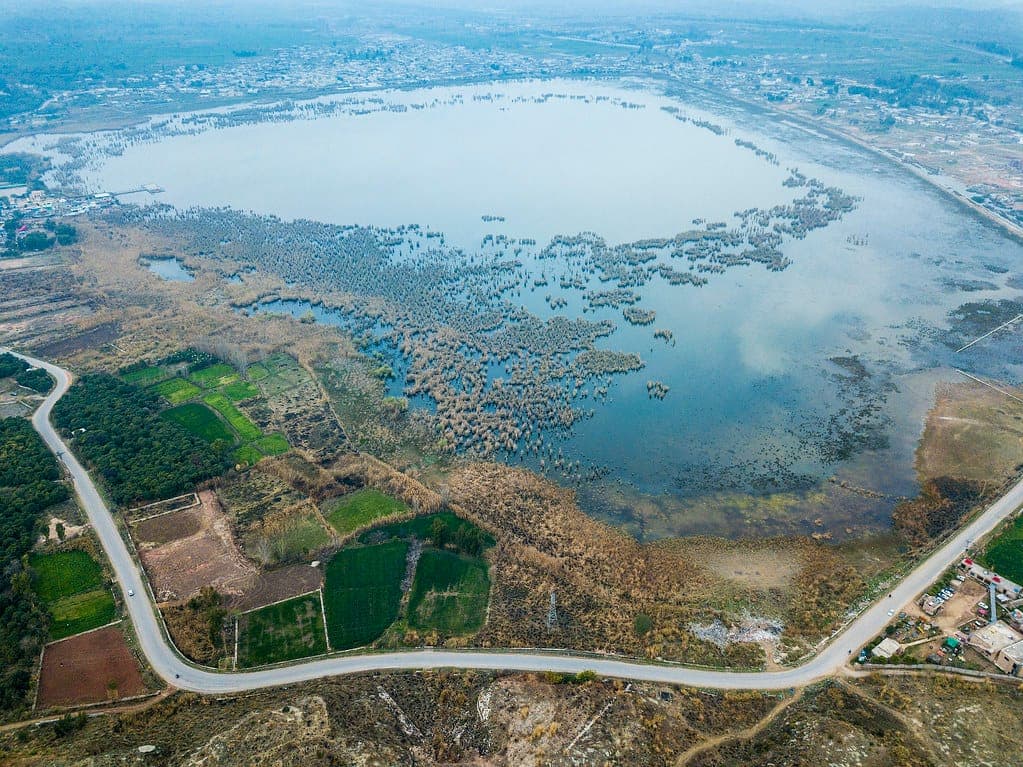
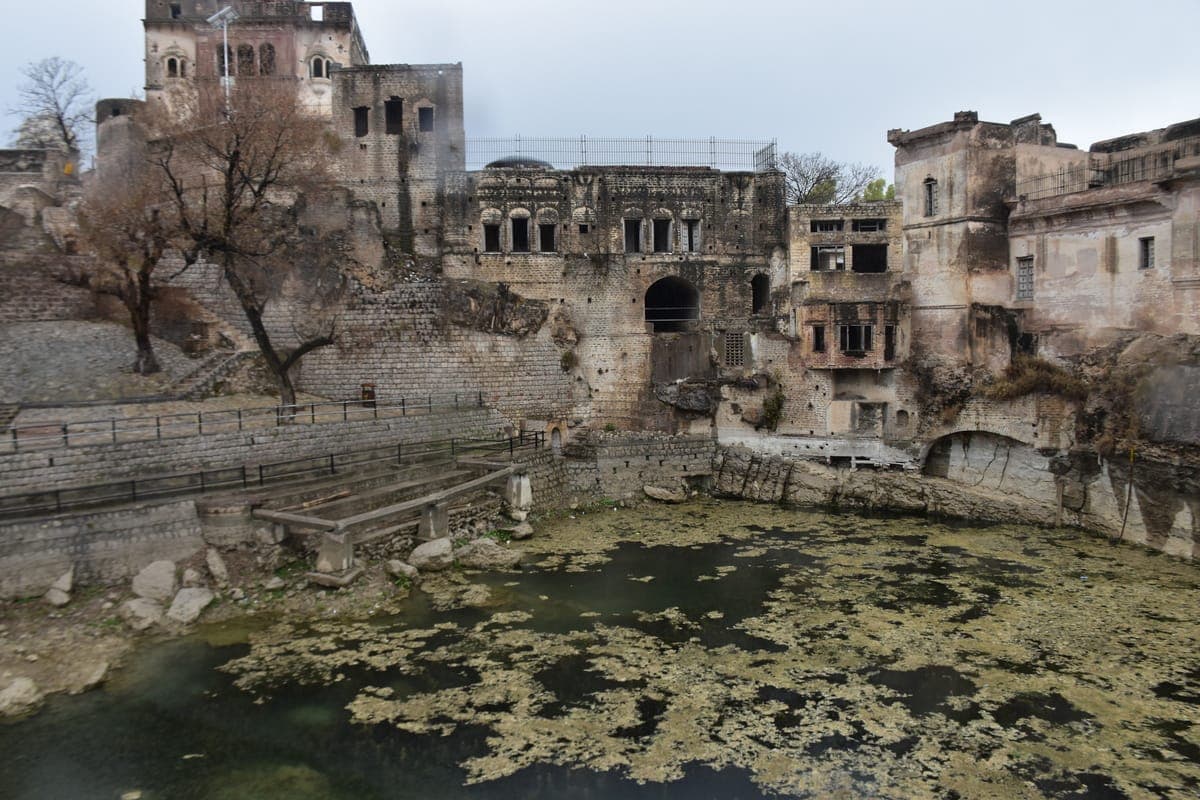
Khewra Salt Mine in pictures
Photos: Shahzaib Damn Cruze · CC BY-SA 4.0 (4 photos) · Mohammad.Waris.khan · CC BY-SA 4.0. Each photo's own credit and licence link is shown when you open it.
Planning tip
Best Time to Visit, Year-round, the mine stays a constant cool temperature inside, making it a comfortable visit even in the summer heat outside.
Getting there, In the Salt Range near Pind Dadan Khan, about a 2.5-hour drive from Islamabad or Lahore, off the M2 motorway. The site is well set up for visitors with a ticketed tour and the entry train.
Allow, One to two hours underground; half a day with the drive, often combined with Kallar Kahar or Katas Raj.
What to Do
Questions travellers ask
+How far is Khewra Salt Mine from Islamabad and Lahore?
About 160 km from each, roughly two and a half hours by the M2 motorway and the Lillah interchange.
+What can you see inside Khewra Salt Mine?
A small train takes visitors into lit chambers with a mosque built of salt bricks, still brine pools and models carved from pink salt. The tunnels run about 730 m into the hill from the entrance.
+Is the mine cold inside?
No, it stays at about 18 to 20 °C all year, comfortable even in summer.
+How old is the mine?
Tradition says the salt was found by the horses of Alexander's army in 326 BC, licking the rocks. The main tunnel used today was developed in 1872.
Nearby
Straight-line distance from Khewra Salt Mine, within 5 km.
Nothing else genuinely close by (within 5 km of Khewra Salt Mine) is published yet.