
Field guides / Punjab / Multan, City of Saints
Field guide · Heritage
Multan, City of Saints
One of the world's oldest cities, famed for its Sufi shrines, blue-tilework mausoleums, Blue Pottery craft, mangoes, silk, and as the spiritual heartland of the Punjab.
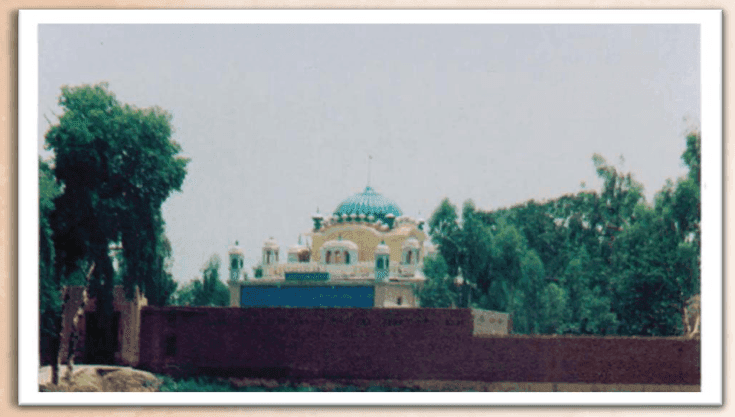
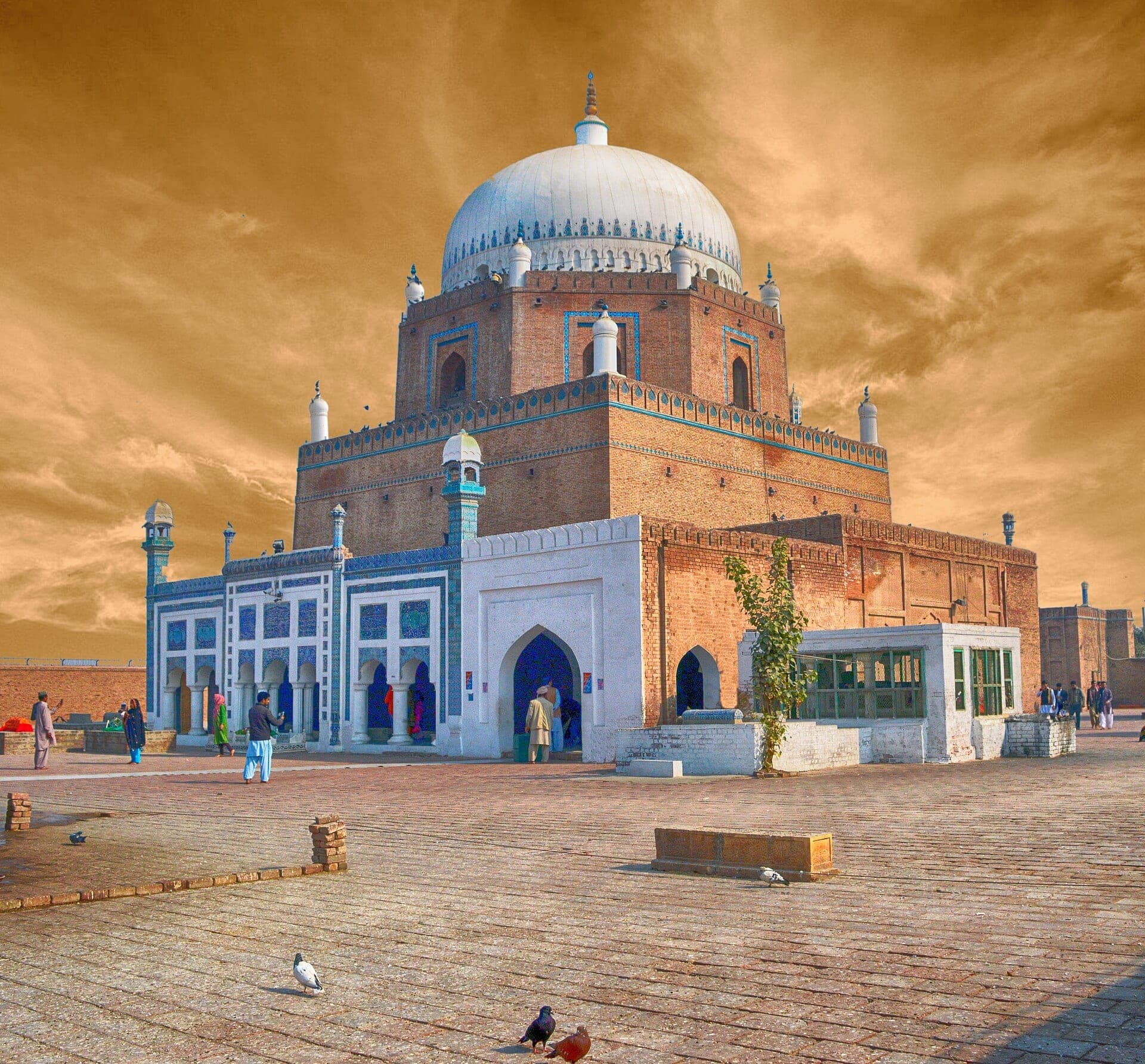
Multan is one of the oldest cities in the world, estimates place continuous occupation at over 5,000 years, and Alexander the Great is recorded to have been severely wounded during its siege in 326 BCE. Today it is Pakistan's fifth-largest city and the undisputed spiritual capital of the Punjab, famous for its Sufi shrines, blue-tilework architecture, and the intensity of its religious culture. The 'City of Saints' (Shehr-e-Aulia) holds the shrines of Bahauddin Zakariya, Shah Rukn-e-Alam, and Shah Shams Tabrez, three of South Asia's most important Sufi figures, within walking distance of each other.
Why go
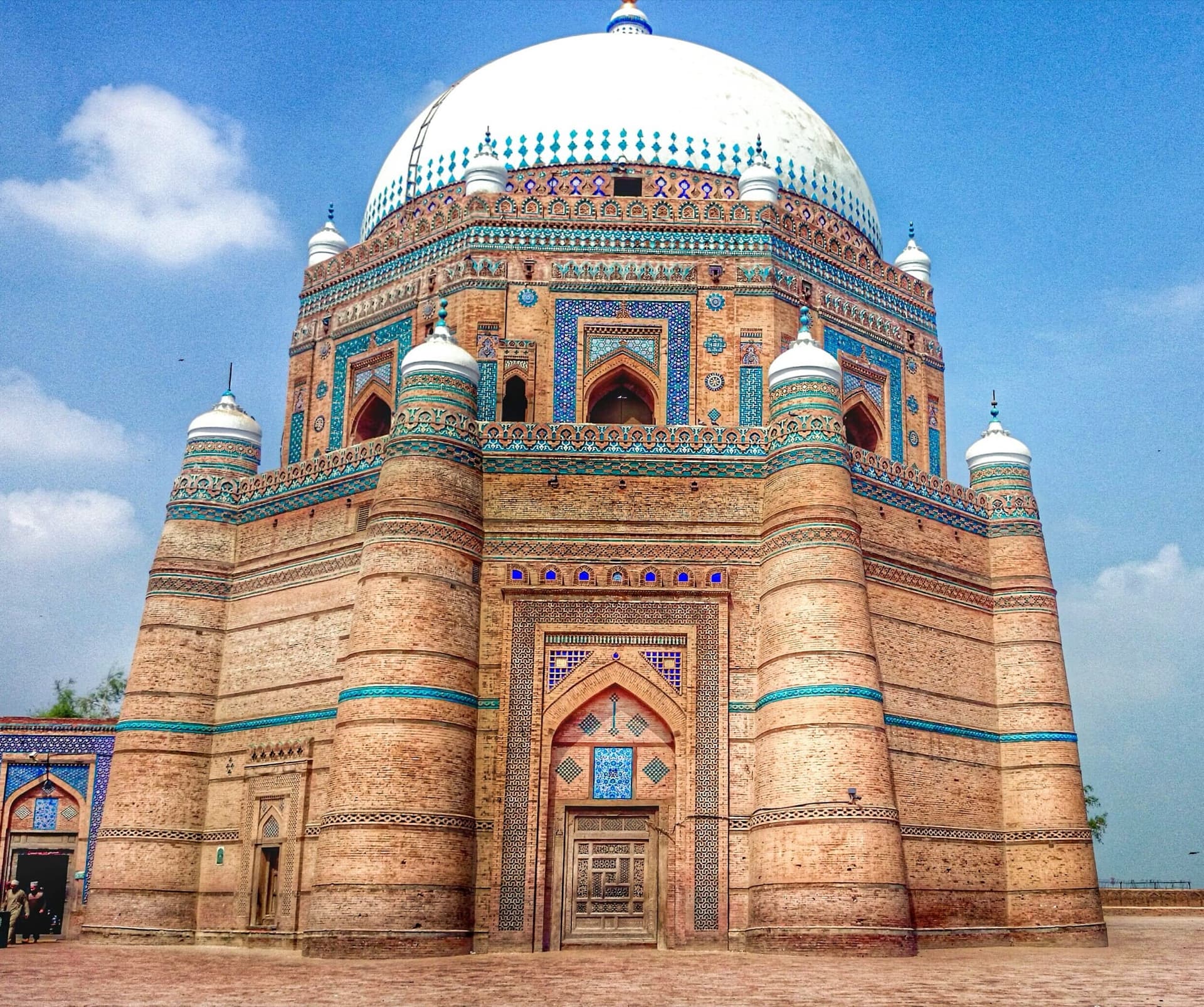
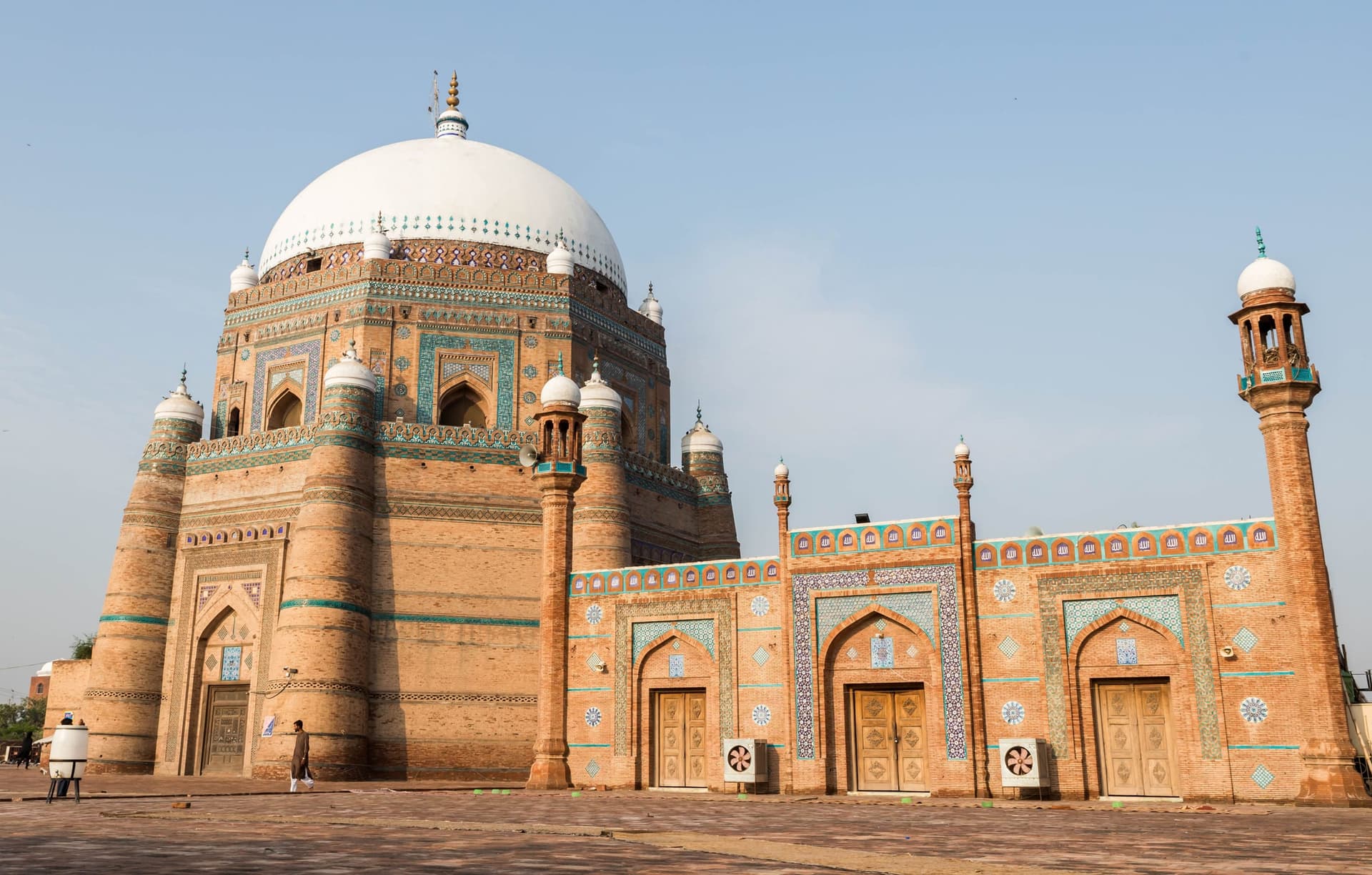
- ✦Shrine of Shah Rukn-e-Alam, 14th-century brick tomb, one of South Asia's finest
- ✦Shrine of Bahauddin Zakariya, founder of the Suhrawardi Sufi order in Pakistan
- ✦Blue Pottery of Multan, distinctive cobalt and white tilework craft
- ✦Mango capital of Pakistan, 300+ varieties grown in the district
- ✦Old city fortifications and bazaars
Shah Rukn-E-Alam Shrine
The 14th-century octagonal mausoleum of Shah Rukn-e-Alam is Multan's signature building and one of the finest examples of Tughluq-era tomb architecture in the subcontinent. The exterior is clad in glazed blue, white, and turquoise tilework. The interior holds elaborately painted plasterwork, carved wooden doors, and the saint's marble tomb. The shrine complex is active 24 hours and draws pilgrims from across Pakistan.
Blue Pottery Craft
Multani Blue Pottery is a distinct tradition using local clay, cobalt, and manganese glaze, the same palette visible on the city's shrines. Working potteries are concentrated in the old city neighbourhood of Hafizabad. Several master potters welcome visitors; pieces range from small tiles to large architectural panels. This is craft that is genuinely linked to the place, buying here supports the tradition directly.
Multan Mangoes
The Multan district grows over 300 varieties of mango, including Chaunsa, Sindhri, Anwar Ratol, and Langra, varieties that are exported globally. The mango season runs June to August, market stalls, juice bars, and even mango festivals define these months in the city. If you are visiting in mango season, this is part of the destination.
Planning tip
Best Time to Visit, November to February, Multan summers are among the most intense in Pakistan (routinely 45°C+). The city comes alive during Urs festivals at each shrine, which vary by the Islamic lunar calendar.
Getting there, Direct flights from Karachi, Lahore, and Islamabad to Multan International Airport. The city centre is 15 minutes from the airport. The shrines are all within 5 km of each other in the old city.
Allow, 2 days minimum to visit the major shrines, the Blue Pottery workshops, and the old city. The Urs season for Bahauddin Zakariya shrine draws massive crowds and changes the city's entire character, extraordinary to witness, challenging to navigate.
What to Do
Nearby
Straight-line distance from Multan, City of Saints, within 5 km.