

Field guides / Punjab / Soon Sakesar Valley
Field guide · Nature
Soon Sakesar Valley
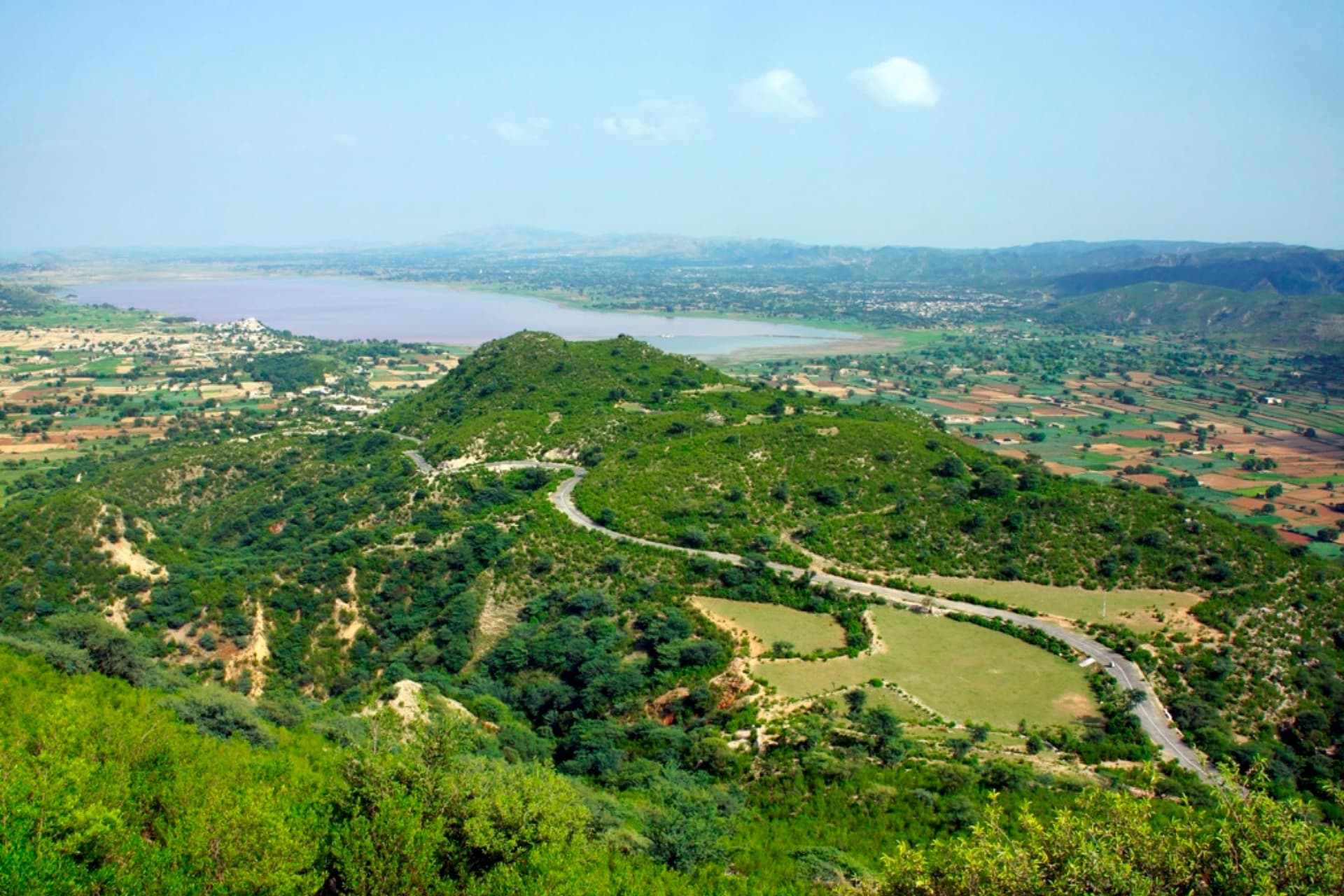
A green upland valley in the Salt Range overlooked by the Sakesar plateau, with lakes like Khabeki and Uchhali, a quiet wetland and birdwatching pocket of Punjab.
The Soon Sakesar Valley is a green upland pocket in Khushab district's Salt Range, built around three brackish lakes, Khabeki, Uchhali, and Jahlar, that together form the Uchhali Complex, a Ramsar-listed wetland since 1996. Every winter, tens of thousands of migratory waterfowl arrive here via International Migratory Bird Route Number 4, having flown as far as 4,500 km from Siberia and Central Asia to escape the harshest months, among them rare white-headed ducks and, in good years, flamboyant flocks of greater flamingos wading the shallow, salty water. It is an unexpected wetland tucked between Punjab's dry hills, overlooked by the high Sakesar plateau.
Why go
- ✦Ramsar-listed Uchhali Complex (since 1996)
- ✦Khabeki, Uchhali, and Jahlar lakes
- ✦Migratory birds flying 4,500 km via Route 4
- ✦Rare white-headed ducks and greater flamingos
- ✦Sakesar, the Salt Range's highest point
A Wetland Built on Salt
The three lakes of the Uchhali Complex are brackish rather than freshwater, a legacy of the surrounding Salt Range geology, and it's exactly that salinity that makes them so attractive to the waterfowl that pass through each winter, the same conditions that support flamingos and white-headed ducks make the lakes far less useful for agriculture, which has kept the valley relatively undeveloped and rural.
Winter Birdwatching
Counts here have run from around 18,000 migratory waterfowl in the late 1980s to over 27,000 individual birds across the complex in more recent surveys, spanning geese, coots, and, the highlight for most visitors, greater flamingos working the shallow salty margins on their long red legs. Early winter mornings, before the wind picks up, are consistently the best time to watch the lakes.
The Sakesar Plateau
Above the lakes, the valley rises to Sakesar, the highest point in the Salt Range, with wheat terraces giving way to a cooler, breezier plateau and views back down over the whole Soon basin, a good overnight base if you want to combine an evening view with a dawn birdwatching session at the lakes below.
Plan It with GreenPak
Use Plan a trip to combine Soon Sakesar Valley with the Salt Range's Khewra Salt Mine and Kallar Kahar on a wider Punjab road loop.
Planning tip
Best Time to Visit, October to March for mild weather and peak migratory birdlife, when the lakes are at their busiest; spring brings a brief flush of green after the rains.
Getting there, Reached from the M2 motorway toward Naushera or Khushab, a few hours' drive from Islamabad or Lahore, with the valley's lakes and villages spread along secondary roads.
Allow, A day trip is enough for the lakes; an overnight at Sakesar allows an early birdwatching start and sunset from the plateau.
What to Do
Nearby
Straight-line distance from Soon Sakesar Valley, within 5 km.
Nothing else genuinely close by (within 5 km of Soon Sakesar Valley) is published yet.