
 Photo: Department of Archaeology & Museums, Government of Pakistan
Field guides / Punjab / Lahore / Chauburji
Field guide · Heritage
Lahore
Lahore District · Punjab, Pakistan
Chauburji
A 1646 Mughal gateway with four flaring minarets and coloured kashi tilework, once the entrance to a lost pleasure garden.
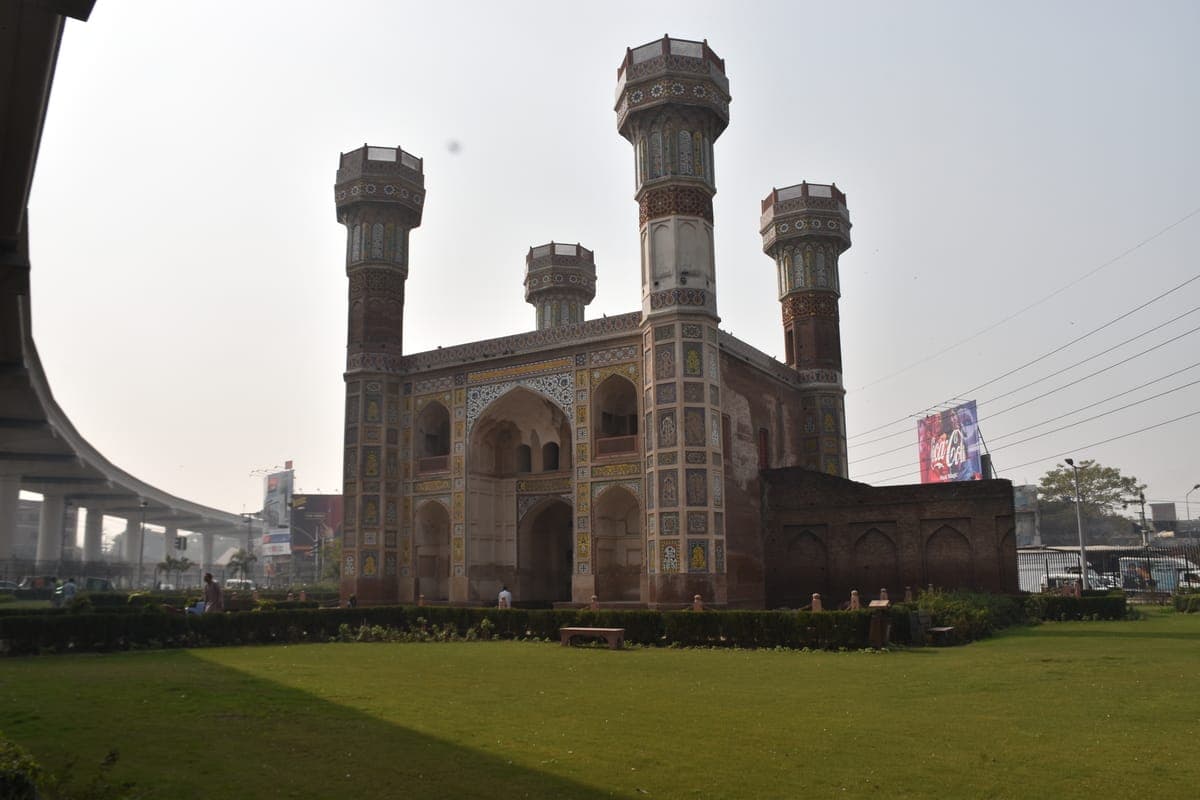
Chauburji ("four towers") is what remains of a grand Mughal gateway raised in 1646, during Shah Jahan's reign, marking the entrance to a large pleasure garden long since built over. Its four corner minarets flare outward above a tiled archway, the kashi-kari tilework still showing bands of blue, turquoise, and yellow against the brickwork. The garden it once opened onto is popularly linked to a royal Mughal woman, though which princess exactly remains debated among historians.
Why go
- ✦1646 Mughal-era gateway
- ✦Four flaring corner minarets
- ✦Original kashi tilework
- ✦Remnant of a lost Mughal pleasure garden
A Gate Without Its Garden
Chauburji was never a standalone building, it was the entrance to an extensive garden that has since vanished under the growth of the city. Only the gateway survives, now standing on a traffic island rather than framing an approach.
Whose Garden Was It?
Local tradition ties the garden to a Mughal princess, most often Zeb-un-Nisa or Jahanara, but no inscription definitively settles the question. The debate is part of what makes the site a favourite for Lahore's own historians.
Planning tip
Best Time to Visit, Any season; a quick stop rather than a weather-dependent one. Morning light suits the tilework best for photos.
Getting there, On a busy roundabout on Multan Road, a short taxi or rickshaw ride from central Lahore.
Allow, 20-30 minutes.
What to Do
Nearby
Straight-line distance from Chauburji, within 5 km.