
Field guides / Sindh / Jamia Masjid, Dadu, Khudabad
Field guide · Heritage
Jamia Masjid, Dadu, Khudabad
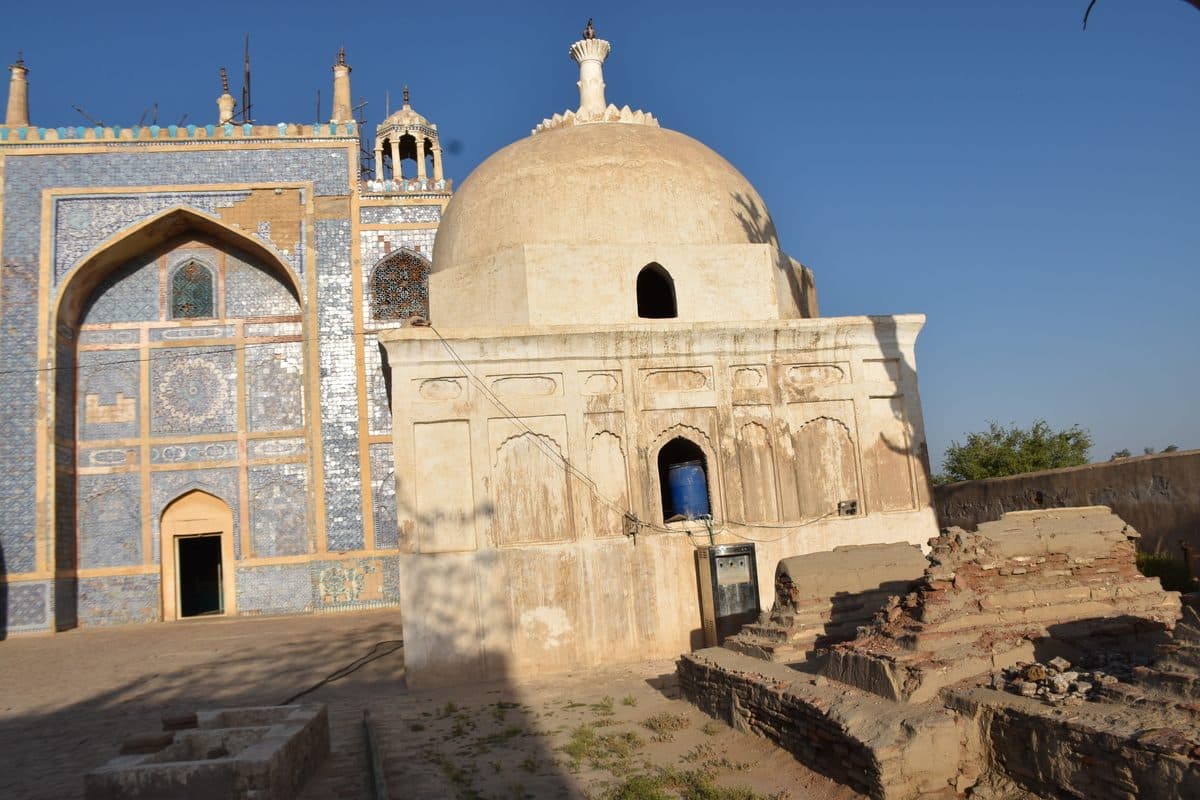
In the midst of the ruins of the old town of Khudabad stands the great massive Kalhora period (18th Century CE) Jamia Masjid.
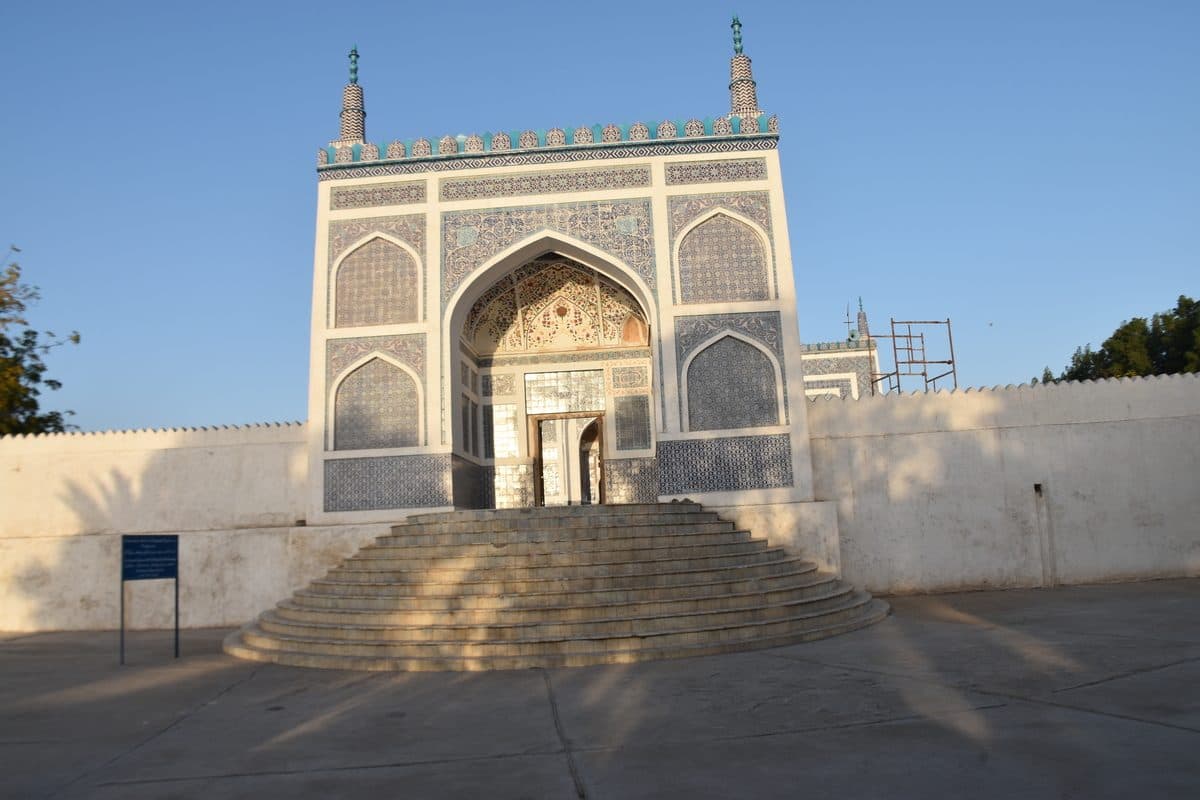
It is lavishly decorated with enameled tiles. The entrance of the mosque is lavishly decorated with panels of local Sindhi tiles on either side. It was built of Mian Yar Muhammad Kalhoro during his reign (1701-1718 CE). The floral patterns are disposed more or less in geometrical forms. It represents a tall and graceful plant lily order whose leaves, flowers and buds sprout from the central stem and fall over right and left in easy natural curves. The prayer chamber is divided into two equal compartments. The eastern compartment, a roofless one is a small hall. The hall seems to have a low flat roof, providing an access to the gallery achieved at the squinch level of the western domed compartment. Massive piers supporting the elegant arches divide the western hall into three aisles, the central one larger in side than the flanking one. Each bay has an arched mihrab sunk in the western wall.
Why go
- ✦A massive Kalhora congregational mosque amid the ruins of Khudabad
- ✦Lavishly faced in local Sindhi enamelled tile
- ✦Tilework built around a tall lily-order plant in natural curves
- ✦Built by Mian Yar Muhammad Kalhoro, who reigned 1701–1718
- ✦Western prayer hall in three aisles under massive piers
History
Khudabad was the first seat of the Kalhora state. Its Jamia Masjid is the most substantial building to survive there, faced in local Sindhi enamelled tile, with panels flanking the entrance and a prayer chamber divided into two compartments — an open eastern hall and a domed western one carried on massive piers in three aisles.
Historical Significance
The finest surviving building of the early Kalhora period and the high point of eighteenth-century Sindhi tilework.
Architecture
The floral patterning is arranged in broadly geometrical form around a tall and graceful plant of the lily order, its leaves, flowers and buds sprouting from a central stem and falling right and left in easy natural curves. The prayer chamber divides into two equal compartments: the eastern one a small roofless hall whose low flat roof once gave access to a gallery at the squinch level of the western domed compartment, and the western hall split into three aisles by massive piers carrying elegant arches, the central aisle wider than those flanking it, with an arched mihrab sunk into the western wall of each bay.
Why Visit
A great tiled mosque in an abandoned capital, with the tomb of the man who built both a short walk away.
Interesting Facts
- Khudabad was the Kalhora capital before Hyderabad was founded in 1768
- The tilework is built around a single lily-order plant motif with leaves and buds falling either side of a central stem
- The western prayer hall is divided into three aisles, with a mihrab sunk into each bay
Planning tip
Best Time to Visit, November to February. Summer here is punishing.
Getting there, Larkana and Dadu lie along the Indus in upper Sindh; both are reachable from the N-55 (Indus Highway). Moenjodaro is the anchor for any visit to Larkana.
Allow, One to two hours per monument.
What to Do
Make Jamia Masjid, Dadu, Khudabad Part of a Trip
GreenPak resorts within reach, and the journeys that travel this region.
Nearby
Straight-line distance from Jamia Masjid, Dadu, Khudabad, within 30 km.