
Field guides / Sindh / Sonda Graveyard
Field guide · Heritage
Sonda Graveyard
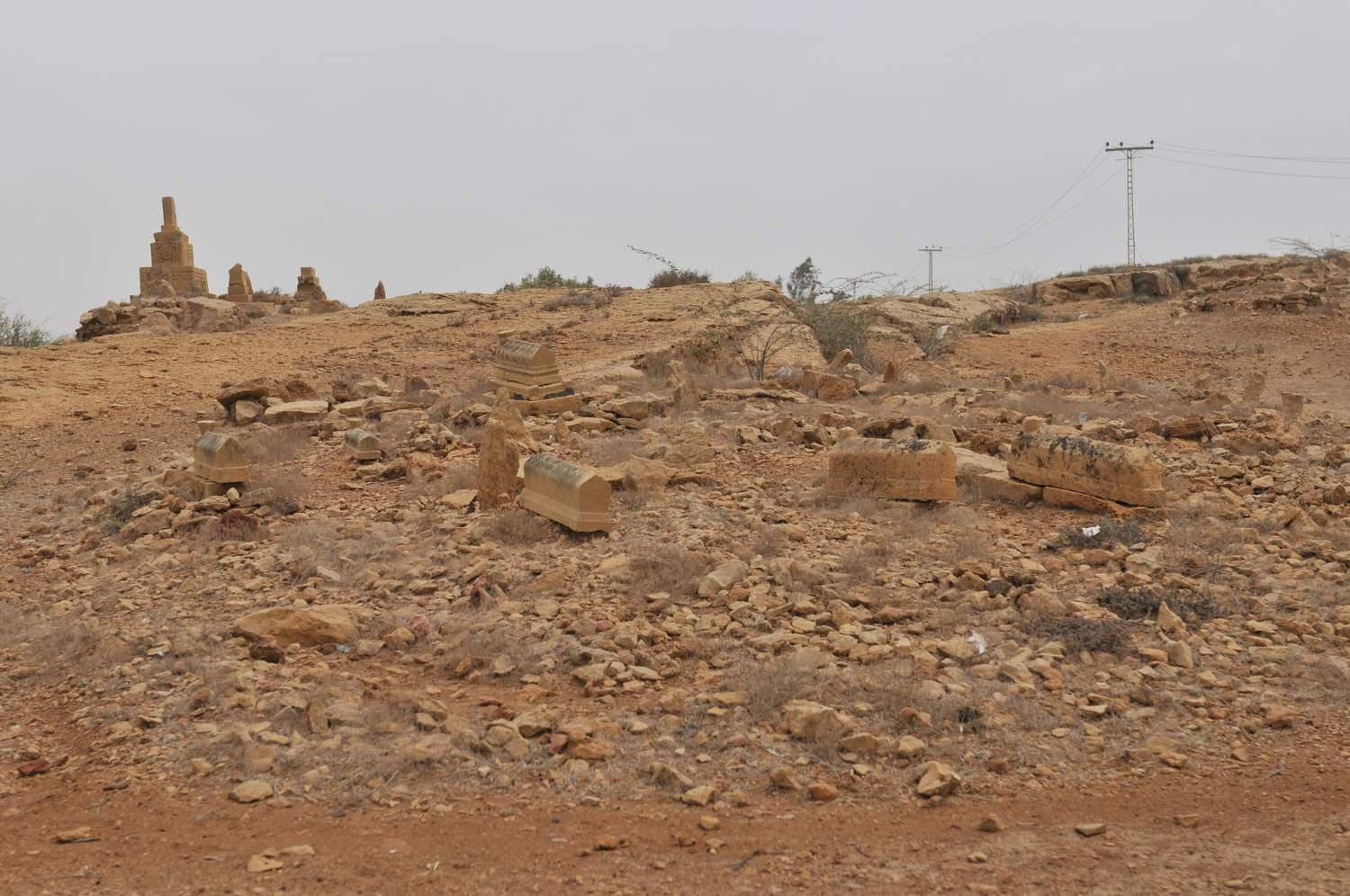
Sonda was founded by the Samma ruler Jam Tamachi in the 3rd quarter of the fourteenth century and was revered by the Muslims of the area due to the noble family of saints, the Makhdums.
It is here in this graveyard that the saintly personages are buried. Most of the yellowish stone tombs were once embellished with Quranic verses, floral and geometrical patterns and human representations; however, little has survived of these splendid graves.
Why go
- ✦Founded by the Samma ruler Jam Tamachi in the late fourteenth century
- ✦Burial ground of the Makhdum family of saints
- ✦Yellow sandstone tombs, once richly carved
- ✦A quieter, less-visited counterpart to Makli
History
The village was founded by Jam Tamachi in the third quarter of the fourteenth century, in the Samma period. The Makhdum family who settled there — among them Makhdum Ramzan Vedani, Mula Ari, Mula Bayazid and Mula Abu Bakar — were widely revered, and it is around their graves that the cemetery grew. The carving style arrived in the subcontinent during Samma rule and carries a strong Gujarati influence.
Historical Significance
Sonda is the largest of Sindh's carved-stone necropolises after Makli, and its stonework preserves a tradition of figurative and decorative carving that is unusual in Muslim funerary art.
Architecture
The graveyard's yellowish stone tombs were once elaborately worked, and enough of that carving survives to show what the site was.
Why Visit
For the carving. Women's and children's graves here are marked with the jewellery they wore — bangles, necklaces, earrings, anklets — cut into the stone.
Interesting Facts
- The graves of women and children are carved with their jewellery: bangles, necklaces, earrings, anklets
- Tombs carry Quranic verses, floral and geometric patterns, and human figures
- The village was founded by Jam Tamachi in the later fourteenth century
- The carving tradition shows strong Gujarati influence, arriving in Sindh under the Sammas
Planning tip
Best Time to Visit, October to February. Summer on the Thatta plain is severe and most of these sites offer no shade.
Getting there, Thatta is about 100 km east of Karachi on the N-5. The town's monuments, the Makli necropolis and Banbhore can all be reached in a single run from the city.
Allow, Half a day for Thatta town and Makli together; a full day if Banbhore is included.
What to Do
Make Sonda Graveyard Part of a Trip
GreenPak resorts within reach, and the journeys that travel this region.
Nearby
Straight-line distance from Sonda Graveyard, within 30 km.