
Field guides / Baltistan Division / Skardu & Baltistan / Trango Towers
Field guide · Mountains
Baltistan Division
Shigar District · Gilgit-Baltistan, Pakistan
Trango Towers
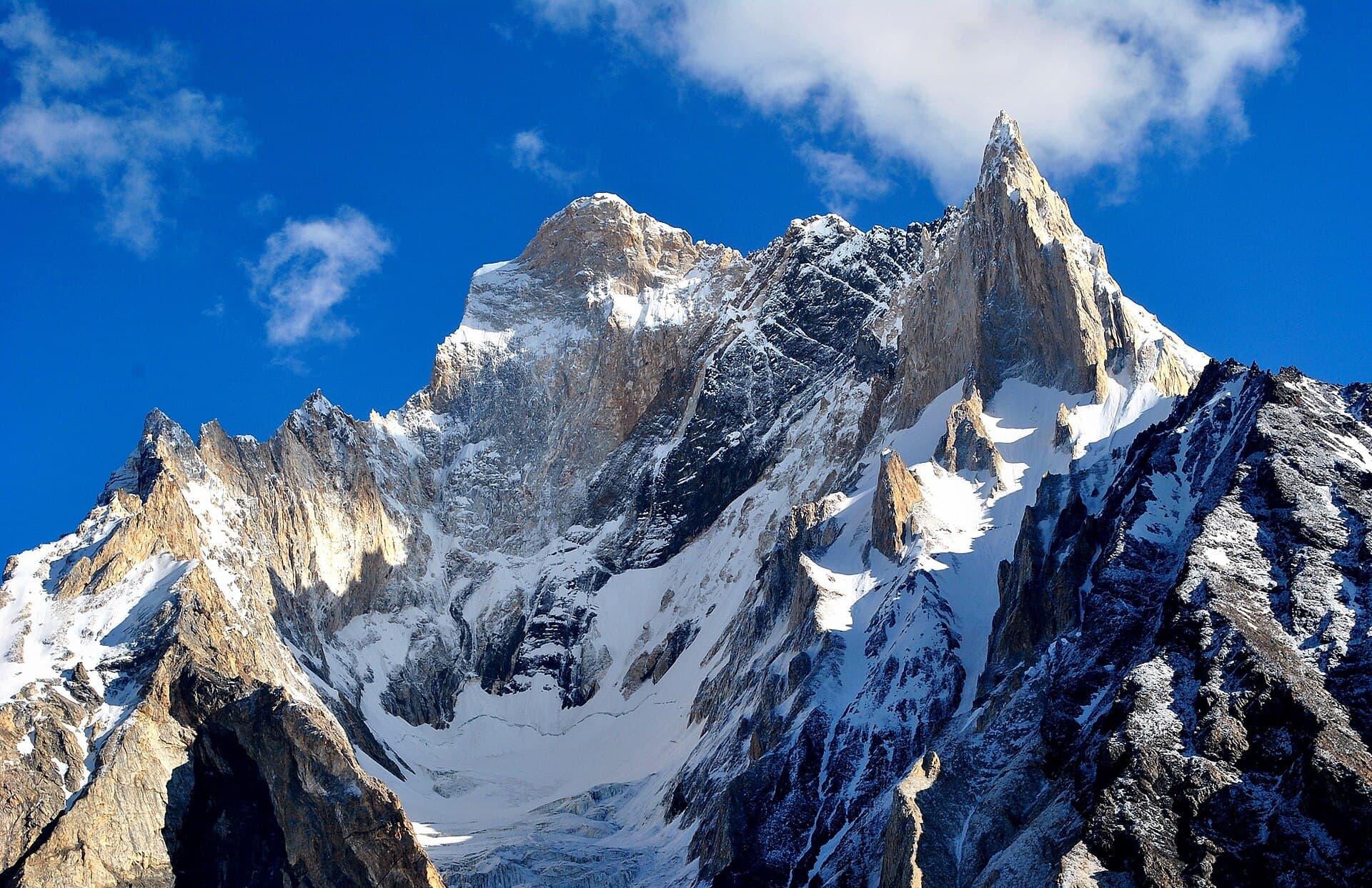
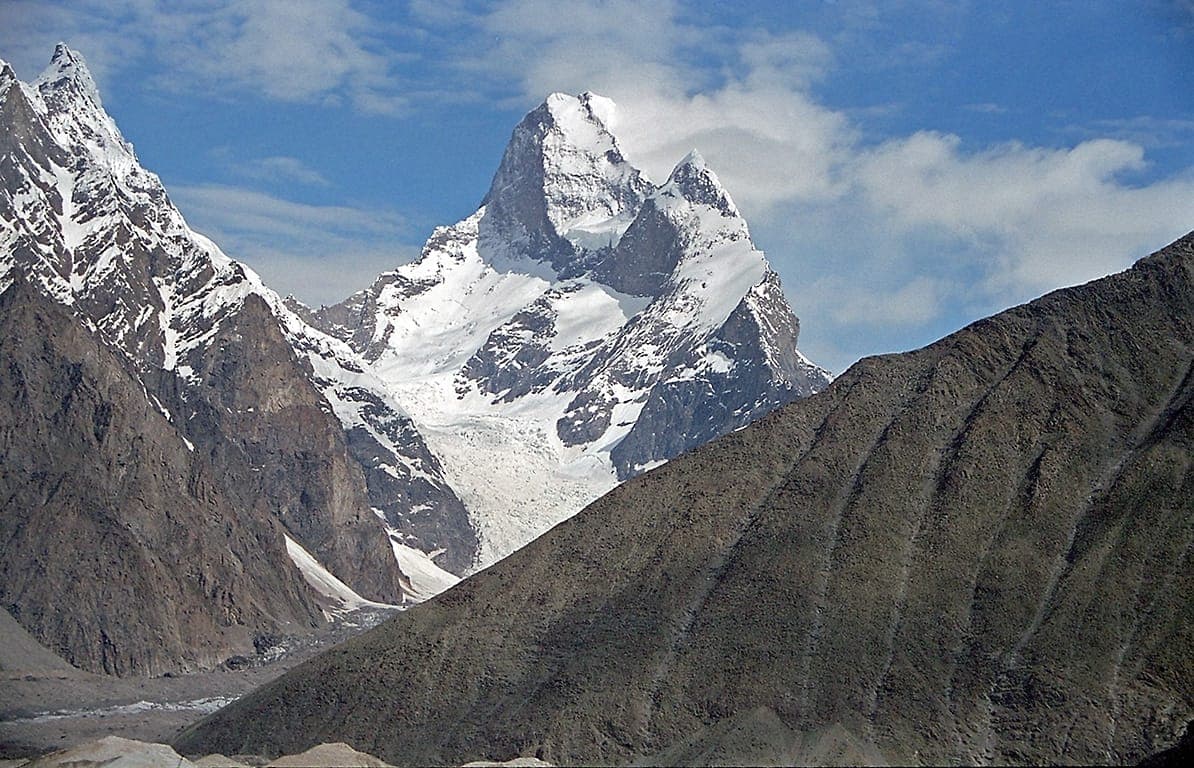
Rock towers above the Baltoro Glacier, the Great Trango Tower's 1,340 m vertical face is the largest near-vertical cliff on Earth, a defining objective for big-wall climbers.
The Trango Towers are a group of granite monoliths rising from the Baltoro Glacier, the Great Trango Tower's east face, at 1,340 m of near-vertical granite, is the largest sheer cliff face on Earth. The formation is composed of four towers: Great Trango (6,286 m), Trango Tower (6,239 m, the Nameless Tower), Trango Monk, and Trango Pulpit. For big-wall climbers, this is the defining destination on the planet. For trekkers on the K2 base camp route, the Trangos dominate the skyline from Day 4 onward and are among the most arresting sights of the entire Baltoro approach.
Quick facts
- Where
- Above the Baltoro Glacier, Shigar District, Gilgit-Baltistan
- Great Trango
- About 6,286 m
- Trango (Nameless) Tower
- About 6,239 m; first climbed 1976
- East face
- About 1,340 m of near-vertical granite
- See them from
- Around Urdukas on the K2 Base Camp trek
- Season
- June to August
Why go
- ✦Great Trango Tower east face, 1,340 m vertical drop, world record
- ✦Nameless Tower (Trango Tower), classic big-wall route
- ✦Views from the Baltoro moraine from Day 4 of the K2 trek
- ✦Sunrise alpenglow on the granite faces
- ✦Dawn and dusk photography from Urdukas camp
About
The Trango Towers are a group of granite towers above the north side of the Baltoro Glacier in Shigar District, Gilgit-Baltistan, northern Pakistan. Great Trango Tower, about 6,286 m, has an east face of some 1,340 m of near-vertical rock, among the tallest cliffs on Earth; Trango (Nameless) Tower, about 6,239 m, is a slender pillar beside it, with the Trango Monk and Trango Pulpit completing the group.
History
Trango (Nameless) Tower was first climbed in 1976 by a British team, and the towers have since become one of the most sought-after big-wall objectives in the world; Great Trango's east face remains among the hardest.
Geography and Surroundings
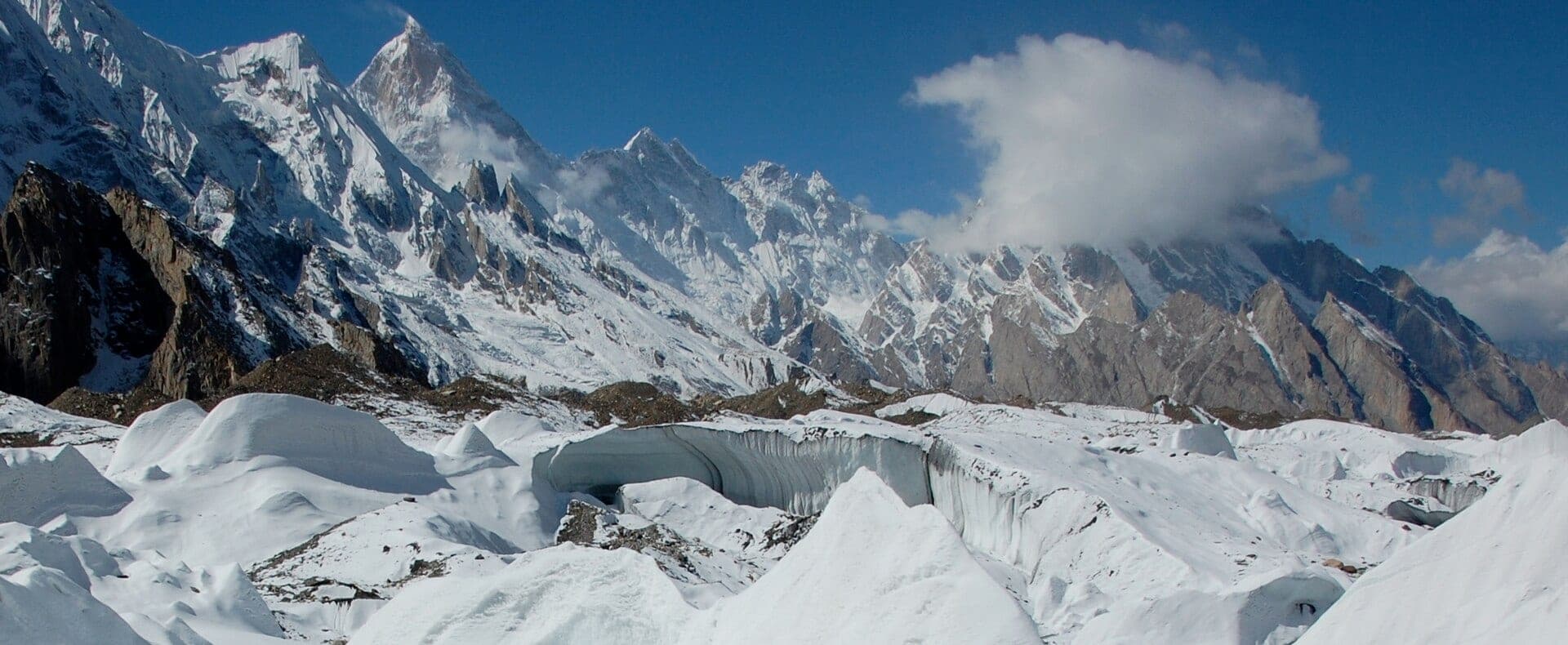
The towers rise on the north bank of the Baltoro Glacier on the approach to Concordia and K2. Trekkers see them from around Urdukas camp, four to five days' walk from Askole, and they stay in view on the way up the glacier.
What Visitors Will See
- Great Trango's huge east face
- The slender Trango (Nameless) Tower
- The whole group, with the Monk and the Pulpit, from the moraine above Urdukas
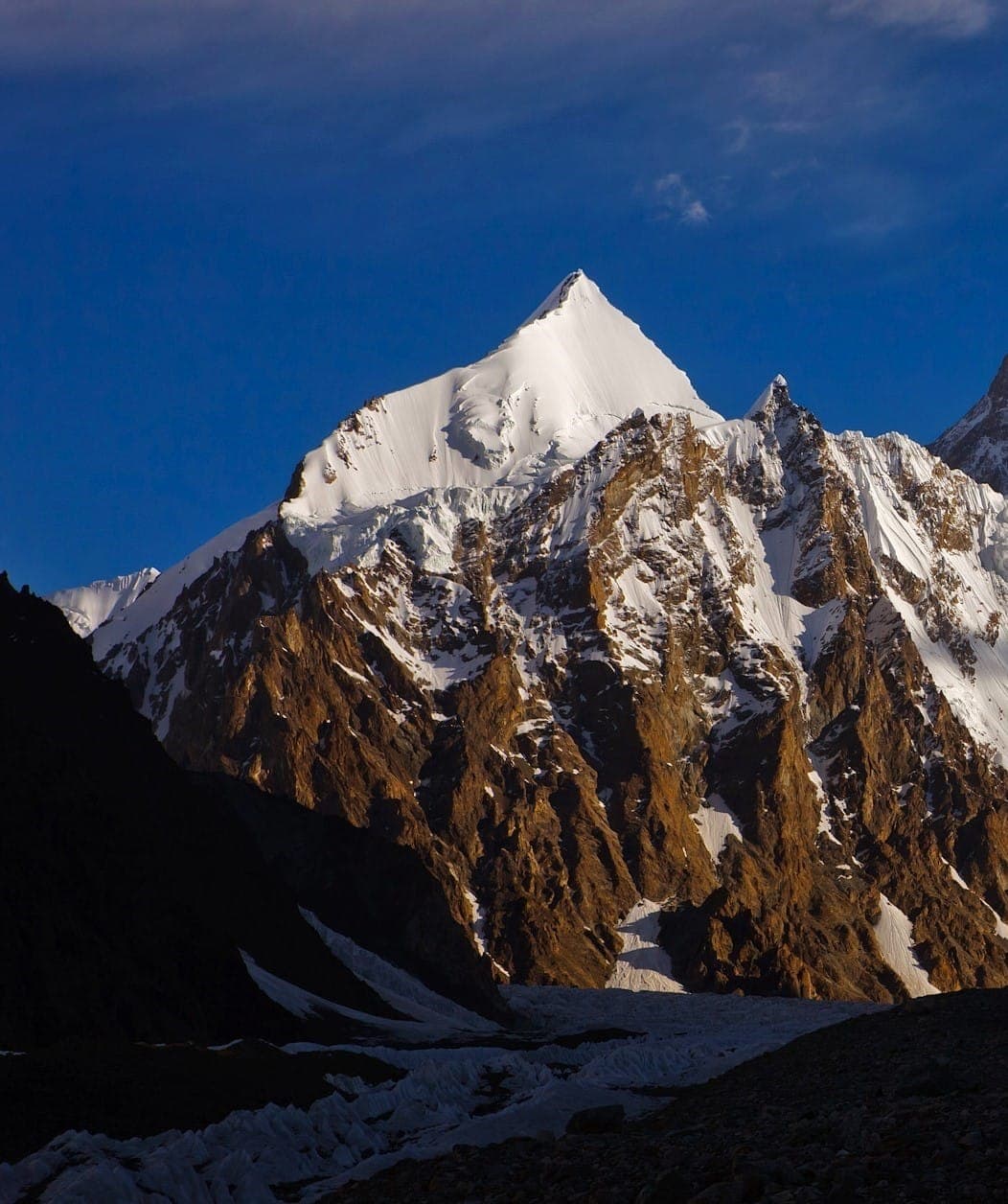
- Alpenglow on the granite at dawn and dusk
Why Visit
For many trekkers the Trangos are the most photographed sight of the whole Baltoro: sheer granite walls rising straight from the glacier.
Climate and Seasons
June to August for trekking and climbing; the towers are backlit in the afternoon from the trekking route, so photograph them early in the morning.
How to Reach
Fly or drive to Skardu, take a jeep to Askole, then trek up the Baltoro with a licensed operator, who arranges permits, guides and porters. Urdukas is reached in four to five days.
Responsible Travel
The Baltoro lies in Central Karakoram National Park: trek with a licensed operator, carry out all waste and keep to established campsites.
Interesting Facts
- Great Trango's east face is about 1,340 m of near-vertical granite
- Trango (Nameless) Tower was first climbed in 1976
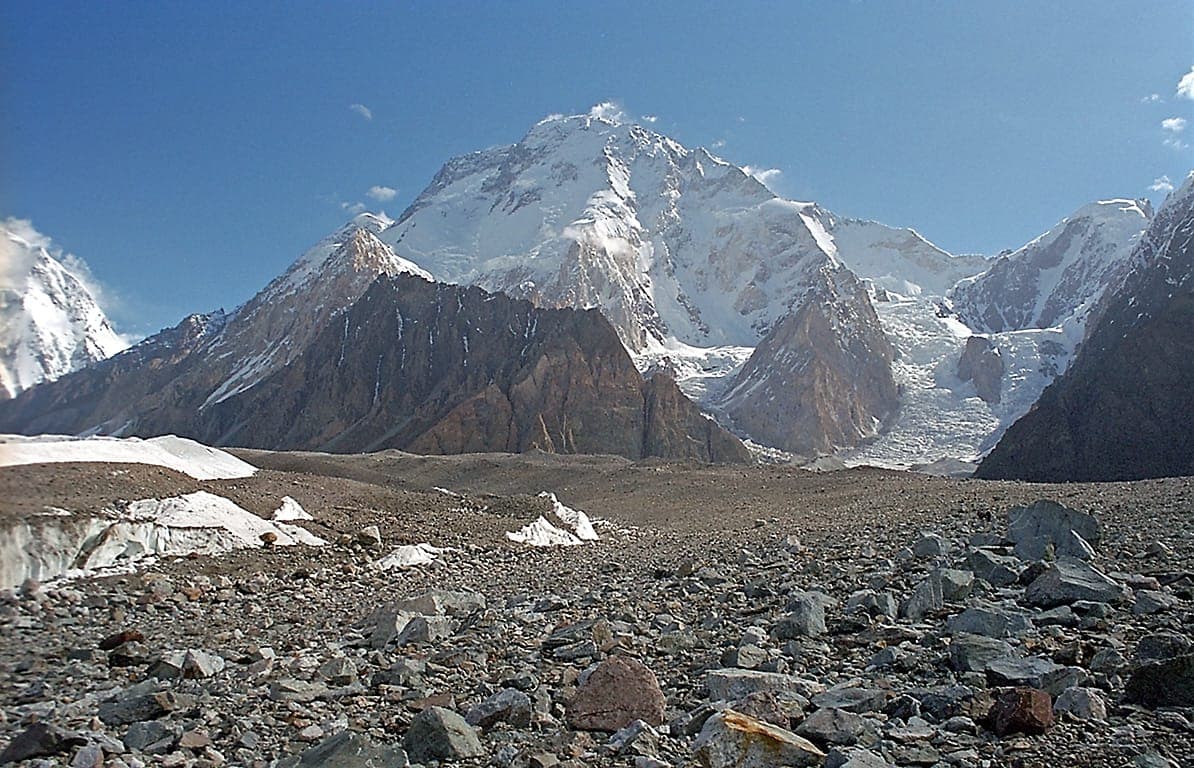
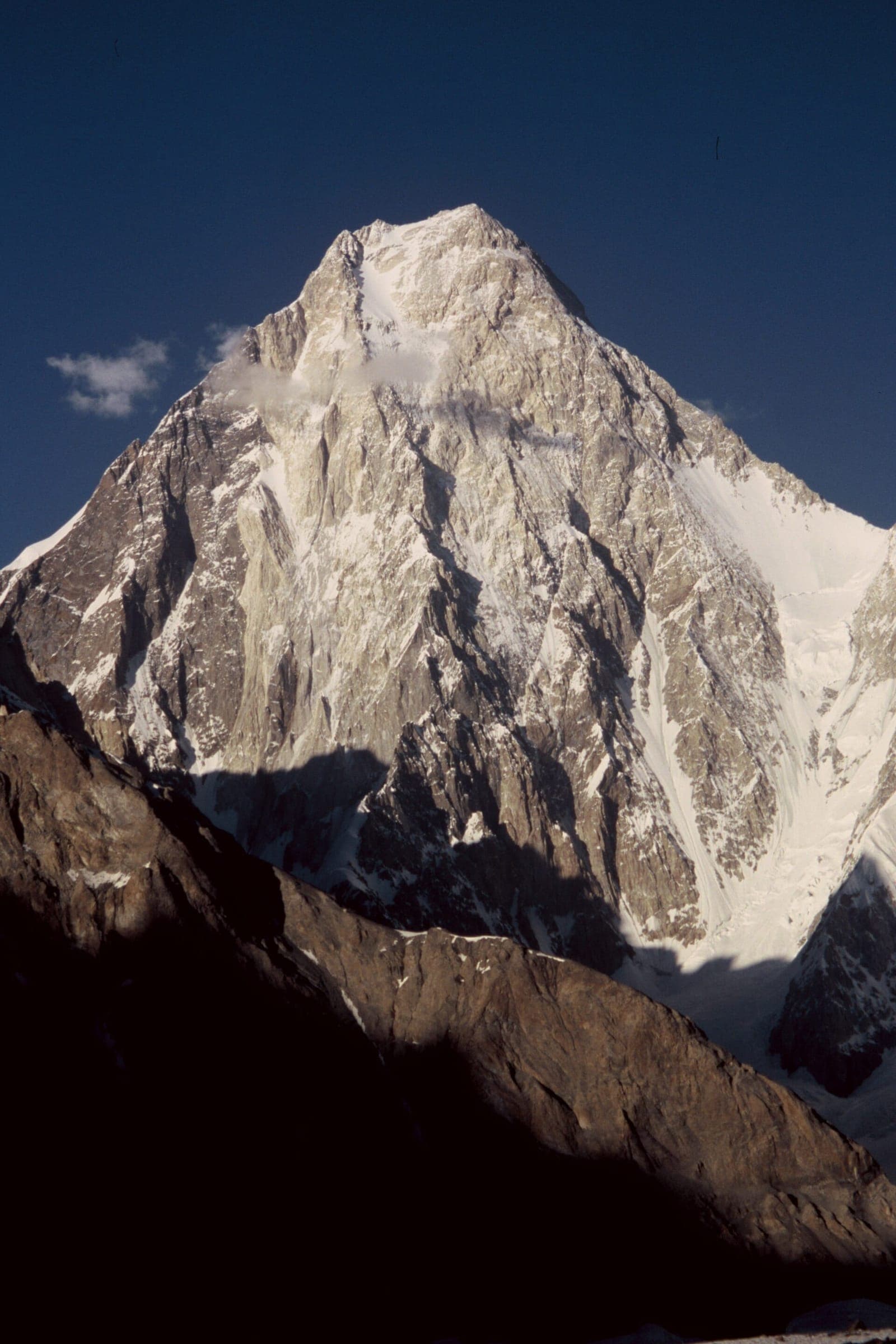
Trango Towers in pictures
Photos: Kogo · CC BY-SA 2.0 · Stefanos Nikologianis · CC BY 2.0 (2 photos) · Maqsood aktar · CC BY-SA 4.0 · Maria Ly · CC BY 2.0 (2 photos). Each photo's own credit and licence link is shown when you open it.
Planning tip
Best Time to Visit, June to August for climbing; the same window applies for trekkers who want to view the Trangos on the K2 base camp route.
Getting there, Viewed from the Baltoro Glacier during the K2 base camp trek, the Trangos rise above the right bank of the glacier from approximately Day 4 (Urdukas) onward. Close approach to the base requires a separate side glacier.
Allow, The Trangos are passed en route to Concordia during the K2 trek (16-20 days total from Skardu). A dedicated Trango Tower climbing expedition is 4-6 weeks with acclimatisation.
What to Do
Questions travellers ask
+Where can you see the Trango Towers?
From the Baltoro Glacier on the K2 Base Camp trek; they come into full view around Urdukas camp, four to five days from Askole.
+How high are the Trango Towers?
Great Trango Tower is about 6,286 m and Trango (Nameless) Tower about 6,239 m. Great Trango's east face is around 1,340 m of near-vertical rock.
+Do you need a permit to see them?
The Baltoro is a restricted trekking zone: trek with a licensed operator, who arranges the permit, guide and porters.
+Can anyone go to the Trango Towers?
Trekkers can see them from the Baltoro Glacier on the K2 Base Camp trek, with a licensed operator and permit; climbing them is for expert big-wall teams only.
Nearby
Straight-line distance from Trango Towers, within 5 km.
Nothing else genuinely close by (within 5 km of Trango Towers) is published yet.