
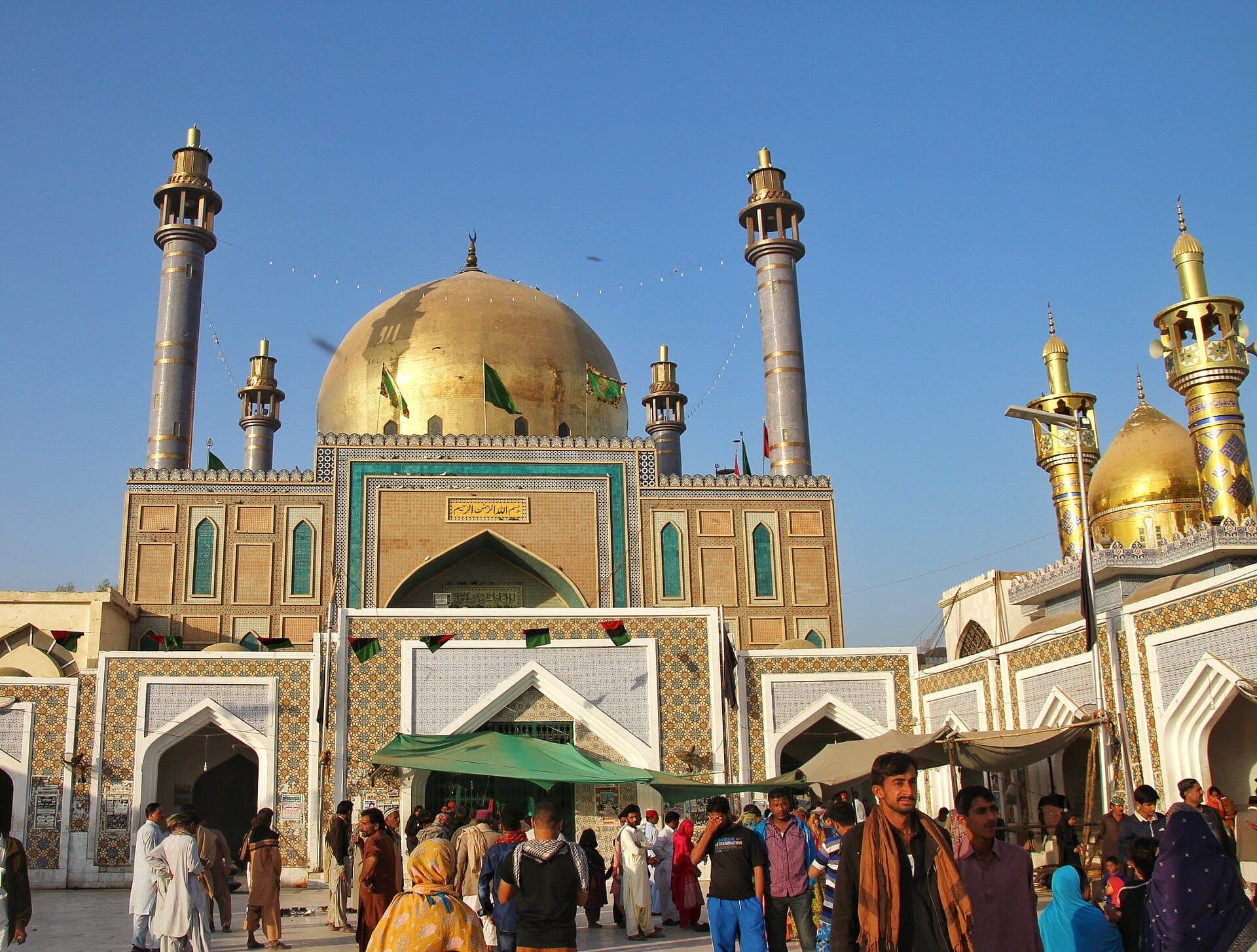
 Photo: Fassifarooq · CC BY-SA 4.0
Events / 18 Sha'ban (Islamic calendar)
Sindh
Urs of Lal Shahbaz Qalandar
Sehwan's great urs for the 13th-century saint Lal Shahbaz Qalandar: more than two million pilgrims, dhamaal drums at dusk, and the red-and-gold shrine lit all night.
The urs of Lal Shahbaz Qalandar is held each year at his shrine in Sehwan Sharif, on the Indus in Jamshoro district, around 18 Sha'ban, the eighth month of the Islamic calendar. It draws more than two million pilgrims from across Pakistan and beyond, for days of dhamaal, the drum-driven devotional dance the shrine is famous for, qawwali and night-long devotion.
- Shrine of Lal Shahbaz Qalandar
- Dhamaal at dusk
- Dama Dam Mast Qalandar
- More than two million pilgrims
- When to plan
- The urs follows the lunar calendar, so its date moves about eleven days earlier each year; it centres on 18 Sha'ban. Sehwan's few rooms are taken long before; most visitors come from Hyderabad or Karachi for the day, or stay with an operator's camp.
- Getting there
- Sehwan is on the Indus Highway, about 135 km north of Hyderabad and roughly 280 km from Karachi by road. Expect road closures and long walks from the parking areas during the urs.
- Region
- Sindh guide →
The saint
Sayyid Uthman Marwandi, remembered as Lal Shahbaz Qalandar, was born in Marwand near Tabriz around 1177 and died in Sehwan in 1274. Lal, ruby-red, after the red he always wore; Shahbaz, a noble falcon; Qalandar, a wandering dervish. He settled in Sehwan, then called Siwistan, taught at its madrasa and wrote treatises there, and with Bahauddin Zakariya of Multan, Baba Farid of Pakpattan and Jalaluddin Bukhari he was one of the 'four friends', the Chahar Yar, of Sindh and Punjab's Sufi tradition. Many devotees also call him Jhulelal, a name shared with the Sindhi river deity, and believe he governs the Indus.
The shrine
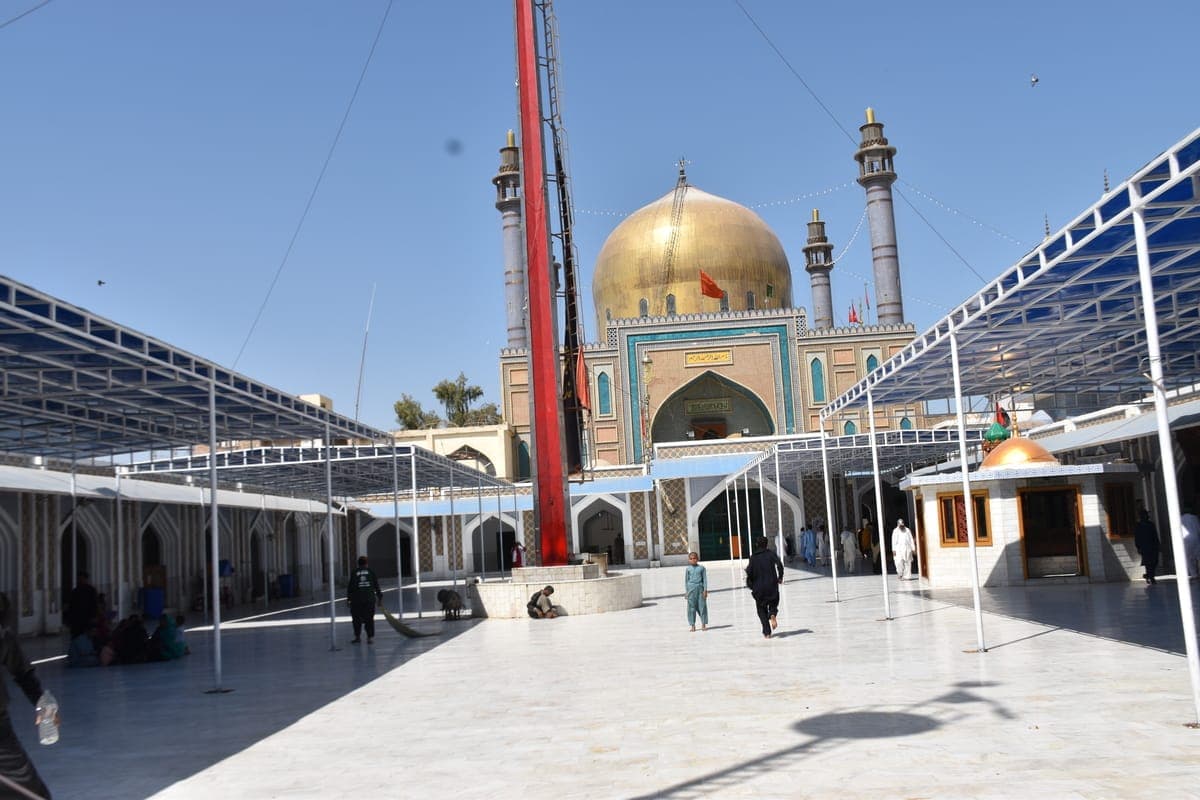
Firuz Shah Tughlaq built the first tomb in 1356; the Tarkhan rulers enlarged it and the courtyard was finished with glazed tiles in 1639. The Talpur Mirs gave the silver gate and balustrade, and the gold-plated door was installed in the 20th century. Sindhi kashi tiles and mirror work cover the walls.
Dhamaal
Every evening at the shrine, and above all during the urs, the great naqqara drums start at sunset and the courtyard fills with dhamaal, a dance of whirling and stamping that carries dancers into trance. The qawwali Dama Dam Mast Qalandar, sung across South Asia, is addressed to him.
If you go
The crowds are immense: carry identification, leave bags behind, and keep to the routes the police mark. Women usually watch dhamaal from the women's enclosure. Dress modestly and remove shoes at the shrine.
Where it is held
Sources
More in Sindh
Region guide →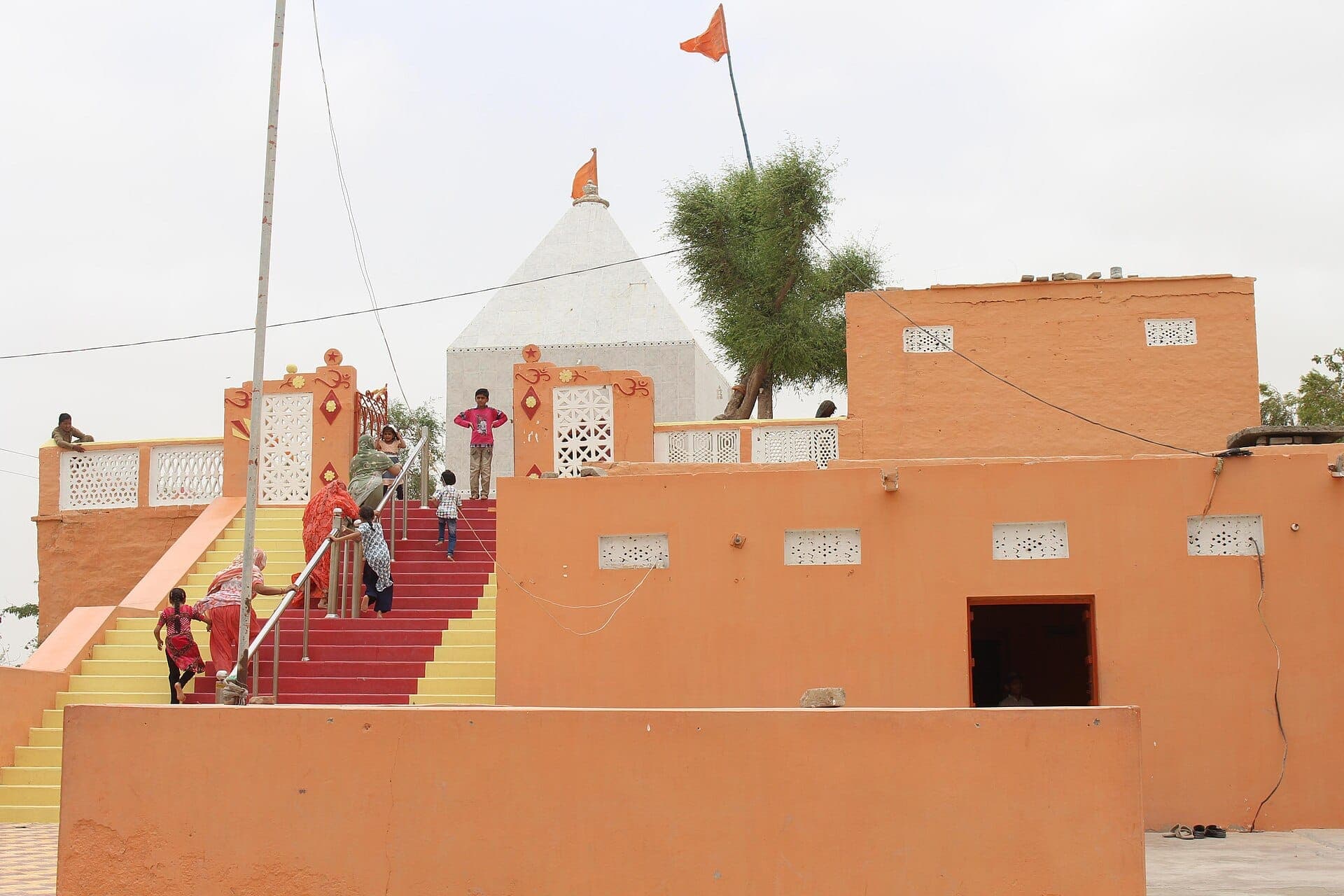
February or March (Hindu calendar)
Maha Shivaratri at Umarkot
One of Pakistan's largest religious festivals: three days at the ancient Shiv Mandir of Umarkot, with around 250,000 Hindu pilgrims from across Sindh.
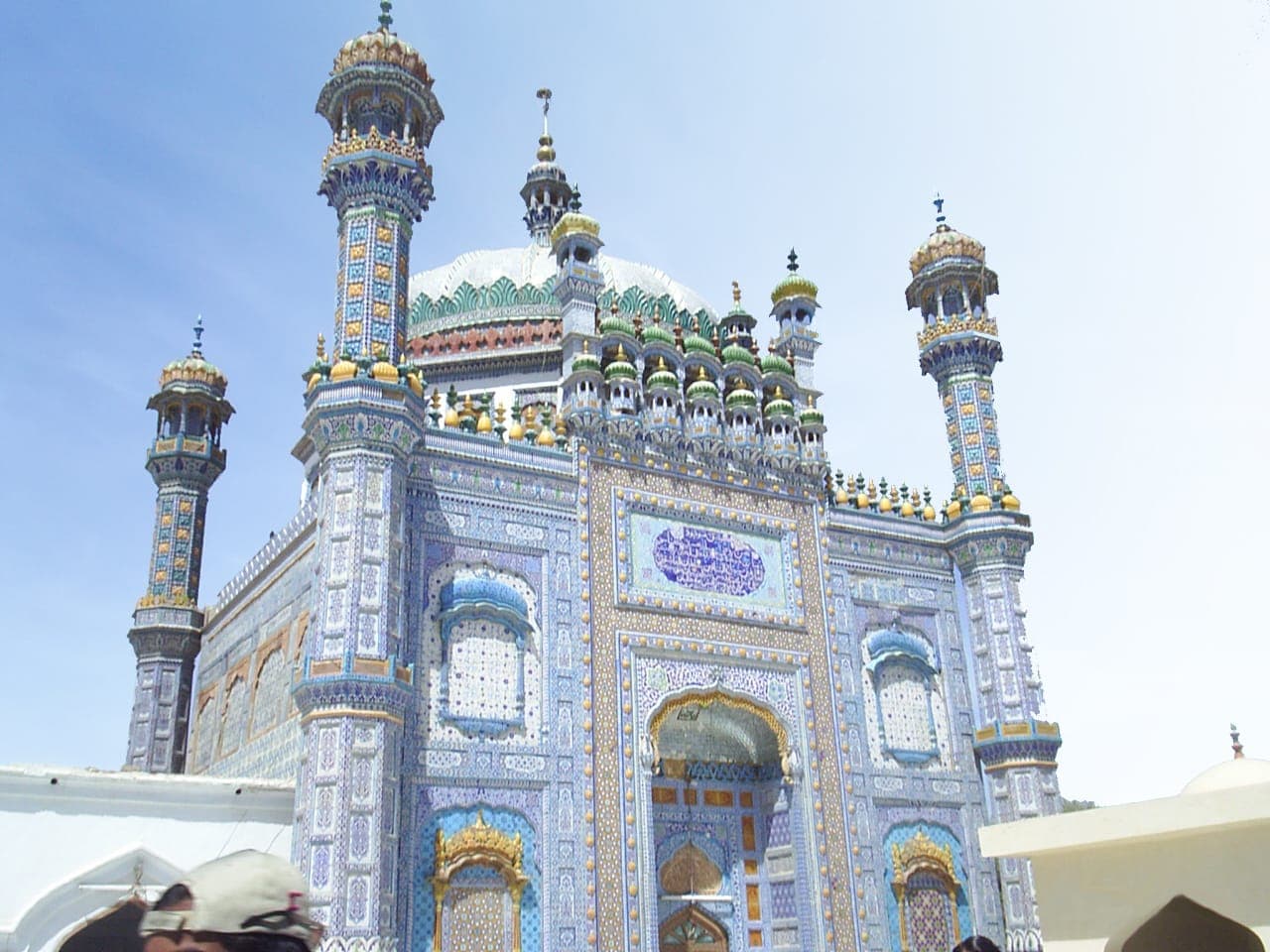
Islamic calendar (announced)
Urs of Sachal Sarmast
Sindh's mystic-poetry festival at Daraza Sharif, raag, devotional music, and literary gatherings for Sachal Sarmast.
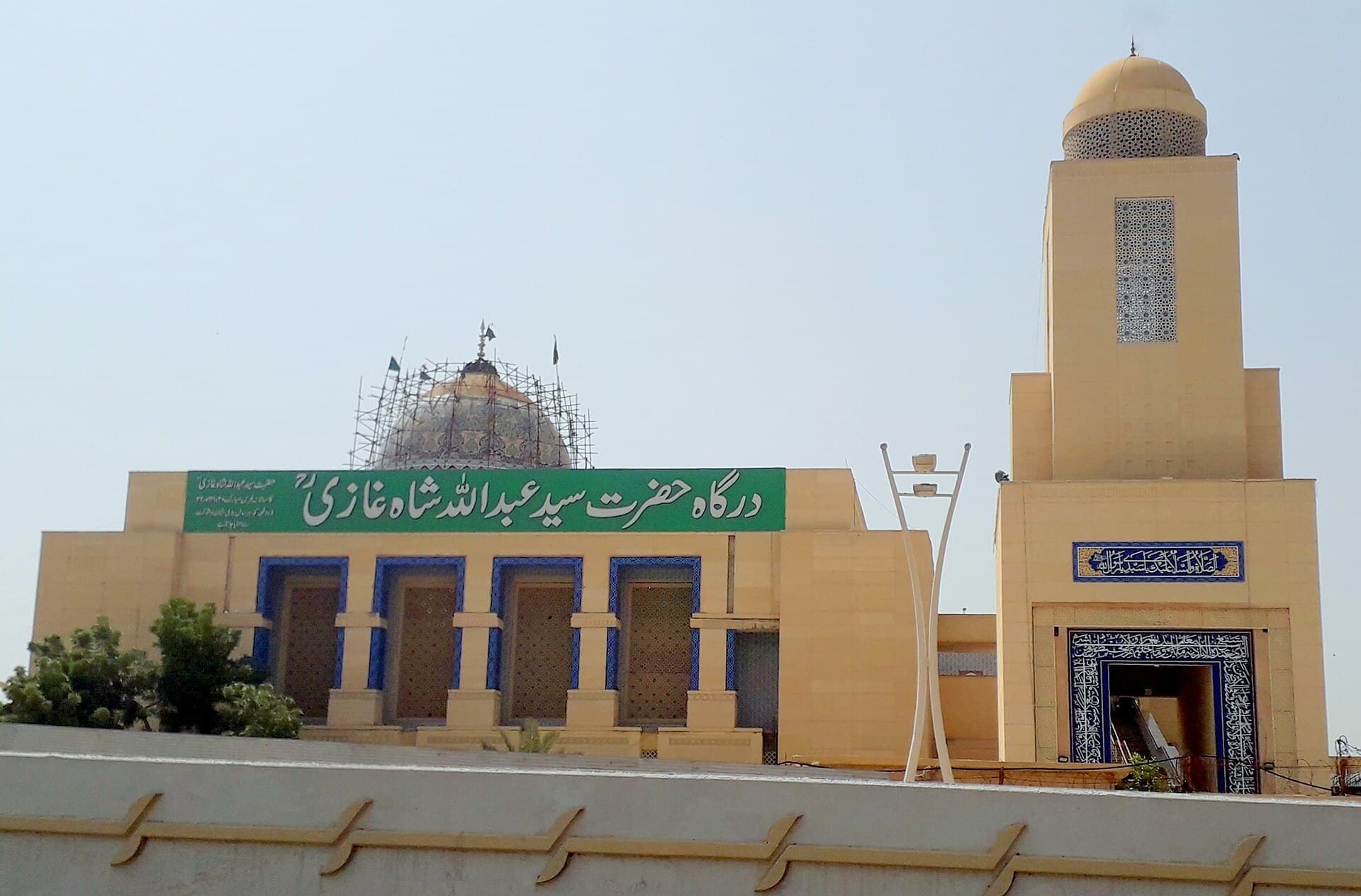
20 to 22 Dhul Hijjah (Islamic calendar)
Urs of Abdullah Shah Ghazi
Karachi's own urs, on the hill above Clifton beach, for the 8th-century saint many Karachiites believe protects the city from the sea.