
Field guides / Khyber Pakhtunkhwa / Sethi House
Field guide · Heritage
Sethi House
A 19th-century Sethi merchant mansion in Peshawar's walled city, known for its carved wood, coloured glass and mirror-inlaid alcoves.
Sethi House is the mansion of the merchant Seth Karim Bakhsh Sethi in Mohallah Sethian, the old Sethi quarter of Peshawar's walled city, close to Bazaar-e-Kalan. Built between 1835 and 1884, it was both the family's home and a centre of their long-distance trade, and in 2026 Pakistan placed it on its UNESCO World Heritage Tentative List.
Why go
- ✦The carved entrance and the brick-paved courtyard
- ✦Red and green cut-glass windows and coloured-glass doors
- ✦Painted ceilings inlaid with glass in geometric and Islamic designs
- ✦Mirror-inlaid alcoves (cheenidaan) and wooden fretwork (tarseem bandi)
About
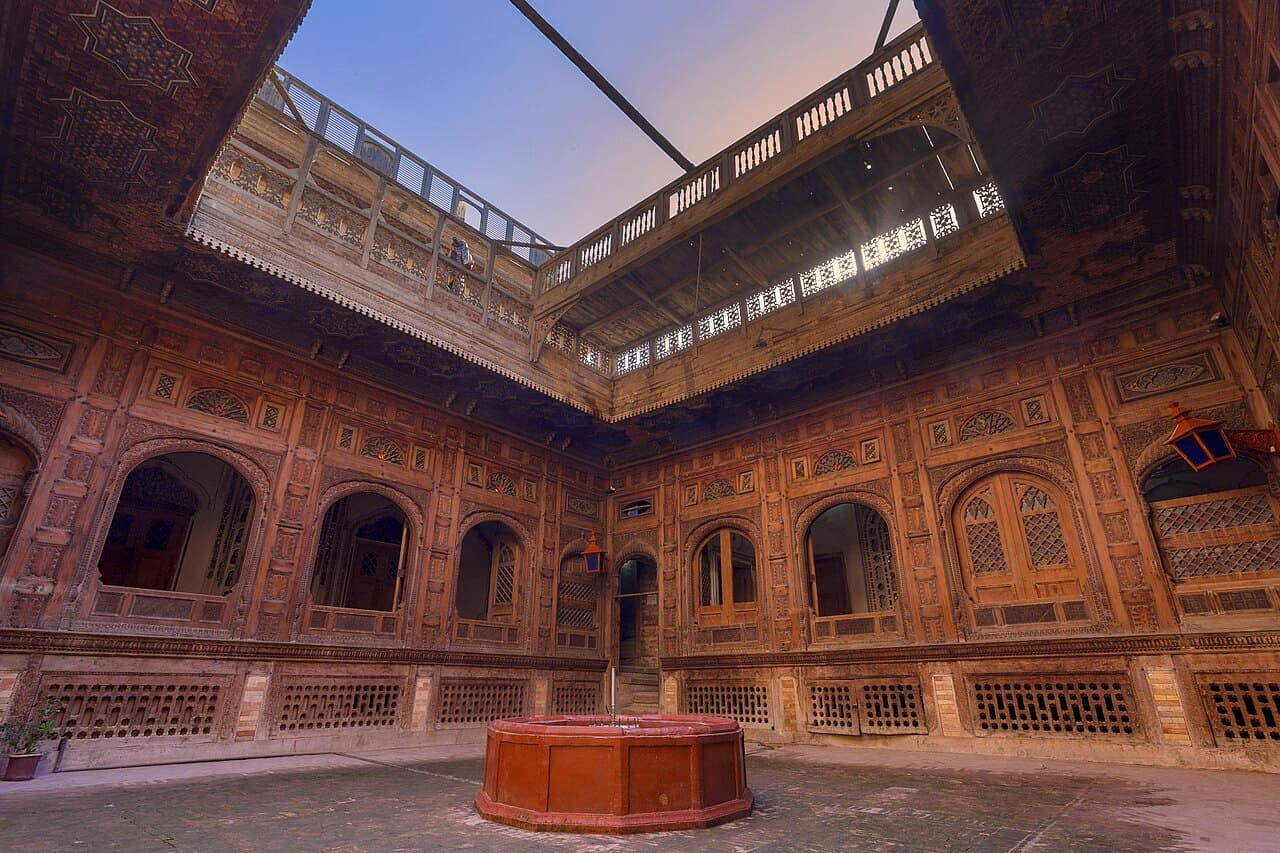
The house is built around a brick-paved courtyard, reached through a carved entrance, where guests were received and business was done. Its rooms are known for coloured cut glass in the windows and doors, carved wooden ceilings, painted panels, mirror-inlaid alcoves (cheenidaan) and delicate wooden fretwork (tarseem bandi), a mix of local, Central Asian and Persian craft.
History
Seth Karim Bakhsh began the house in 1835 and it was completed in 1884, while the Sethis were becoming one of the region's leading merchant families, trading along the routes that linked South Asia with Central Asia. The house was extended through the city's Durrani, Sikh and British periods, and its fabric records those phases. Mohallah Sethian still holds seven Sethi havelis, built over roughly a century from about 1800 to 1910.
Architecture
Limestone and small Waziri and Kashmiri bricks were used in the building. The courtyard is surrounded by twelve rooms; the windows of four of them face the courtyard and are set with red and green cut glass, and coloured glass also adorns the doors. The ceilings are painted in many colour combinations and engraved with glass in geometric and Islamic designs. The house rises over several floors, with ventilated basements and terraces for the heat, and screened corridors and separate stairs that kept business rooms apart from the family's private quarters.
Why Visit
Few places show so clearly how a wealthy trading family lived and worked under one roof in a busy market city: the scale of a merchant compound, with interior craftsmanship of the highest order and traces of its commercial life, such as old ledger marks and script, still in the fabric.
How to Reach
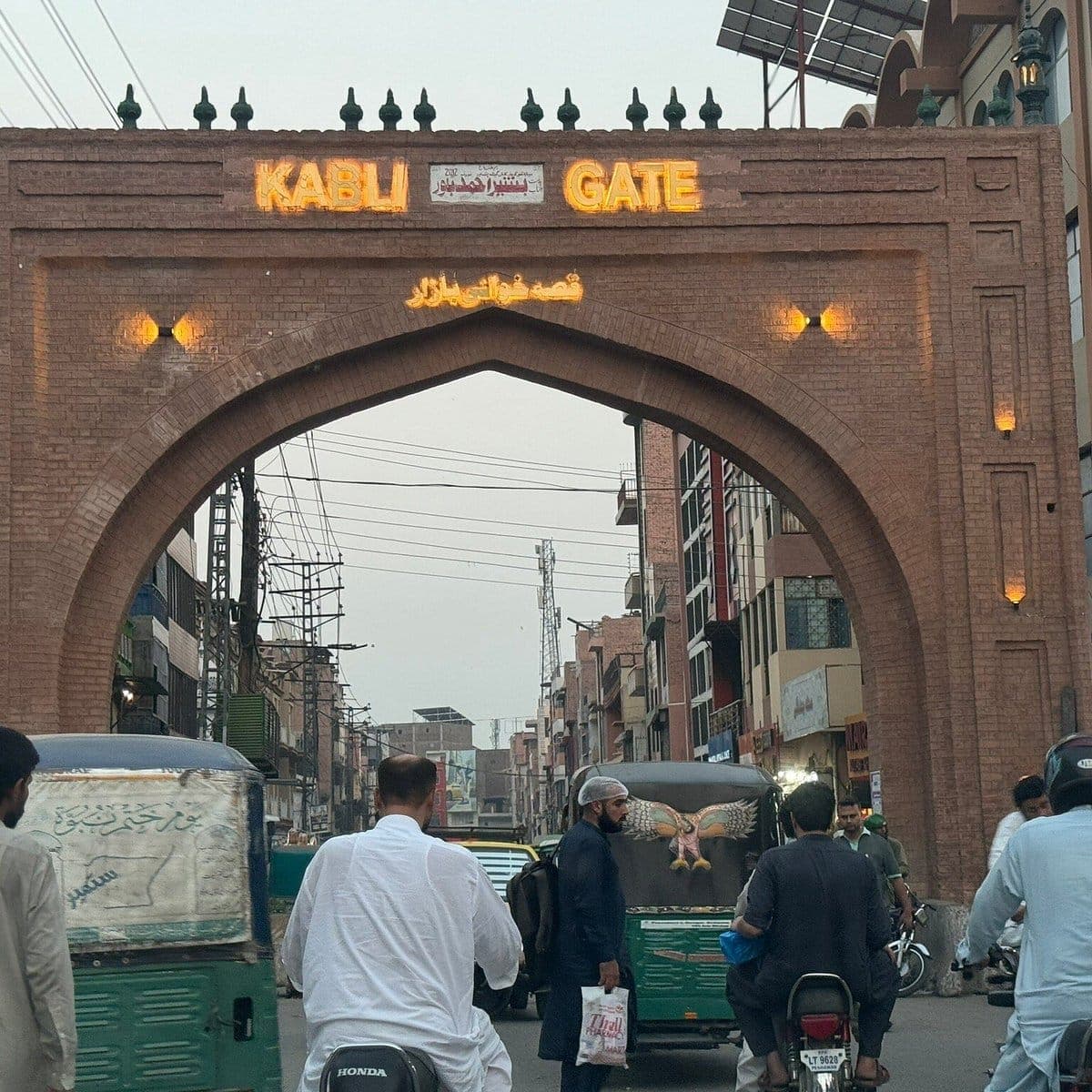
Reach Mohallah Sethian in Peshawar's walled city from the Chowk Yadgar/Gor Khatri side; the lanes are best explored on foot after parking outside the tightest streets.
Responsible Travel
Treat the site as protected heritage: do not scratch, climb or remove material, and follow caretaker instructions.
Interesting Facts
- The house took 49 years to finish, from 1835 to 1884.
- It joined Pakistan's UNESCO World Heritage Tentative List in 2026, under criteria (ii) and (iv).
- It is protected under the Khyber Pakhtunkhwa Antiquities Act, 2016.
Planning tip
Best Time to Visit, October to April for comfortable sightseeing; the site can be visited year-round subject to opening hours.
Getting there, Reach Mohallah Sethian in Peshawar's walled city from the Chowk Yadgar/Gor Khatri side; the lanes are best explored on foot after parking outside the tightest streets.
Allow, 1–2 hours; allow half a day when combining nearby heritage sites.
What to Do
Make Sethi House Part of a Trip
GreenPak resorts within reach, and the journeys that travel this region.
Nearby
Straight-line distance from Sethi House, within 30 km.