
Field guides / Punjab / Tomb of Abu Hanifa
Field guide · Heritage
Tomb of Abu Hanifa
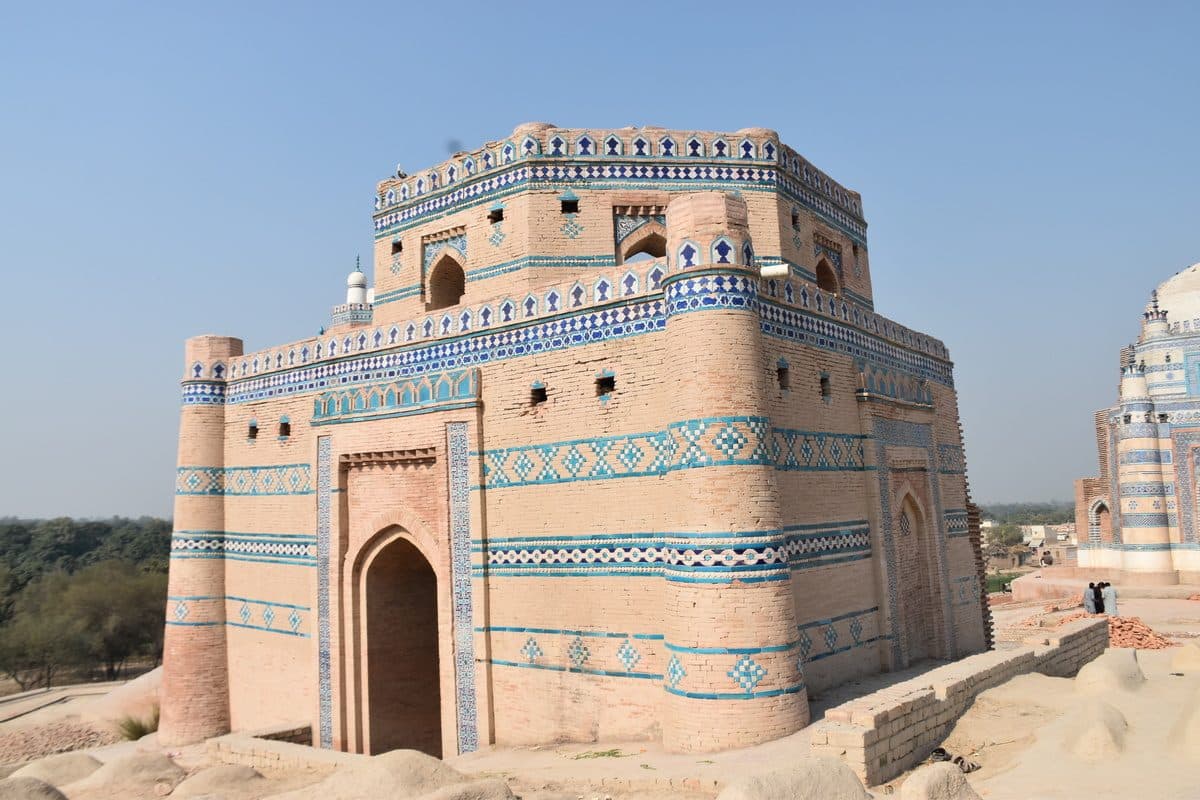
A tomb, built on a raised mound, square in plan with slightly battered wall, the dilapidated structure has lost its flat roof leaving only traces of wood brackets imbedded in the side walls.
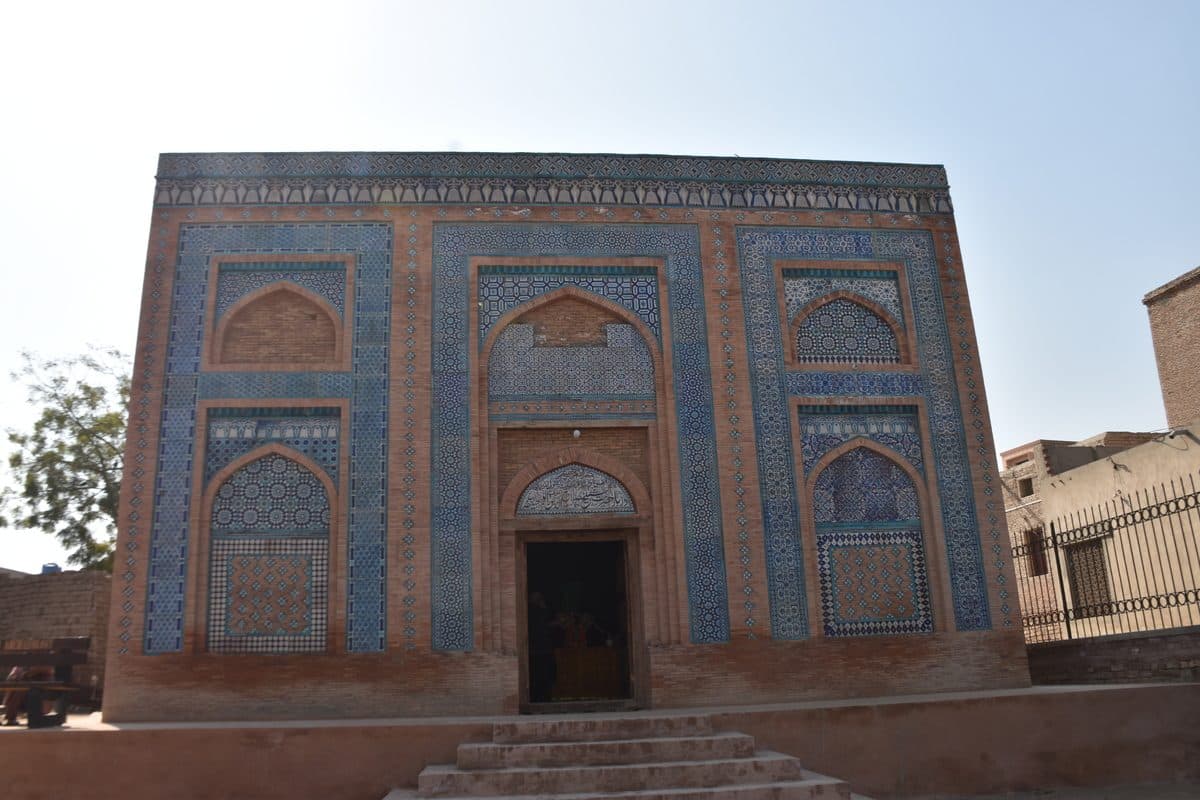
The brick masonry up to plinth level is much damaged. Each side has recessed arched panel while on the south is the main entrance. The entrance is marked with arched panels built in cut-bricks 18cm x 10cm x 28cm and glazed tiles. There are also series of diapers fabricated with glazed border. The other three sides have decorative bands in glazed tiles. Internally, the western side has a slightly recessed arched Mehrab again decorated with glazed tiles and tile-mosaics. The center of the interior has a square platform in brick roughly plastered with mud and straw on which is placed the cenotaph, also constructed with bricks. No inscription is available on the tomb to indicate the date and the personage lying buried there.
Why go
- ✦Square tomb on a raised mound, walls slightly battered
- ✦Entrance framed in cut-brick panels and glazed tile
- ✦Glazed-tile mihrab recessed into the western wall inside
- ✦Cenotaph on a brick platform plastered in mud and straw
History
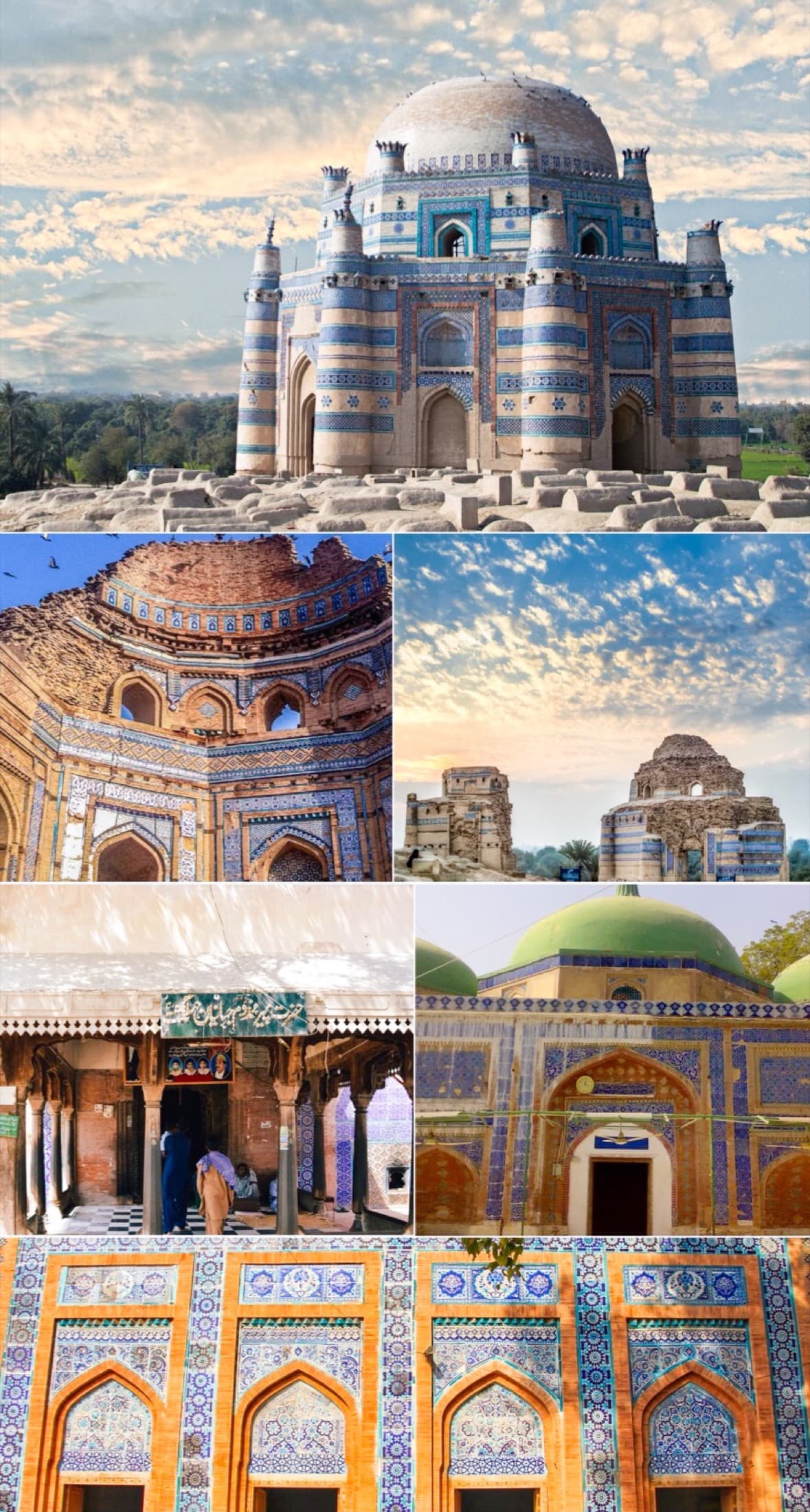
Uch's importance came from its saints. Jalaluddin Surkh-Posh Bukhari arrived from Bukhara in 1244 and his lineage — including Jahaniyan Jahangasht — made the town a centre of pilgrimage and scholarship. The tombs on the mound belong to that community.
Historical Significance
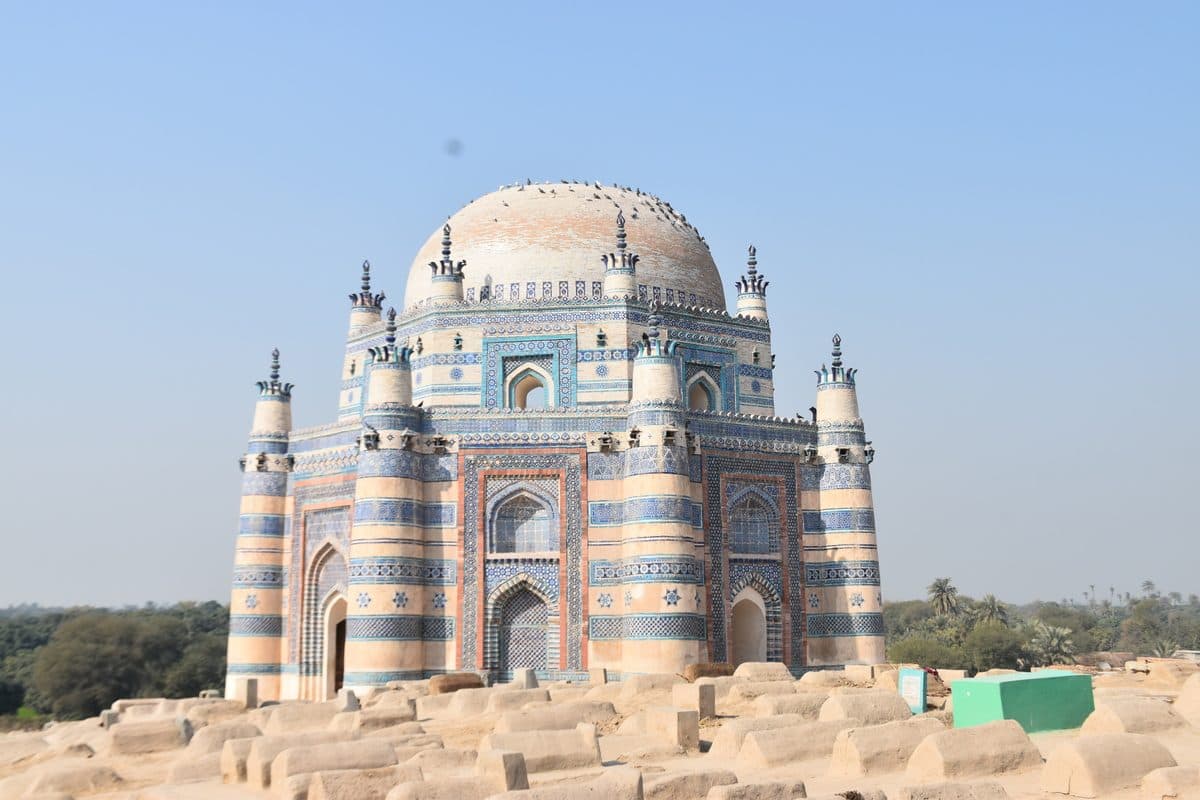
Part of the Uch Sharif funerary landscape, whose principal monuments have been on the UNESCO tentative list since 2004.
Architecture
A square tomb on a raised mound, its walls battered slightly inward, each side carrying a recessed arched panel with the main entrance on the south. That entrance is marked with arched panels of cut brick and glazed tile, with bands of diaper work behind glazed borders; the other three sides carry decorative bands of glazed tile.
Why Visit
The glazed-tile mihrab inside the west wall is the best thing here, and it is not visible from outside.
Interesting Facts
- Uch was a centre of Sufi learning from the twelfth to the seventeenth century
- The cenotaph sits on a brick platform plastered in mud and straw, beneath glazed tilework
Planning tip
Best Time to Visit, November to February. Summer on the Cholistan margin is extreme.
Getting there, Uch Sharif lies about 70 km south-west of Bahawalpur. The tomb group stands together on its mound and is seen as one visit.
Allow, Two to three hours for the Uch Sharif group; a full day from Bahawalpur with travel.
What to Do
Make Tomb of Abu Hanifa Part of a Trip
GreenPak resorts within reach, and the journeys that travel this region.
Nearby
Straight-line distance from Tomb of Abu Hanifa, within 30 km.