

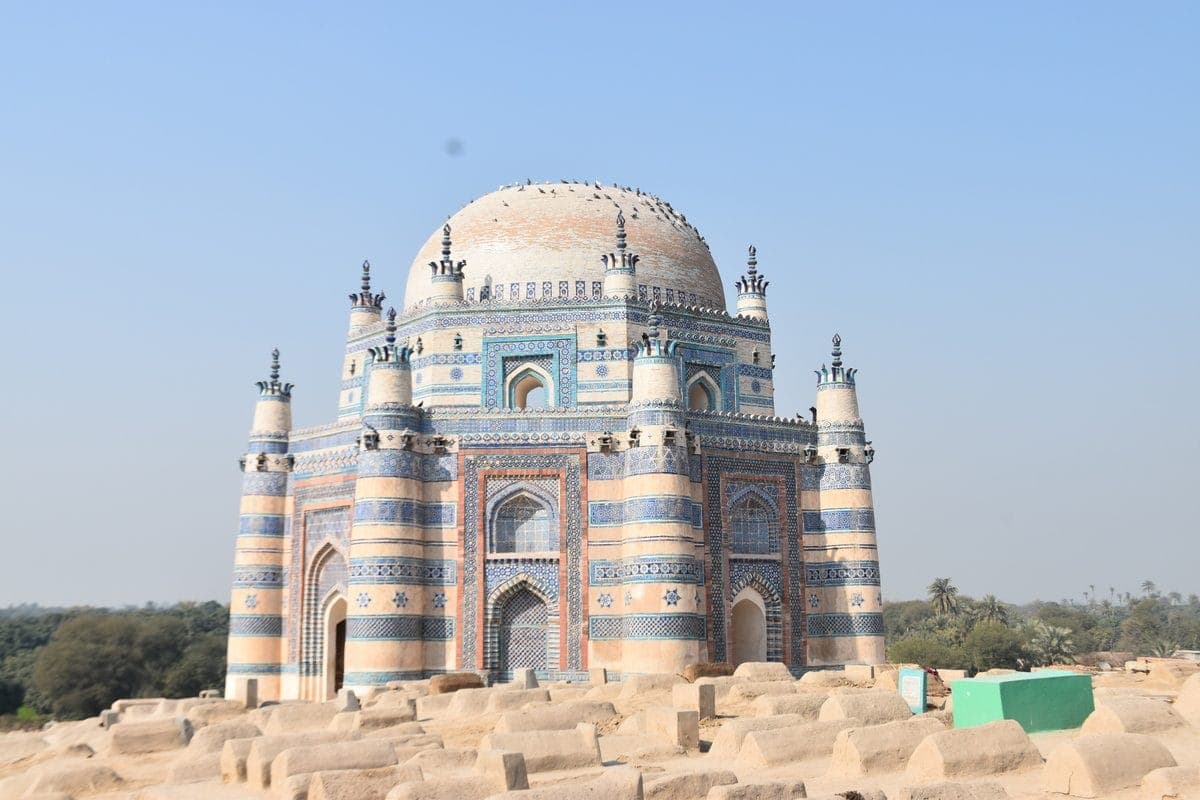
 Photo: Department of Archaeology & Museums, Government of Pakistan
Field guides / Punjab / Bahawalpur & Cholistan / Tomb of Bibi Jawindi
Field guide · Heritage
Bahawalpur
Bahawalpur District · Punjab, Pakistan
Tomb of Bibi Jawindi
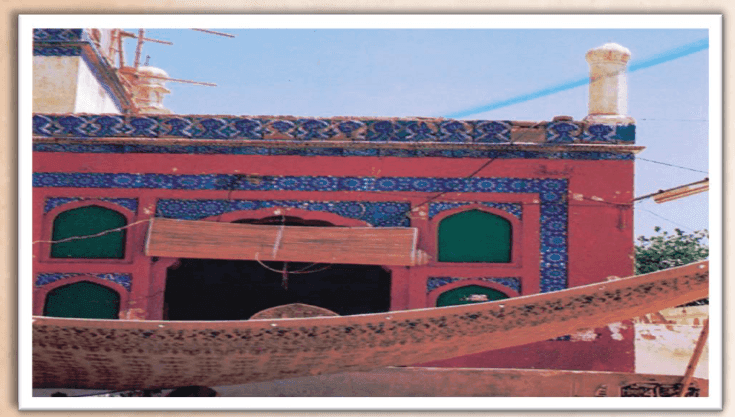
The glazed-tile tomb of Bibi Jawindi at Uch Sharif, one of five Uch monuments on Pakistan's UNESCO tentative list.
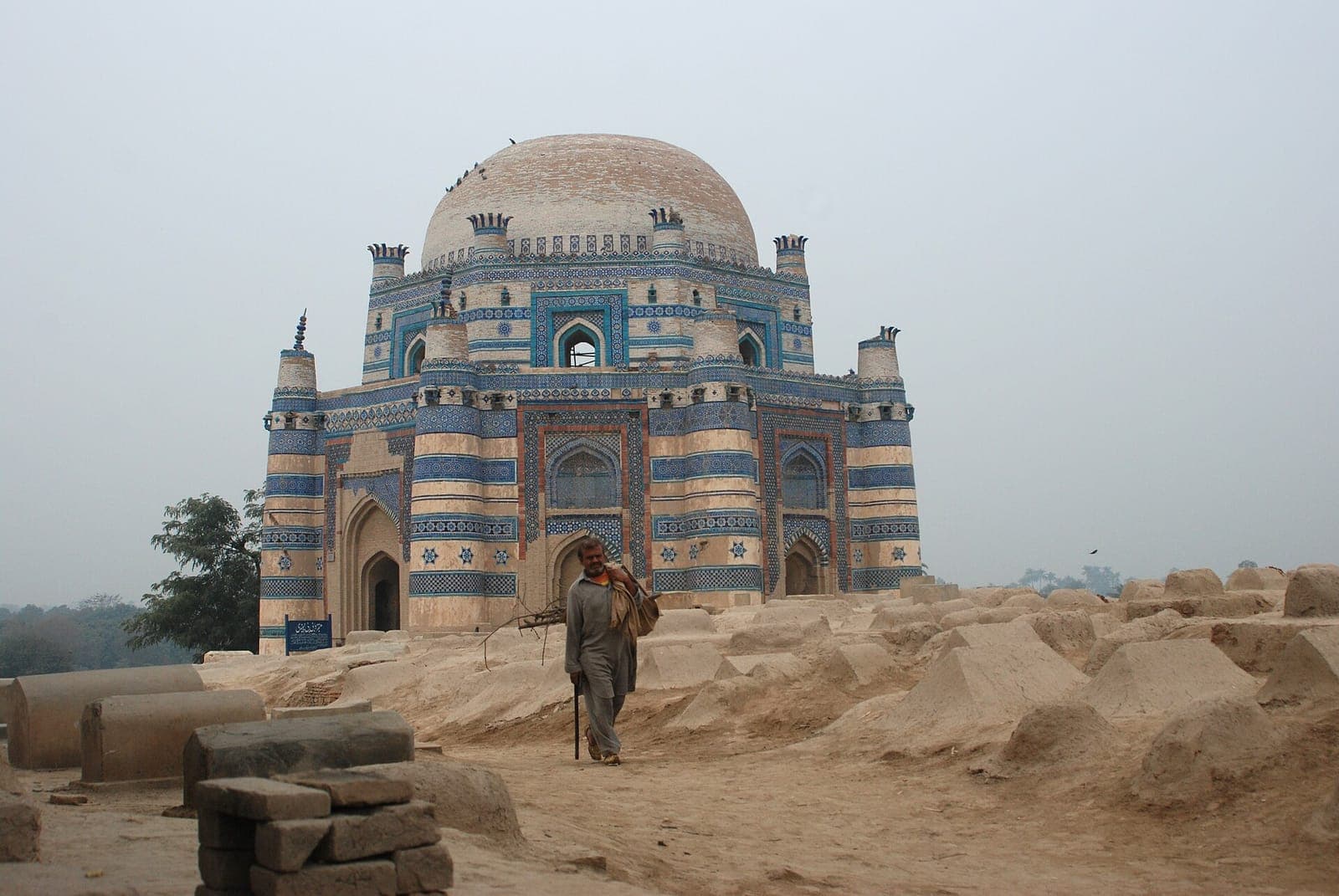
The sides have round tapered turrets surmounted with round pillars of the same style. Each octagon has an oblong framing with a border of glazed tiles and within this frame is an arched opening, recessed in three stages and faced with glazed brick-tiles. The floral design is composed of brick tiles of triangular shape. The south-west octagon had a flight of steps leading to the second storey. Similarly, the interior of the tomb has arched recess in three stages the soffits of which are covered with glazed tiles.
Why go
- ✦The most celebrated of the Uch Sharif tombs
- ✦Octagonal, faced entirely in glazed brick-tile
- ✦Arched openings recessed in three stages behind glazed tile borders
- ✦Floral patterns built from triangular tiles
- ✦Half the structure is gone — and the surviving half is the reason to come
History
Uch is among the oldest continuously settled places in Pakistan; Alexander Cunningham identified it as Alexandria on the Indus, founded around 325 BCE. Nasiruddin Qabacha made it the principal city of Upper Sindh in 1204, and it fell to Sultan Iltutmish in 1228. Between the twelfth and seventeenth centuries Uch became one of South Asia's great centres of Sufi learning: Jalaluddin Surkh-Posh Bukhari arrived from Bukhara in 1244, and Muhammad Ghaus Gilani founded a Qadiriyya monastery here in the mid-1400s. Half of Bibi Jawindi's tomb was washed away by floods in 1817.
Historical Significance
One of five Uch Sharif monuments submitted together to UNESCO's World Heritage tentative list in January 2004, alongside the shrine of Baha'al-Halim, the tomb of the Ustad, and the shrine and mosque of Jalaluddin Bukhari. It is generally held to be the finest tile monument in Pakistan.
Architecture
Round tapered turrets stand at the angles, each carried up into a matching pillar. Every face is framed in an oblong border of glazed tile, and inside that frame sits an arched opening recessed in three stages, faced with glazed brick-tiles; From the south-west octagon a flight of steps once climbed to a second storey.
Why Visit
Because half of it is missing. The 1817 flood took one side away and left the building open like a cross-section, so the tilework can be read in depth rather than only in elevation.
Interesting Facts
- Floods carried away half the tomb in 1817 — what stands is effectively a section through it
- It was built by a foreign ruler from Khurasan for the descendant of a local saint
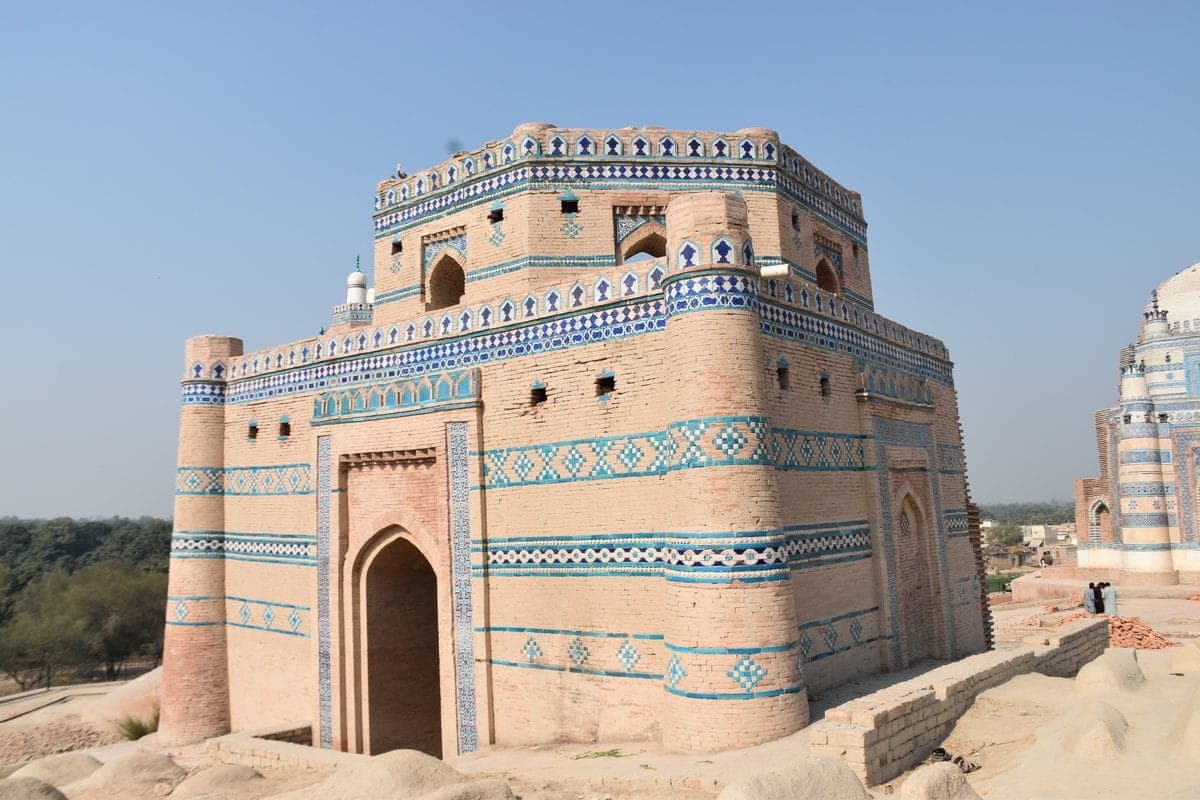
- The tomb next to it belongs to the Ustad — the master builder himself
- Cunningham identified Uch as Alexander's 'Alexandria on the Indus'
Planning tip
Best Time to Visit, November to February. Summer on the Cholistan margin is extreme.
Getting there, Uch Sharif lies about 70 km south-west of Bahawalpur. The tomb group stands together on its mound and is seen as one visit.
Allow, Two to three hours for the Uch Sharif group; a full day from Bahawalpur with travel.
What to Do
Nearby
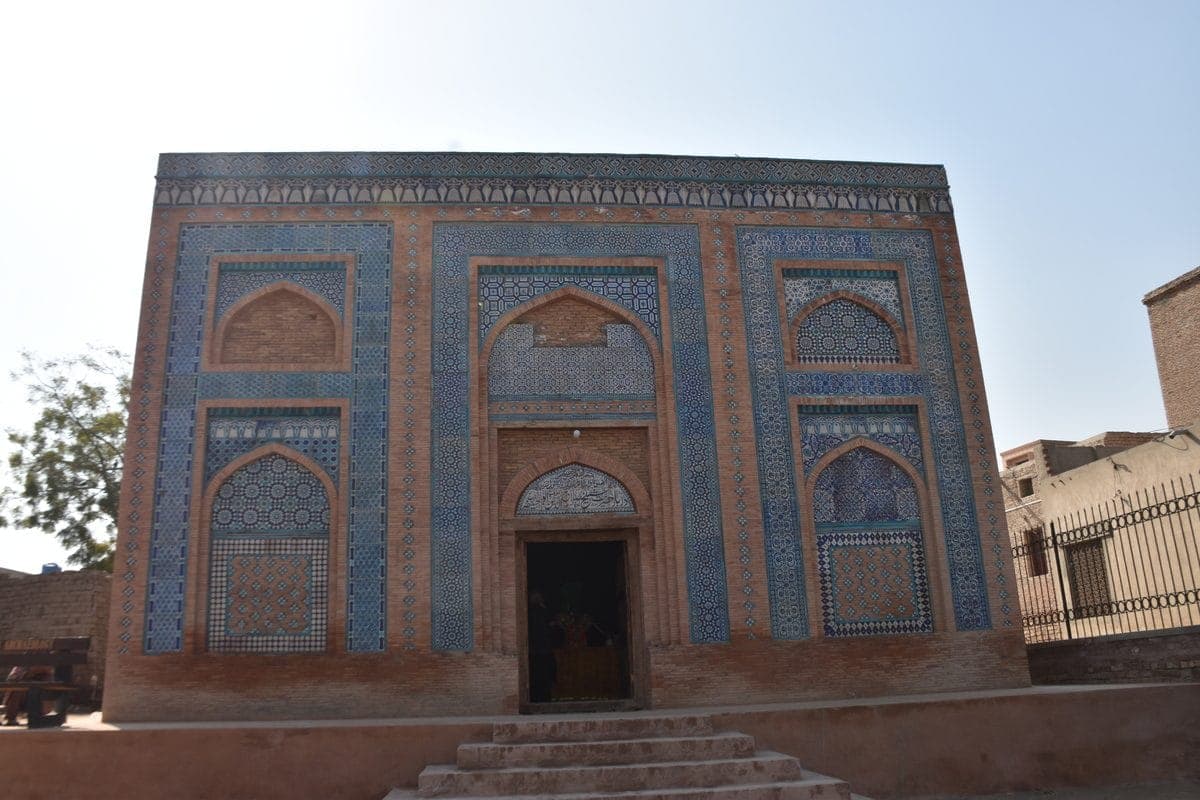
Straight-line distance from Tomb of Bibi Jawindi, within 5 km.
More in Bahawalpur & Cholistan
All 14 places in Bahawalpur & Cholistan →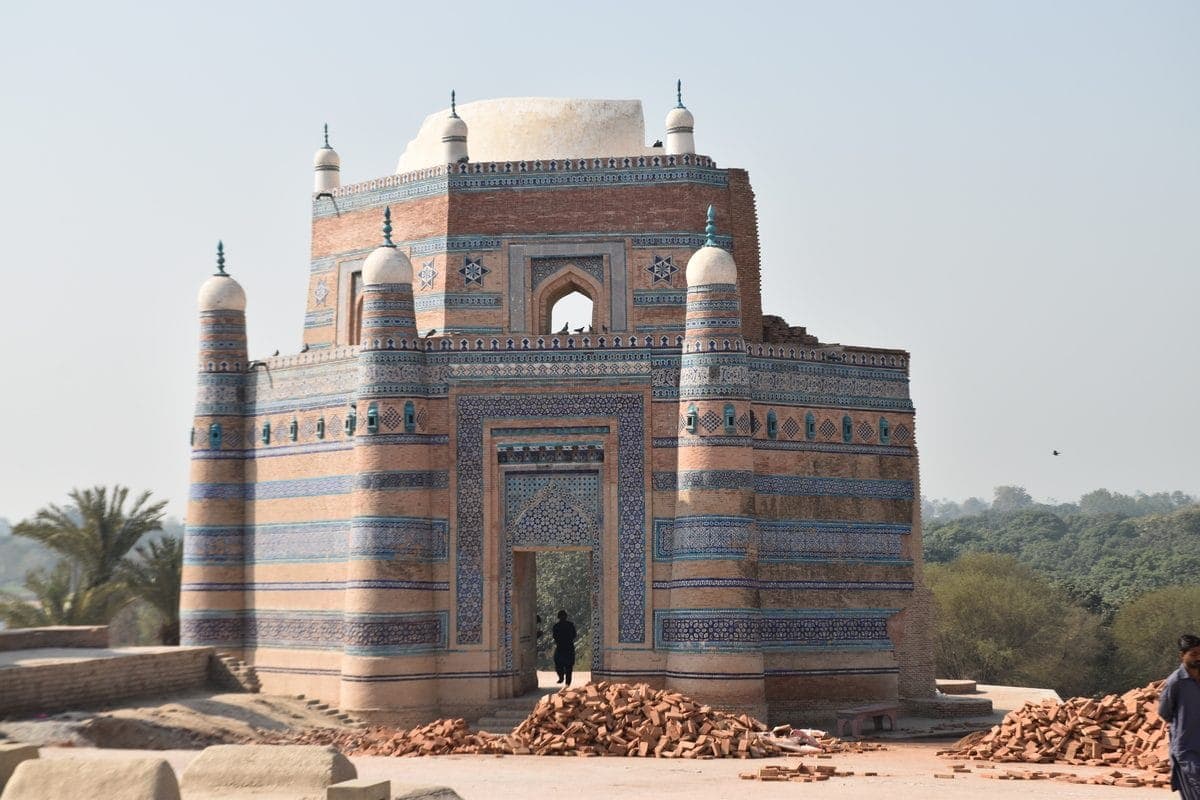
Tomb of Bhawal Haleem
Mosques, shrines and tombs
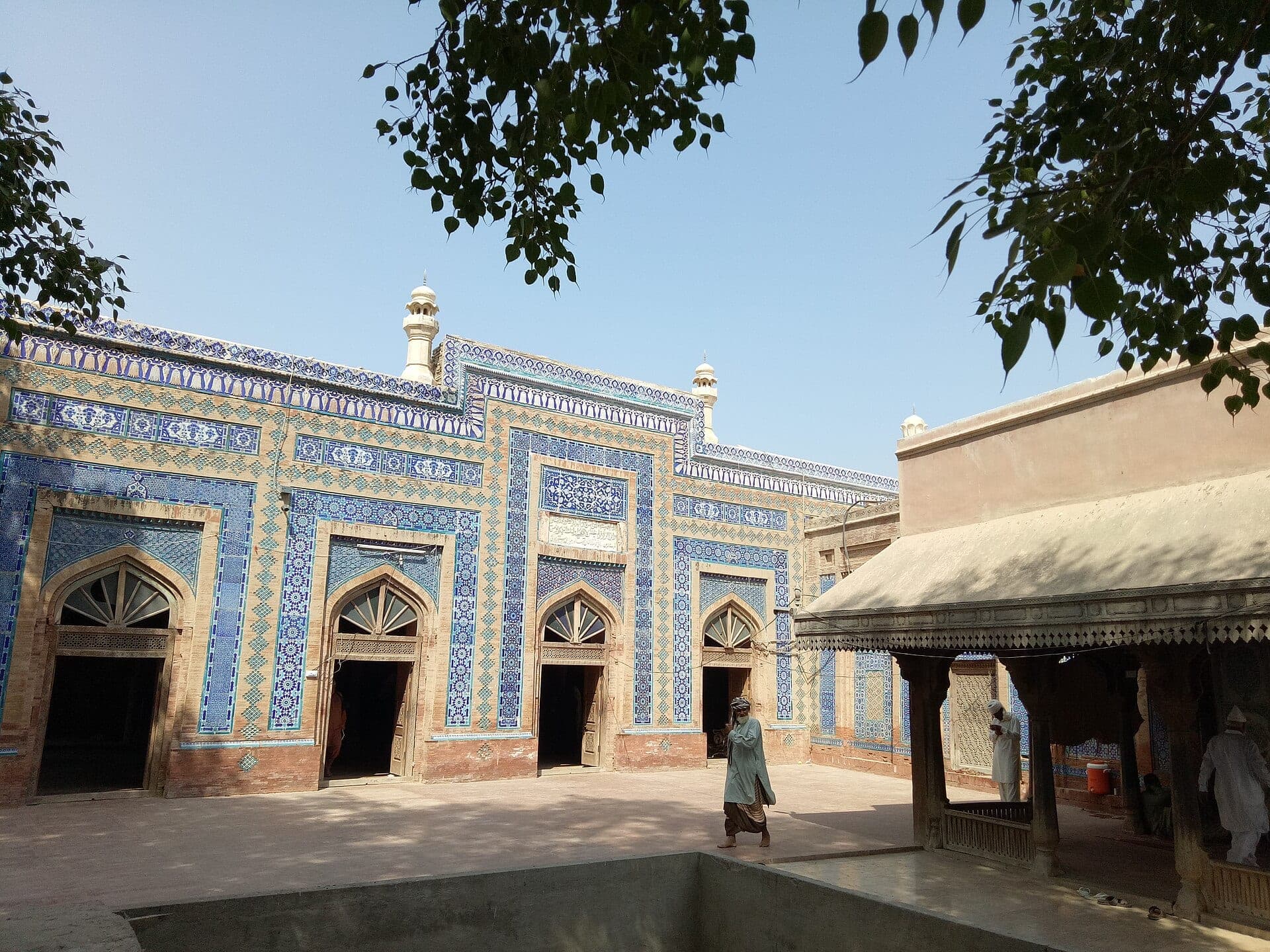
Shrine of Jalaluddin Surkh-Posh Bukhari, Uch
Mosques, shrines and tombs
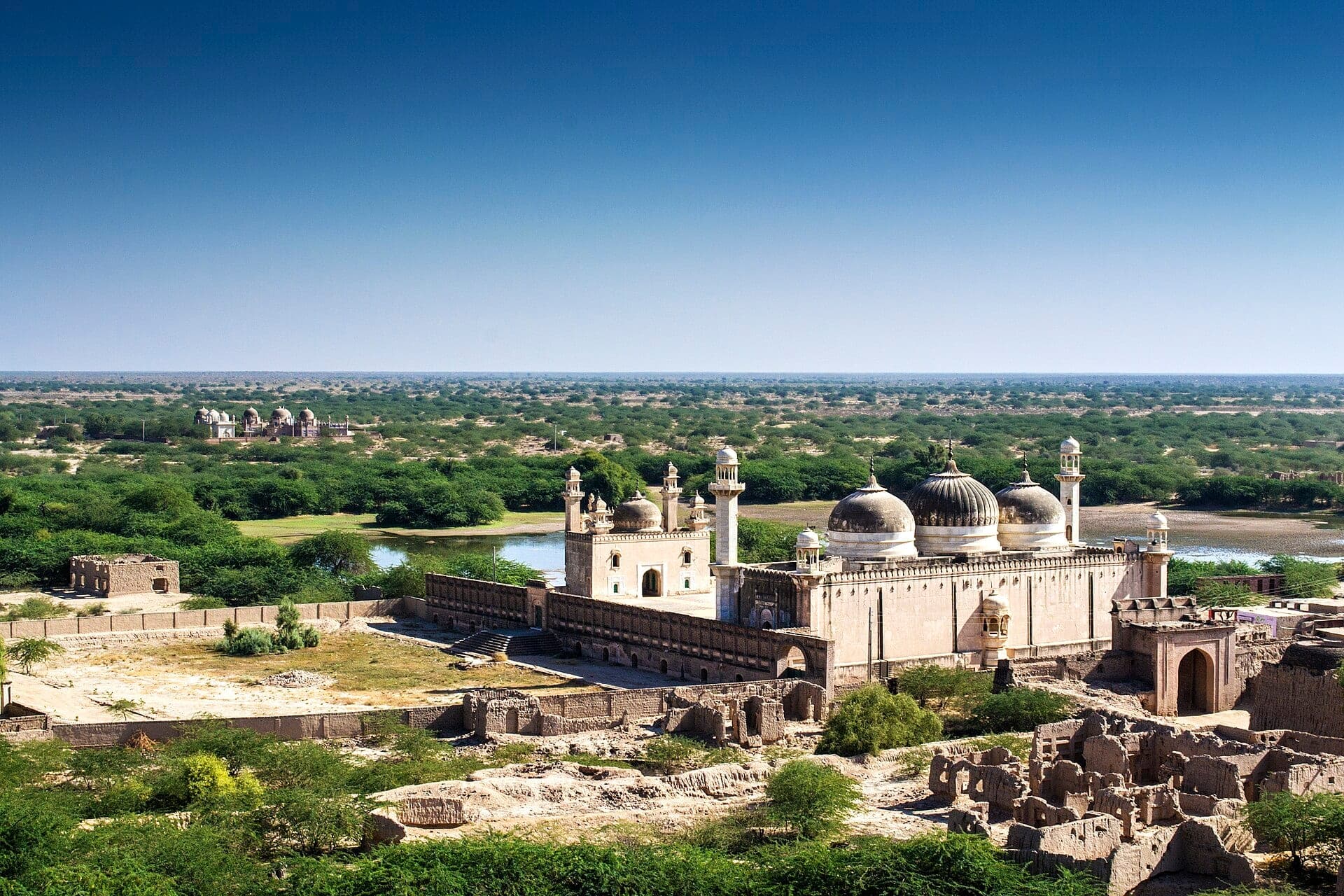
Abbasi Mosque, Derawar
Mosques, shrines and tombs
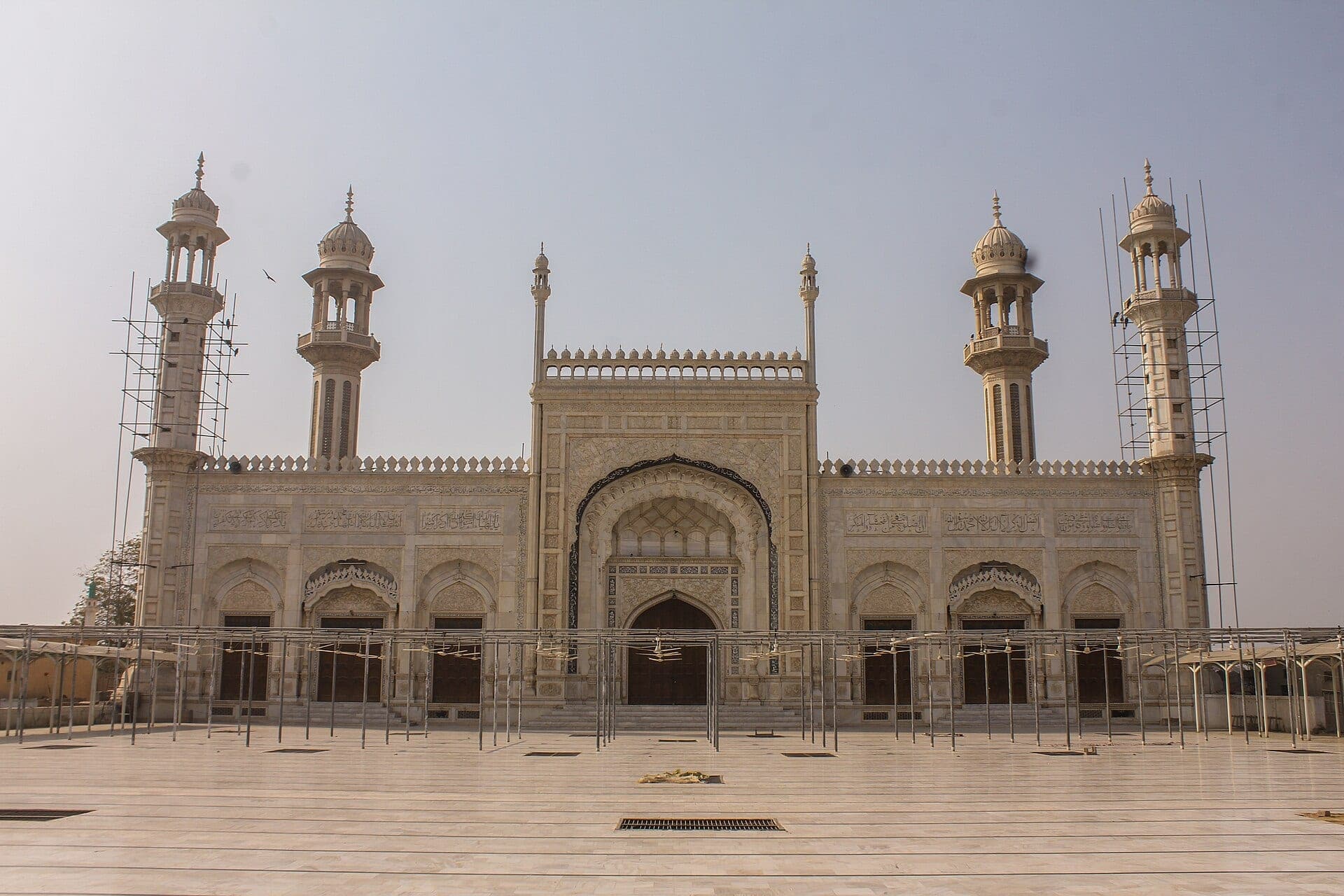
Al-Sadiq Mosque, Bahawalpur
Mosques, shrines and tombs
Guru Nanak's Well (Karrare da Khoh), Uch Sharif
Sikh heritage
Derawar and Cholistan Desert Forts
Landmarks and buildings