
Field guides / Balochistan / Tomb of Hanidan
Field guide · Heritage
Tomb of Hanidan
Hinidan is located about 21 km north-west of Karachi on the right bank of Habb river.
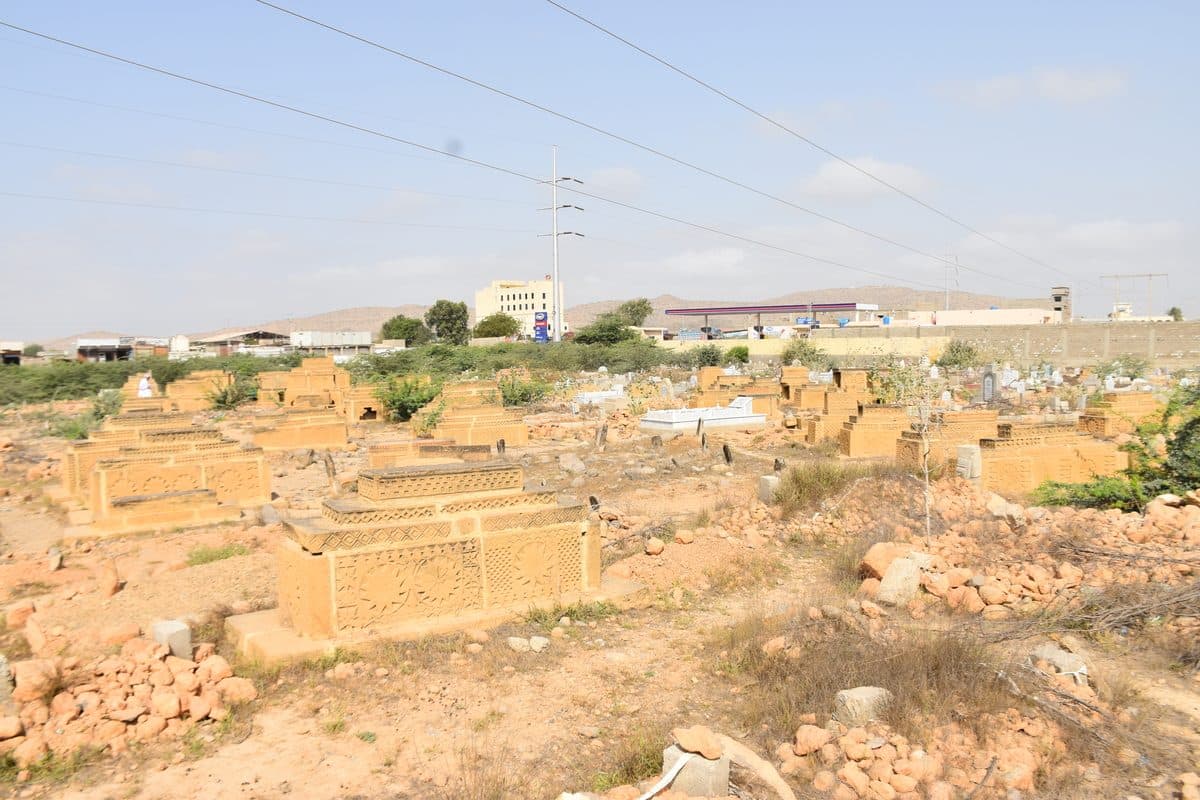
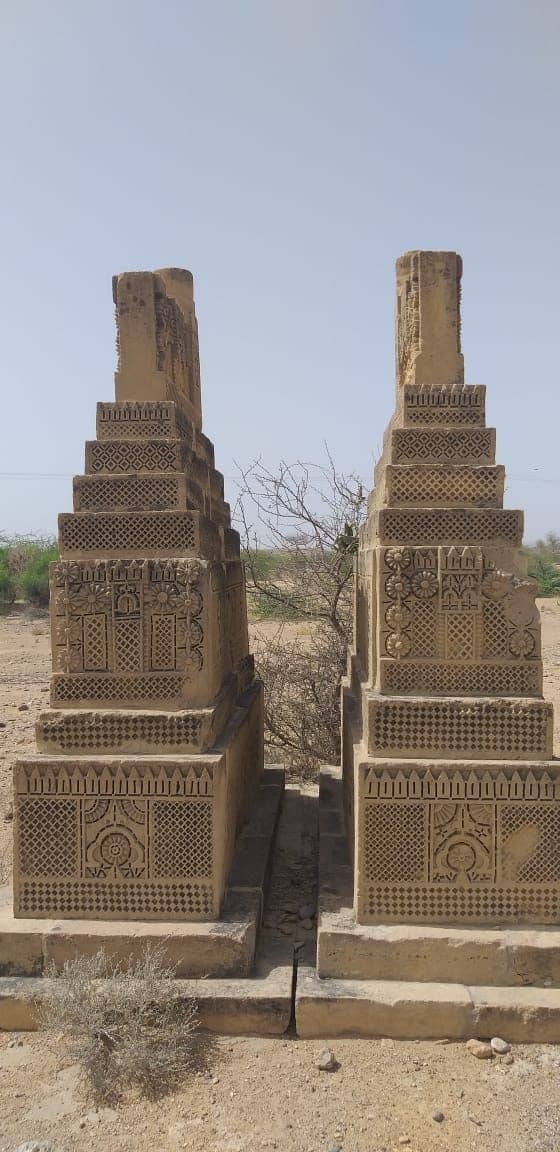
From Habib Chauki, Doorejee road, which through un-metaled, but quite motor able loads to Hinidan through the hill torrents and the Habb river, which is still without a bridge. At a distance of about 17 the Shrine of Pir Hassan or Hassan Pir, in the mast of a graveyard in Chaukhandi style. From Hasan Pir, the graveyard at Hinidan is about 65 km. The graves at Hinidan, which number more than 71 are in a good state of preservation. The close study of the graves has brought to notice many new features. The head-stones are in a variety of design; some depicting the sun-flowers on the top, others in rectangular shape resembling the fortification wall with marlon designs. Some head stones are of a roundish-shape culminating in a pointed columns towards the sky. The central portion of most of the graves is in the form of a coffin carrier. The handles on both the sides are projecting towards out-side. The top of the handles is engraved with sun-flowers which are in full blossom. This feature has also not been found on similar graves elsewhere.
Why go
- ✦More than seventy graves, well preserved
- ✦Headstones carved with sunflowers in full blossom
- ✦Others shaped as fortification walls, complete with merlons
- ✦Graves built as coffin carriers with projecting handles
- ✦Carved handle-tops found nowhere else on graves of this kind
History
The carved sandstone necropolises of lower Sindh and Balochistan were built between roughly the fifteenth and eighteenth centuries, largely by the Jokhio, Jam and Baloch tribes. The style is exclusive to this corner of the subcontinent: pyramidal stacked slabs, cut and fitted without mortar, carrying carving that records the identity of the dead — horsemen for men who rode, jewellery for women, symbols of rank, trade and cause of death. At Hinidan the headstones vary widely: sunflowers on top, rectangular forms worked to resemble a merloned fortification wall, and rounded stones rising to a pointed column.
Historical Significance
Most graves here take the form of a coffin carrier with handles projecting outward on both sides, and the tops of those handles are engraved with sunflowers in full blossom — a detail the register notes has not been found on comparable graves anywhere else.
Architecture
A Chaukhandi-style graveyard on the right bank of the Hab river in Lasbela, reached by an unmetalled but motorable road running through hill torrents and across the river, which is still without a bridge. More than seventy-one graves stand here in good condition, and close study has turned up features not recorded elsewhere.
Why Visit
Go straight to the handles on the sides of the graves. The sunflowers carved into them are unique to this graveyard.
Interesting Facts
- More than seventy graves survive here in good condition
- The carved handle-tops are a feature recorded at no other site of this kind
- The tradition runs from about the fifteenth to the eighteenth century
- Chaukhandi carving is exclusive to Sindh and Balochistan — it exists nowhere else
Planning tip
Best Time to Visit, November to March.
Getting there, Lasbela district in southern Balochistan. The Jam's graveyard is about 6.5 km north of Bela town; the Hinidan graves lie on the right bank of the Hab river, approached by unmetalled but motorable road through hill torrents — the river crossing is still unbridged.
Allow, An hour to ninety minutes at each.
What to Do
Make Tomb of Hanidan Part of a Trip
GreenPak resorts within reach, and the journeys that travel this region.
Nearby
Straight-line distance from Tomb of Hanidan, within 30 km.