
Loading…
Field guides / Sindh / Buddhist Stupa
Field guide · Heritage
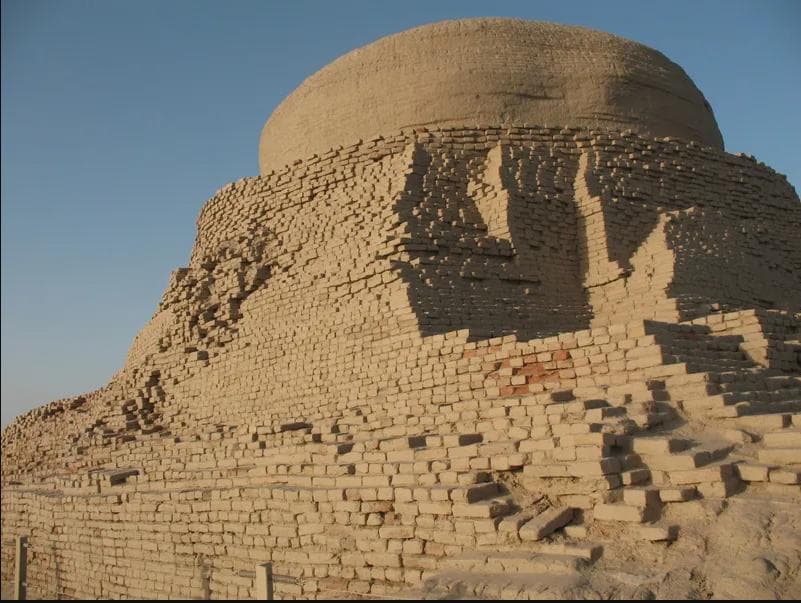
Mohen-jo-Daro, an ancient Indus Valley Civilization site, is often associated with early Buddhist history due to the discovery of a Buddhist stupa in the area.
This stupa, located within the Mohenjo-daro protohistoric complex, dates back to the 1st-5th century CE, marking a period of transition and religious influence in the region. The stupa sits atop a brick platform, at the center of a courtyard surrounded by quadrangle rooms, indicating its ceremonial significance. While the city was primarily a thriving center of the Indus Valley Civilization, later Buddhist influences are evident, particularly in the architectural features. Excavations in the 1920s and 1930s brought attention to the stupa, suggesting a Buddhist presence postdating the civilization’s decline around 1700 BCE. The stupa is a significant site reminder of the spread of Buddhism in South Asia. Today, it remains a protected site under the Antiquity Act of 1975, emphasizing its importance in both Buddhist and South Asian archaeological history.
Why go
The Buddhist stupa at Mohenjo-daro, located in Larkana, stands atop the ancient Indus Valley ruins and represents a later historical phase. It faces serious challenges from erosion, salinity, and environmental stress. Despite being under the Department of Archaeology, conservation remains limited, making urgent preservation efforts essential.
Planning tip
Best Time to Visit, Year-round; confirm local conditions and any festival dates before travel.
Getting there, In or near Mohen-Jo-Daro at Larkana, Sindh; confirm current local access before visiting.
Straight-line distance from Buddhist Stupa, within 30 km.