
Field guides / Sindh / Khaliq Dina Hall & Library
Field guide · Heritage
Khaliq Dina Hall & Library
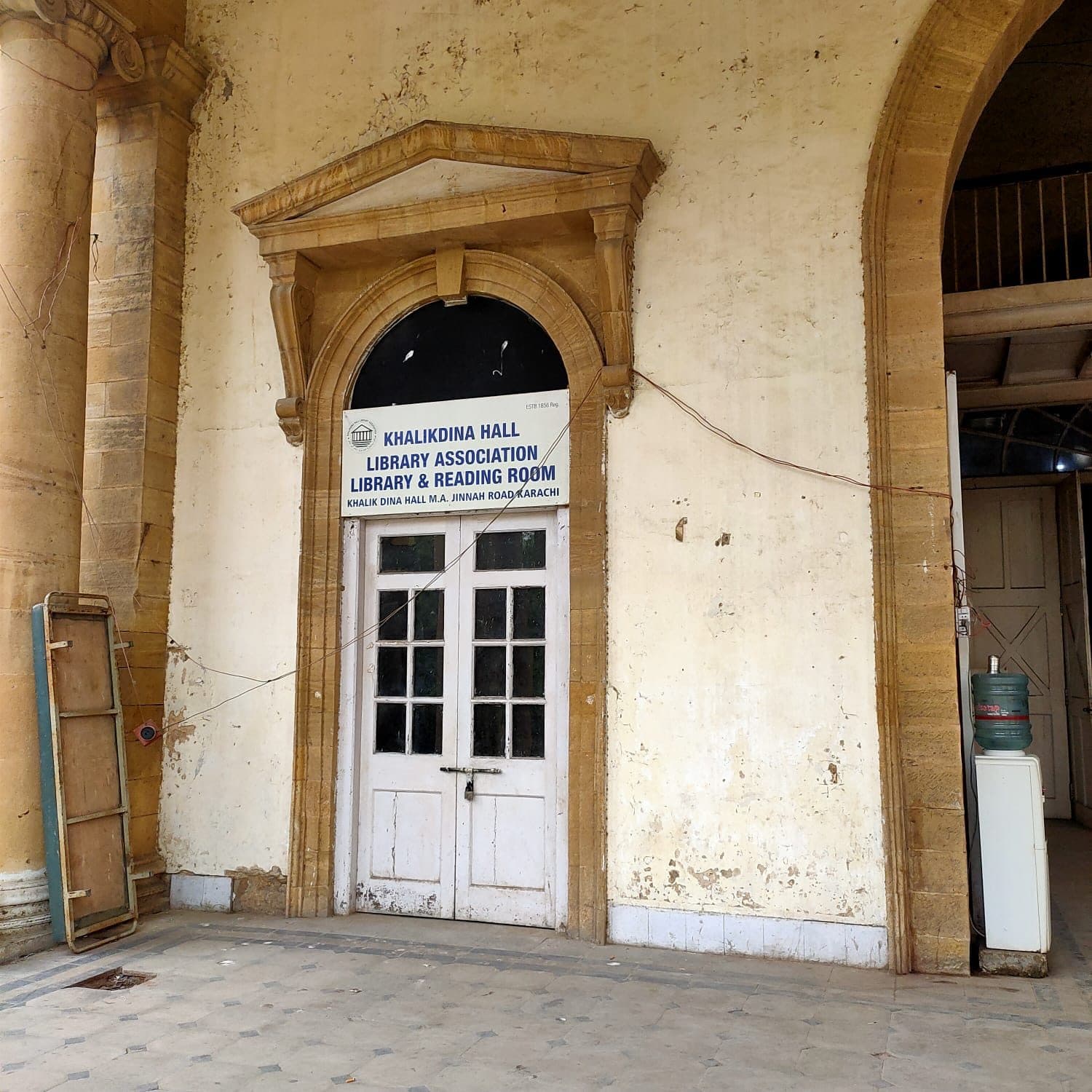
It was constructed in 1906 with a spacious hall for public meetings and additional rooms.
A public library was established in this hall. It is constructed with ashlar masonry with a wooden roof.
Why go
- ✦Built in 1906 as a public meeting hall
- ✦Home to one of Karachi's early public libraries
- ✦Ashlar masonry under a wooden roof
History
The building was funded by Ghulam Hussain Khaliqdina, who gave Rs 18,000 of the Rs 33,000 it cost, and designed by Moses Somake, the Iraqi-Jewish architect responsible for much of colonial Karachi's finest work. It is Palladian in manner — high columns, a triangular pediment, teak ceilings — and functioned from the start as a hall for political and literary gathering as much as a library.
Historical Significance
Two events fix it in the national story. In 1921 Maulana Muhammad Ali Jauhar, a leader of the Khilafat Movement, was tried for sedition here and conducted his own defence — the proceedings became known as the Trial of Sedition. On 15 December 1947, Muhammad Ali Jinnah renamed the All-India Muslim League as the Pakistan Muslim League in this hall.
Architecture
Built in 1906 with a spacious hall for public meetings and rooms alongside, and home to a public library established within it. The building is of ashlar masonry with a wooden roof — a piece of colonial-era civic Karachi still in use.
Why Visit
Most of Pakistan's founding happened in rooms that no longer exist. This one is still standing, and still a library.
Interesting Facts
- Designed by Moses Somake, an Iraqi-Jewish architect who shaped much of colonial Karachi
- Maulana Muhammad Ali Jauhar defended himself here in the 1921 Trial of Sedition
- Jinnah renamed the Muslim League in this hall on 15 December 1947
- Ghulam Hussain Khaliqdina personally funded more than half the construction cost
Planning tip
Best Time to Visit, November to February, when the coastal heat eases.
Getting there, Within Karachi's metropolitan area.
Allow, An hour or less at each site.
What to Do
Make Khaliq Dina Hall & Library Part of a Trip
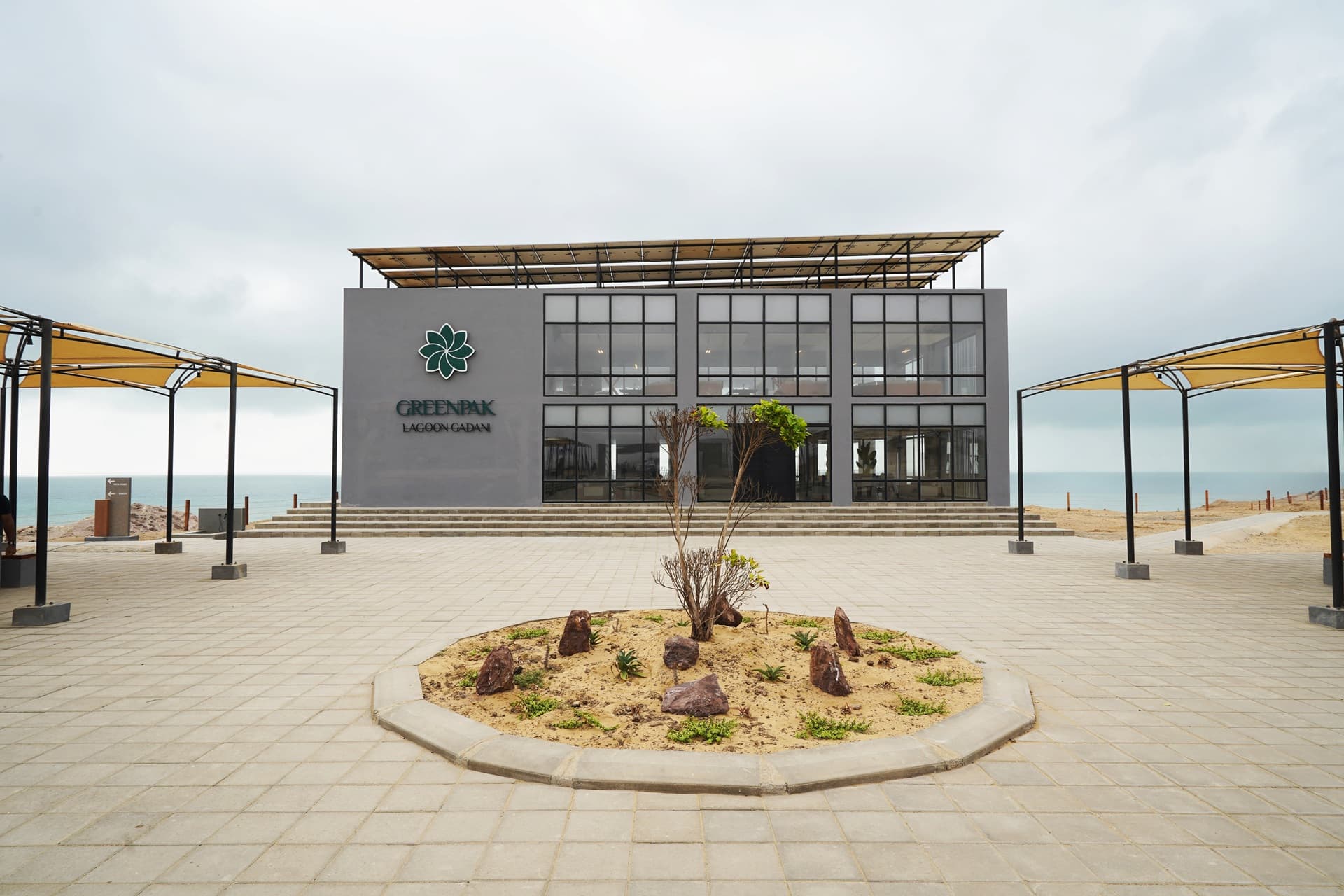
GreenPak resorts within reach, and the journeys that travel this region.
Nearby
Straight-line distance from Khaliq Dina Hall & Library, within 30 km.