
Area guides / Sindh / Karachi
Area guide
Karachi
Colonial halls, bazaars and the sea, in Pakistan's largest city
Region
Sindh
When to go
October to March, when the coastal heat eases. Market mornings are the liveliest.
Getting there
Karachi is served by international and domestic flights, and is the start of the N-5 and the Makran Coastal Highway. Taxis and rickshaws cover the city centre.
Spots
3 key places
Overview
About Karachi
Karachi, capital of Sindh and Pakistan's largest city, was the federal capital from 1947 to 1959 and remains the country's commercial centre on the Arabian Sea. Its old core keeps Victorian landmarks, Empress Market and Frere Hall, alongside the Mazar-e-Quaid, the National Museum and Jinnah's Flagstaff House.
Karachi is served by international and domestic flights, and is the start of the N-5 and the Makran Coastal Highway. Taxis and rickshaws cover the city centre.
The old centre
Saddar and the streets around it hold Empress Market, Frere Hall, the Khaliq Dina Hall and Quaid-e-Azam House, close enough to see in a day. Opening hours vary, so check before travelling.
Out to the coast
West of the city the coast turns wild: Mubarak Village, Bhit Khori and, across the Balochistan border, Gadani and the Miani Hor lagoon.
Field Guides
All places →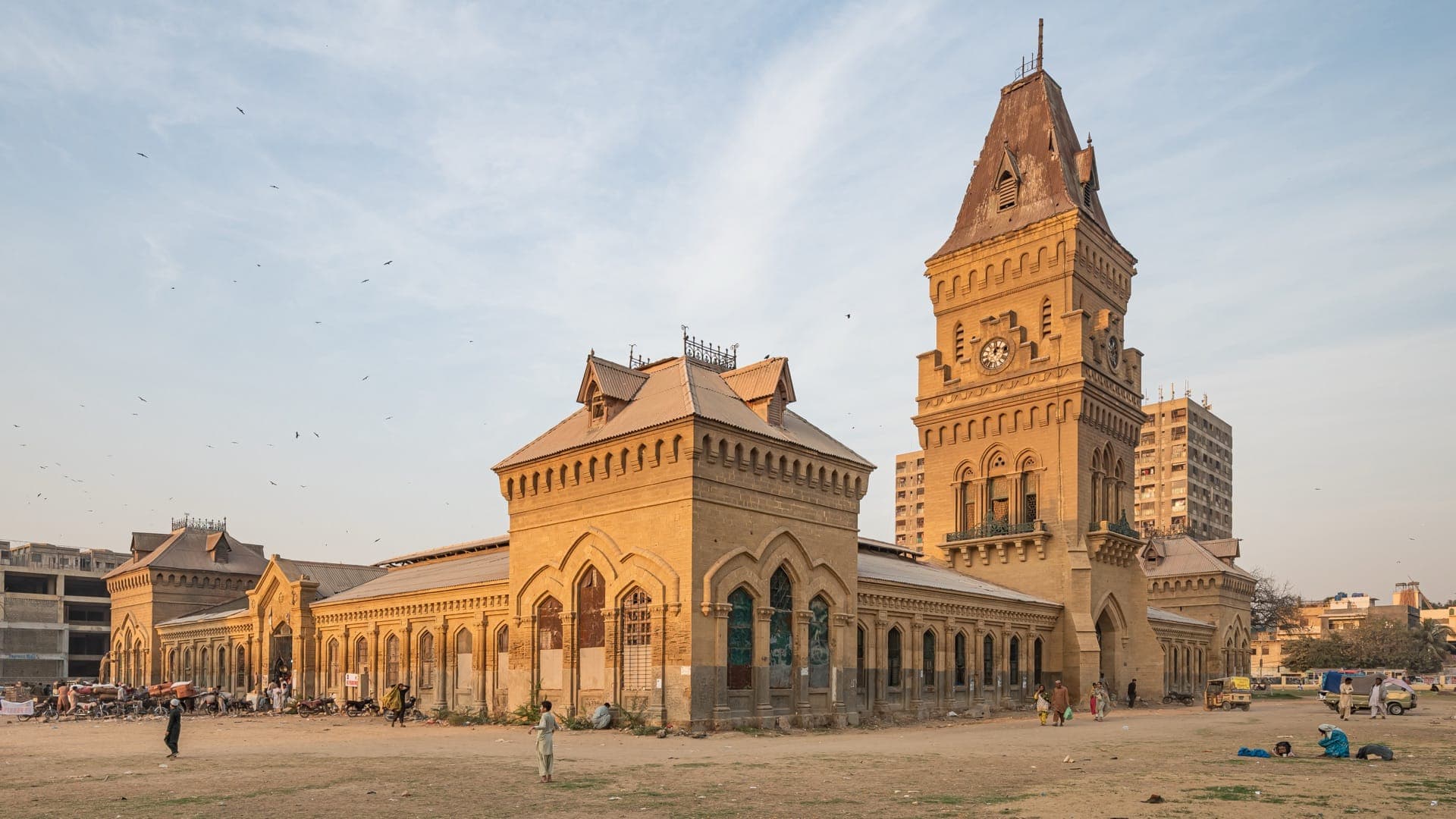
Empress Market
Empress Market rises above Saddar in pale limestone, a Victorian Gothic market hall built between 1884 and 1889 and named for Queen Victoria. Its arcaded halls and clock tower were designed to impose order on the colonial city's trade; well over a century later the building still works as a market, and the surrounding streets remain among the busiest in Karachi.
Frere Hall
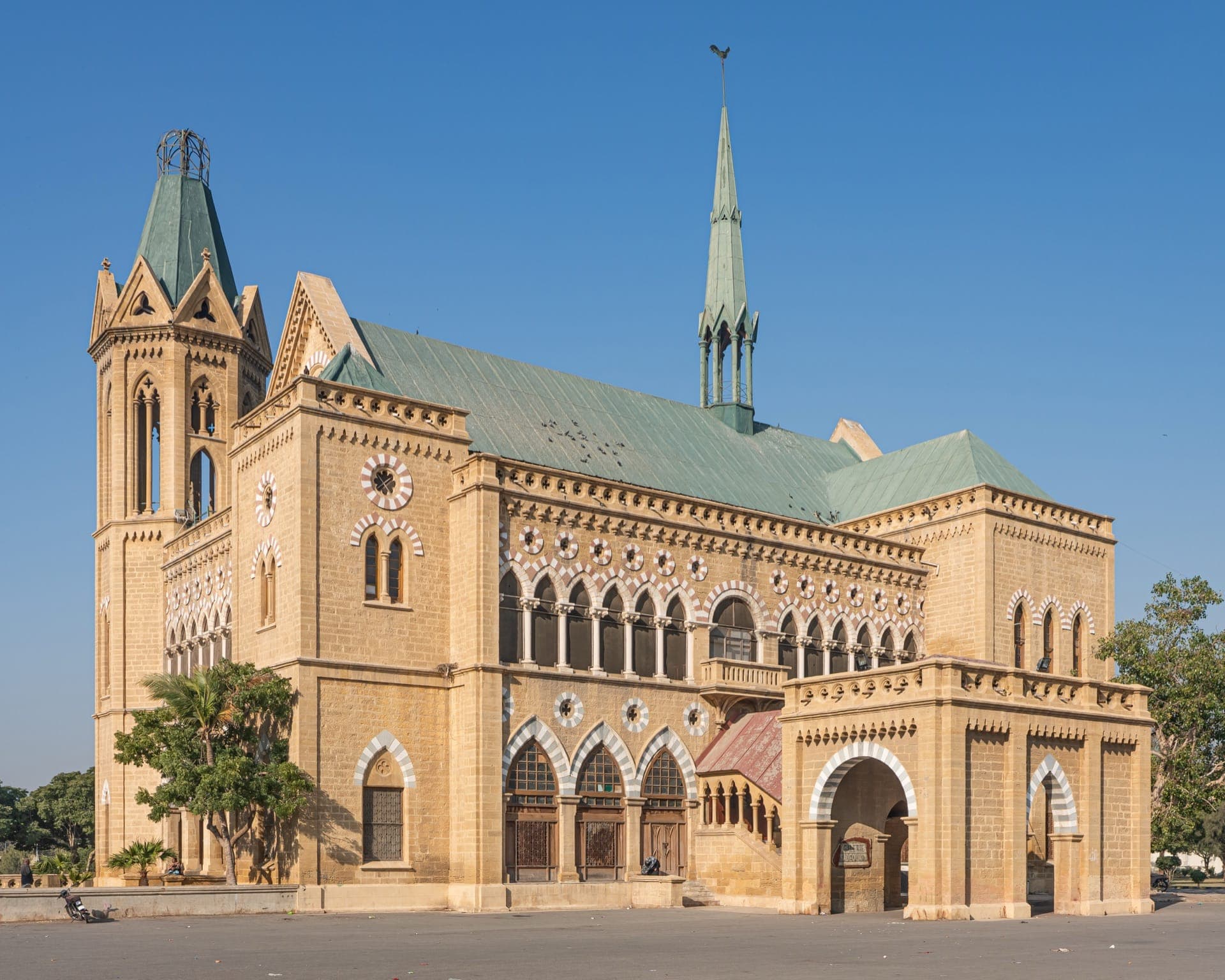
Frere Hall stands in its own gardens in central Karachi, a Venetian Gothic building of 1865 in honey-coloured limestone, named after Sir Bartle Frere. Built as a town hall, it now holds a library and, on the upper floor, the great ceiling mural Sadequain was working on when he died, an unfinished sweep of allegorical figures that is reason enough to climb the stairs.
Quaid-e-Azam House
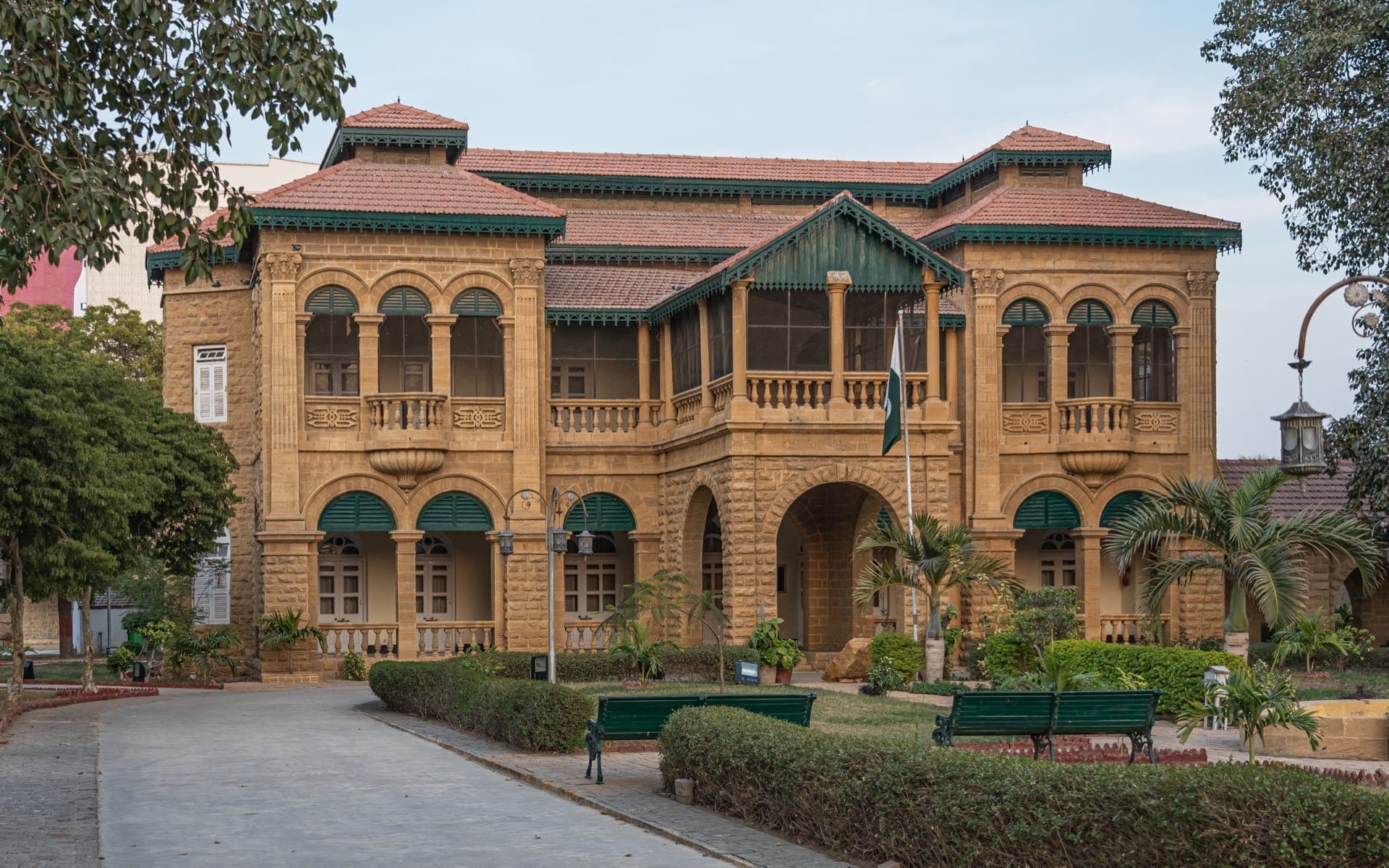
Quaid-e-Azam House, better known as Flagstaff House, is a colonial bungalow of honey-coloured stone set in its own garden in central Karachi, with deep verandas and green-trimmed eaves. Muhammad Ali Jinnah bought it in 1943 and it was his Karachi residence in his final years; it is now a museum, and his personal effects and furnishings are kept much as he left them.
National Museum
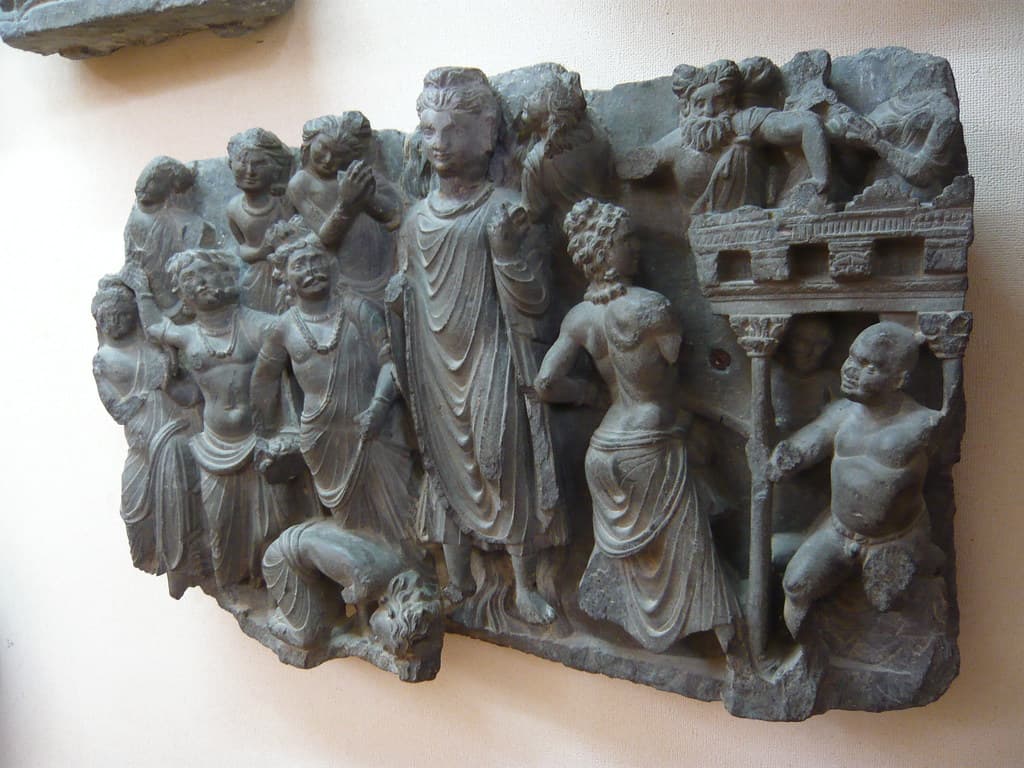
It features sculptures, coins, and manuscripts related to Buddhism, including iconic Gandhara pieces and Buddha imagery. The museum showcases items from Buddhist centers like Taxila and Mohenjo-daro, highlighting cultural exchanges. Specialized exhibitions focus on Buddhist art, architecture, and ancient texts. The museum's collection also includes over 70,000 publications related to Buddhist archaeology. A conservation laboratory helps preserve these artifacts. The museum frequently hosts exhibitions dedicated to Buddhism, particularly during cultural events.
Mazar-e-Quaid
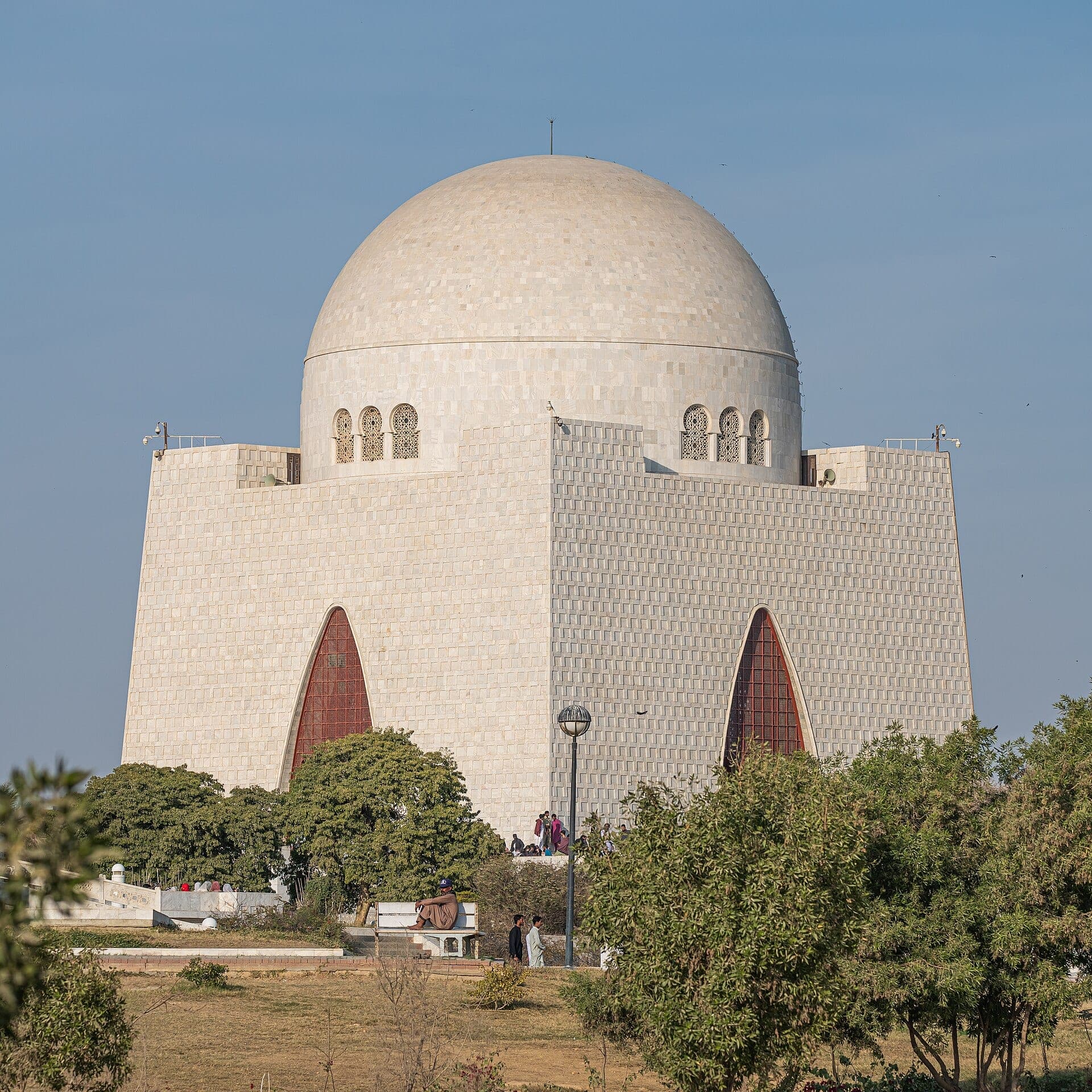
Mazar-e-Quaid is the white-marble mausoleum of Muhammad Ali Jinnah, founder of Pakistan, set on a raised platform within a 61-acre gardened plaza in the Jamshed Quarters of central Karachi. Designed by Bombay-based architect Yahya Merchant, a personal friend of Jinnah's, the cuboid structure topped with a Mughal-inflected dome combines traditional form with the modernist restraint of its 1960s construction, ground broke on 8 February 1960, President Ayub Khan laid the foundation stone that July, and the mausoleum was formally inaugurated by President Yahya Khan on 18 January 1971. The complex also holds the tombs of Jinnah's sister Fatima Jinnah, revered as Mādar-e Millat ('Mother of the Nation'), and of the country's first and eighth prime ministers, Liaquat Ali Khan and Nurul Amin.
Resorts
All resorts →GreenPak stays in this area are listed on the region guide.