
Loading…
Field guides / Punjab / Mankiala Stupa
Field guide · Heritage
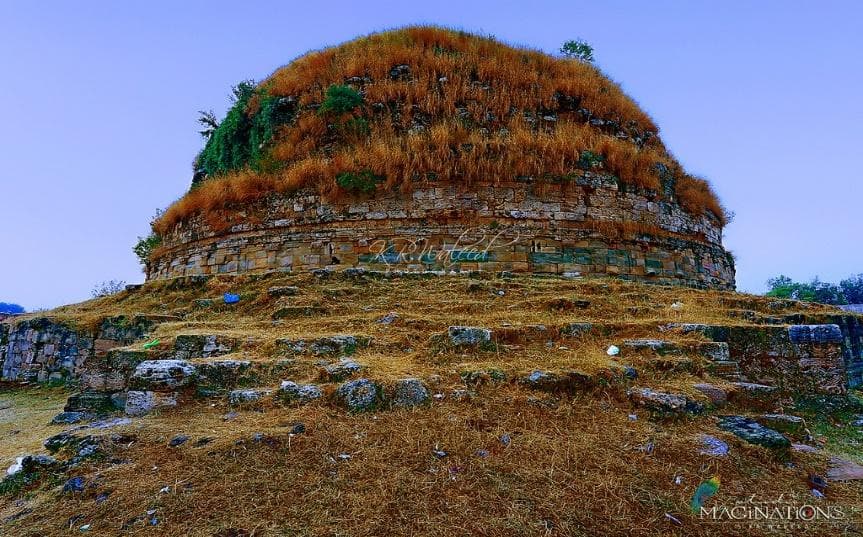
The Manikyala Stupa is a significant Buddhist site located near Tope Mankiala, in Pakistan’s Pothohar region, roughly 36 km southeast of Islamabad, close to Rawalpindi.
It is believed to mark the spot where, according to Jataka tales, Prince Sattva, an incarnation of Buddha, sacrificed parts of his body to feed seven hungry tiger cubs. The stupa was likely built during the reign of King Kanishka between 128 and 151 CE, though some theories suggest it could have been one of 84 stupas constructed during Emperor Ashoka’s reign to house the Buddha's ashes. Discovered by Mountstuart Elphinstone in 1809, the stupa has been restored, with records showing a restoration in 1891. Relics from the stupa, found by Jean-Baptiste Ventura in 1830, were removed during British colonial rule and are now housed in the British Museum.
Why go
The Mankiala Stupa near Rawalpindi is a significant Buddhist site from the Gandhara period, long neglected and damaged by encroachment. Recent restoration efforts have begun through a joint project involving South Korean experts and Pakistan’s archaeology departments. Excavation and preservation work is now underway to protect and stabilize the structure.
Planning tip
Best Time to Visit, Year-round; confirm local conditions and any festival dates before travel.
Getting there, In or near Rawalpindi, Punjab; confirm current local access before visiting.
Straight-line distance from Mankiala Stupa, within 30 km.