
Field guides / Punjab / Pharwala Fort
Field guide · Heritage
Pharwala Fort
The fort of Pharwala (Par Wala) was constructed during the year 1008-1015 CE by Sultan Kai Gohar (the founder of Gakhar Dynasty) in the Sub-continent.
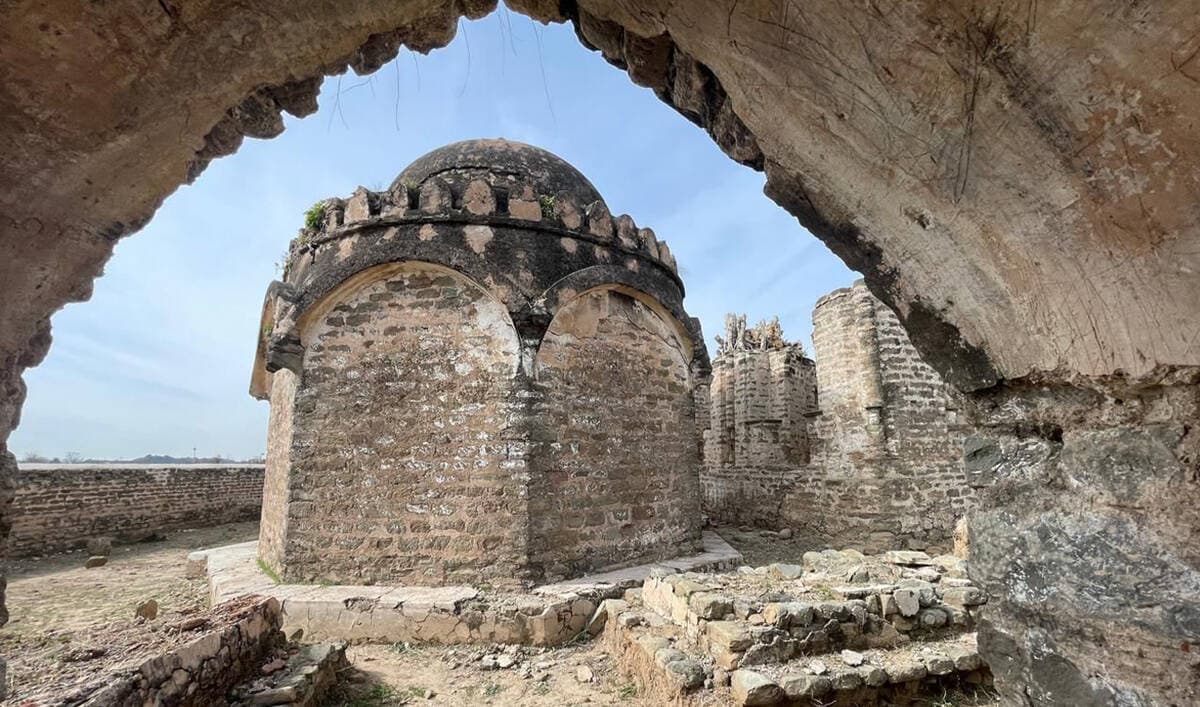
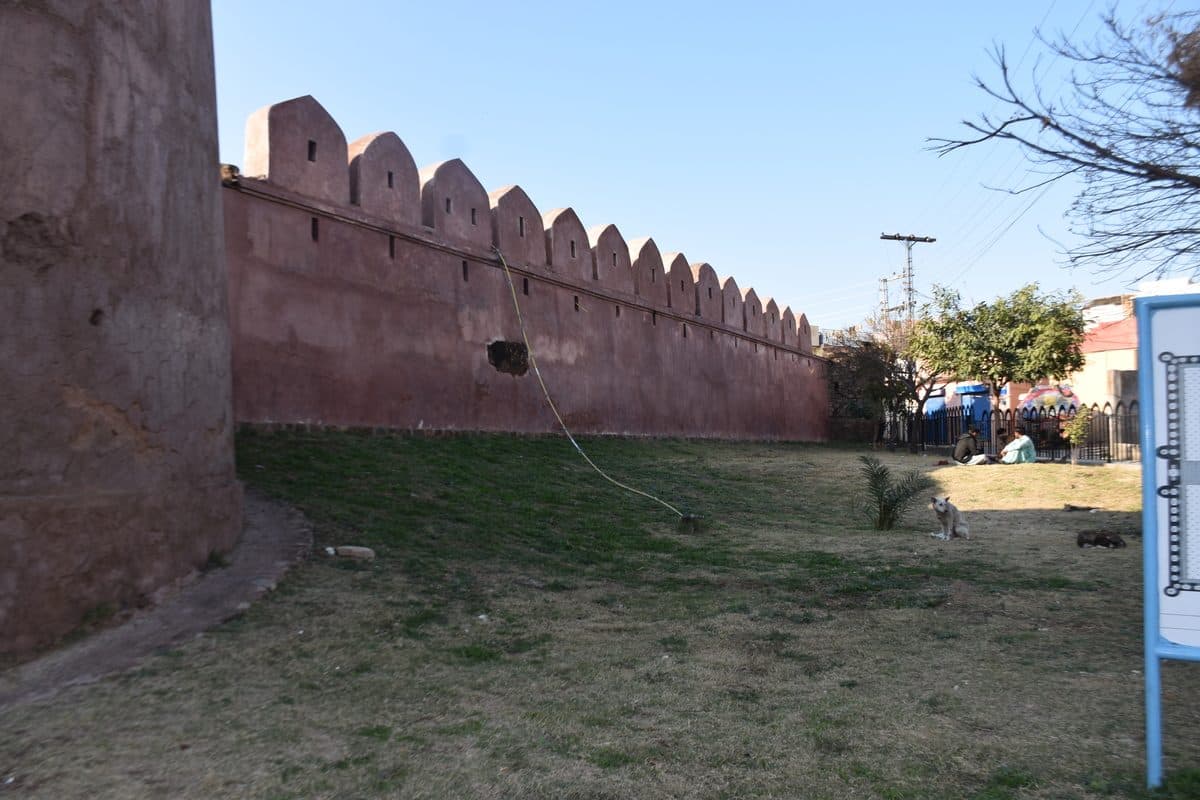
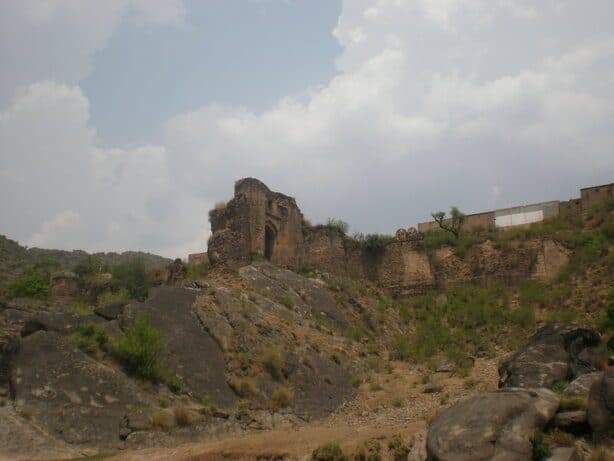
The fort has six gateways namely Hathi Gate, Fort Gate, Lashkari Gate, Ziarat Gate, Bagh Gate and Begum Gate. The area of the fort is about 54 sq.km. In history, the fort has been used as Military fort, it had 100 Elephants, 5000 Horses and 10,000 Men stationed inside it. The structure of the fort, mainly the two gateways, parts of the fortification, a mosque and a tomb located on the other bank of Soan River, are in a bad state of preservation. The structures are mainly built-in stone in lime surkhi or mud mortar and are stylistically similar to those of the fort at Rawat. None of the original residential or other buildings survived within the fortification.
Why go
- ✦Built by Sultan Kai Gohar, founder of the Gakhar dynasty
- ✦Raised between 1008 and 1015 CE
- ✦Six gateways — Hathi, Fort, Lashkari, Ziarat, Bagh and Begum
- ✦Once garrisoned by 10,000 men, 5,000 horses and 100 elephants
- ✦Built in stone and lime surkhi, in the manner of Rawat Fort
History
The fort sits on the left bank of the Soan river, defended on one side by the river and on the other by a spur of the hills — a position so strong it was long considered unassailable. Babur attacked it in 1519, before the Gakhar chief Hathi Khan had submitted to him, and afterwards raised the walls by ten feet. The fort was returned to the clan once the Gakhars allied with the Mughals, and that alliance shaped the politics of the Potohar for the next two centuries. Six gateways served it — Hathi, Fort, Lashkari, Ziarat, Bagh and Begum.
Historical Significance
The dynastic seat of the Gakhars, whose alliance with the Mughals and long feud with the Suris decided who controlled the Grand Trunk Road through the Potohar. A few Gakhar families still live within the walls.
Architecture
Six gateways served it — Hathi, Fort, Lashkari, Ziarat, Bagh and Begum — and as a working military fort it is recorded as holding a hundred elephants, five thousand horses and ten thousand men. What remains is chiefly two of the gateways, parts of the fortification, a mosque, and a tomb standing on the far bank of the Soan river; all are in poor condition. The structures are built in stone laid in lime surkhi or mud mortar, stylistically close to the fort at Rawat. None of the original residential buildings inside the walls survive.
Why Visit
The gates and the river together. Nothing survives of the buildings inside, so the fort is best read as a position rather than a palace.
Interesting Facts
- The Gakhars held the Potohar for around 850 years
- Babur stormed it in 1519 and then raised its walls by ten feet
- It was built over an earlier Hindu Shahi fort
- Gakhar families still live inside the fortification today
Planning tip
Best Time to Visit, October to April. Spring is the pick; summer on the Potohar plateau is hot and hazy, and the Soan approach to Pharwala is best avoided after heavy rain.
Getting there, South-east of Islamabad. Rawat sits about 18 km from Rawalpindi towards Jhelum, close to the Grand Trunk Road. Pharwala lies further east towards Kahuta and requires crossing the Soan river — check conditions locally before setting out.
Allow, About an hour at Rawat; a half day for Pharwala including the approach.
What to Do
Make Pharwala Fort Part of a Trip
GreenPak resorts within reach, and the journeys that travel this region.
Nearby
Straight-line distance from Pharwala Fort, within 30 km.