
Field guides / Islamabad Capital Territory / Tomb of Sultan Muqarrab Khan
Field guide · Heritage
Tomb of Sultan Muqarrab Khan
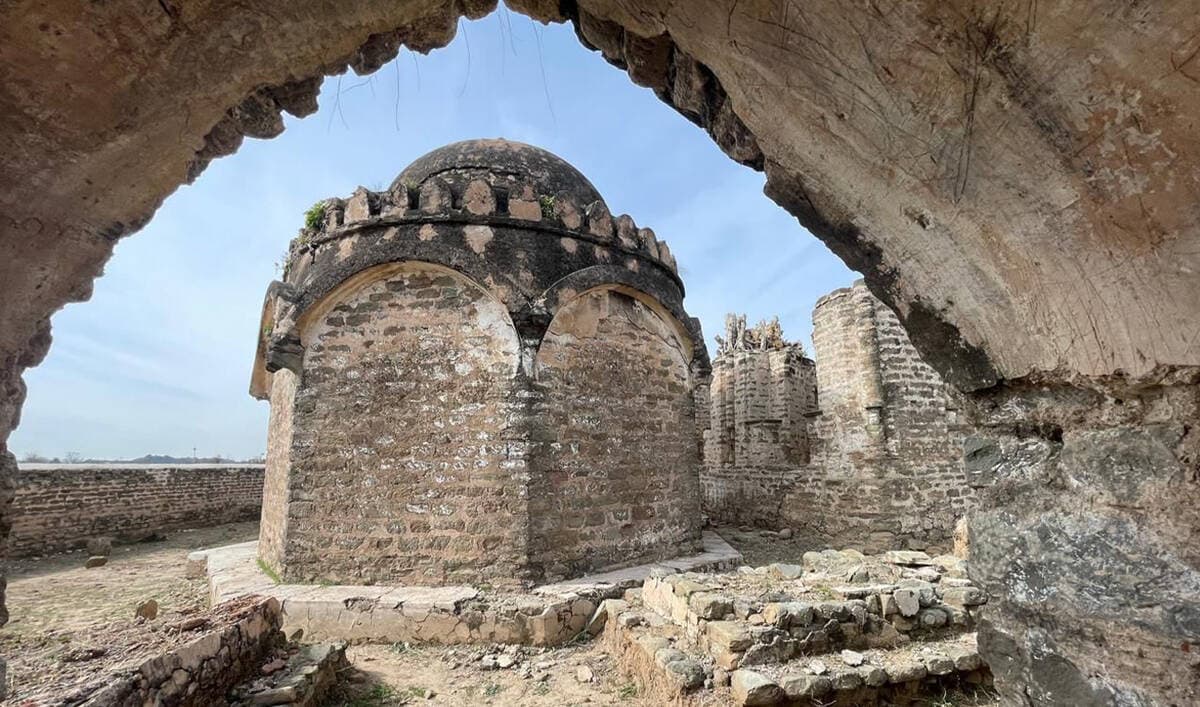
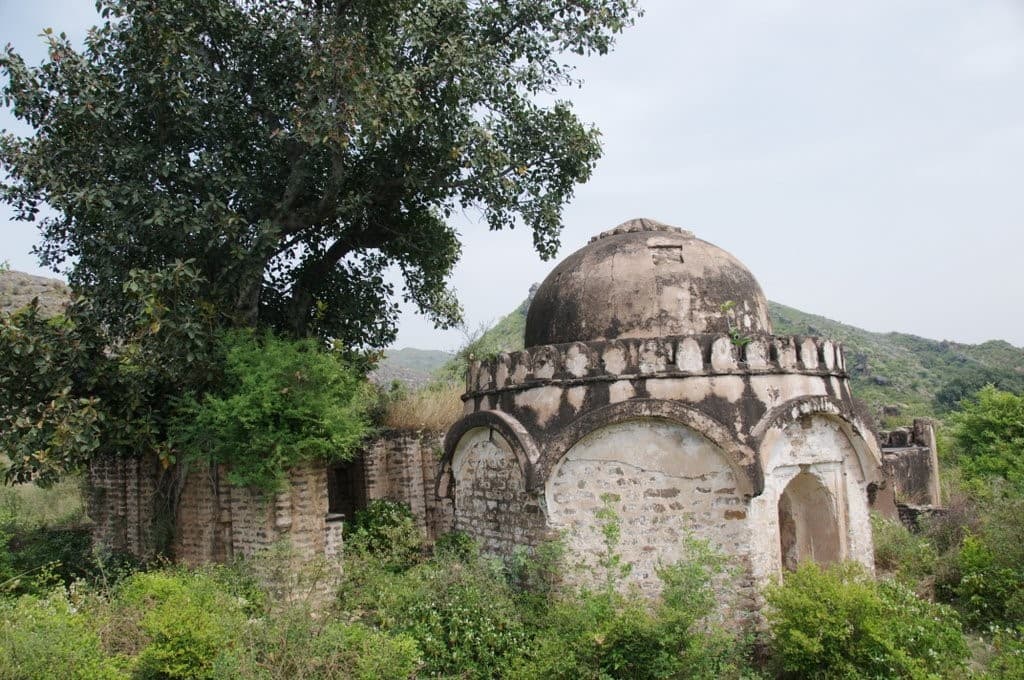
The octagonal tomb of Sultan Muqarrab Khan, the last independent Gakhar chieftain, beside the Pharwala mosque in the Pothohar hills.
The tomb of Sultan Muqarrab Khan stands north of the Pharwala mosque in the Pothohar hills south-east of central Islamabad. It belongs to the last independent chieftain of the Gakhars, whose stronghold was Pharwala Fort, and in 2026 Pakistan placed it on its UNESCO World Heritage Tentative List.
Why go
- ✦The octagonal tomb in its rectangular courtyard
- ✦A continuous band of suspended semi-arch motifs around the outer walls
- ✦The parapet of false miniature merlons around the dome
- ✦Multi-tier lime-plastered graves of the Gakhar sultans
About
Set within a rectangular courtyard, the octagonal tomb is ringed by a continuous band of suspended semi-arch motifs, with a low parapet of false miniature merlons around the base of its dome. Around it lie the graves of the Gakhar sultans, making it a small dynastic burial ground rather than a single monument.
History
Sultan Muqarrab Khan sided with Nadir Shah at the Battle of Karnal in 1739, after which he was confirmed in possession of Pharwala Fort. In 1765 Sikh forces defeated him at Gujrat and he surrendered his lands up to the Jhelum; in 1769 he was captured and killed by a rival chief, Himmat Khan Domli. Most Gakhar territory then passed to Sardar Gujjar Singh Bhangi, Pharwala excepted, and the last of it was taken by Sardar Anand Singh Thepuria in 1818.
Architecture
The tomb measures about 7 by 7 metres and 3.5 metres high, octagonal in plan, with its entrance to the east and a dome decorated with leaf patterns. Inside, false arches fill the three sides without an entrance. It was built in stone masonry, later plastered with cement. North-west of the tomb stands a roofless two-room enclosure on a high platform, and the courtyard holds multi-tier graves finished in lime plaster, with further unmarked graves found beneath the floor.
Why Visit
It is the monument of a regional ruling family rather than an imperial one: a tomb that records the end of Gakhar independence in the 18th century, as Mughal authority declined and Sikh power rose in the Punjab.
How to Reach
In the Pothohar hills near Pharwala, south-east of central Islamabad, north of the Pharwala mosque. Local roads are rural, so check access before setting out and go with a local driver.
Responsible Travel
Treat the site as protected heritage: do not scratch, climb or remove material, and follow caretaker instructions.
Interesting Facts
- Historical accounts say the graves of Adam Khan and Momer Khan were vandalised during the Sikh period.
- It joined Pakistan's UNESCO World Heritage Tentative List in 2026, under criterion (vi).
- It is protected under the Antiquities Act, 1975, and managed by the Department of Archaeology and Museums.
Planning tip
Best Time to Visit, October to April for comfortable outdoor heritage visits.
Getting there, In the Pothohar hills near Pharwala, south-east of central Islamabad, north of the Pharwala mosque. Local roads are rural, so check access before setting out and go with a local driver.
Allow, 1–2 hours; allow half a day when combining nearby heritage sites.
What to Do
Make Tomb of Sultan Muqarrab Khan Part of a Trip
GreenPak resorts within reach, and the journeys that travel this region.

Nearby
Straight-line distance from Tomb of Sultan Muqarrab Khan, within 30 km.