
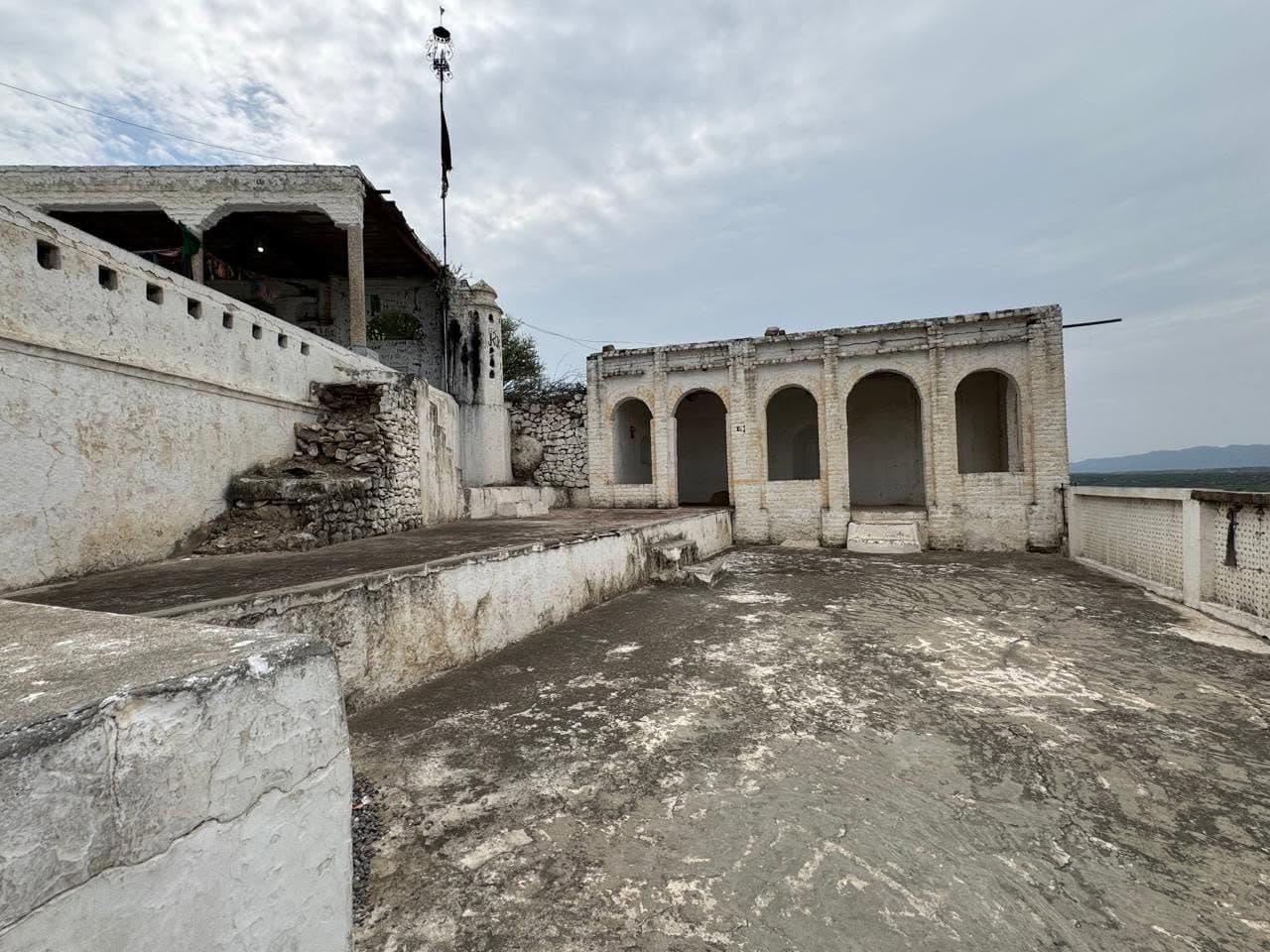
Since my retirement, I have taken up several personal projects, one of which is tracing the family tree of the Khattars of Wah, to which I belong. It has been almost two years now. The family has spread extensively, almost across the globe. Unlike a traditional family tree, I have also included the female lineage, which has nearly doubled my work but made the research even more interesting.
I am now close to completing it, but I remained uncertain about the genealogy at the very top of the tree and was searching for people who could help. A local historian and book collector, Raja Noor Muhammad Nizami, had given me the reference of Muhammad Imran Khan Khattar of Bagh Nilab. I had been in contact with him since winter, and with my family tree nearing completion, it was finally time to meet him.
It had rained the previous day. Sitting in my study, I contacted Imran and asked whether he could show me Bagh Nilab — once an important gateway into the subcontinent — and whether we could exchange our research, as he is also working on a book that includes the shajra of the Khattars. He said he would be delighted to receive me.
I waited for a colleague who works with me on the project and was coming from Rawalpindi, and by noon we set off for Bagh Nilab.
As we crossed Cadet College Hasan Abdal towards Peshawar on the GT Road, memories of our childhood journeys to Peshawar, and later my military journeys to Nowshera, came flooding back.
Before continuing, however, I must mention Wah. Wah village was once part of District Attock but, during Ayub Khan’s era, was shifted to Rawalpindi and placed in Tehsil Taxila. I intend to write separately about Wah someday. It is one of Punjab’s most iconic historic villages and has the distinction of producing two prime ministers — one of undivided Punjab and another of Patiala before Partition — besides many other prominent personalities.
Even today, in its overall appearance, Wah is no less charming than many European villages. To its north, some lands and settlements still fall within District Attock and retain strong Khattar lineages linked to the region. Hasan Abdal itself remains a tehsil of Attock.
The GT Road has improved considerably, and because of the motorway, traffic beyond Hasan Abdal has reduced. The Rawalpindi–Hasan Abdal stretch, however, remains extremely busy and heavily commercialised.
After crossing the Haro River and travelling for around twenty minutes, we turned left through the impressive Bab-e-Attock gate onto a dual carriageway bypassing Kamra towards Attock city.
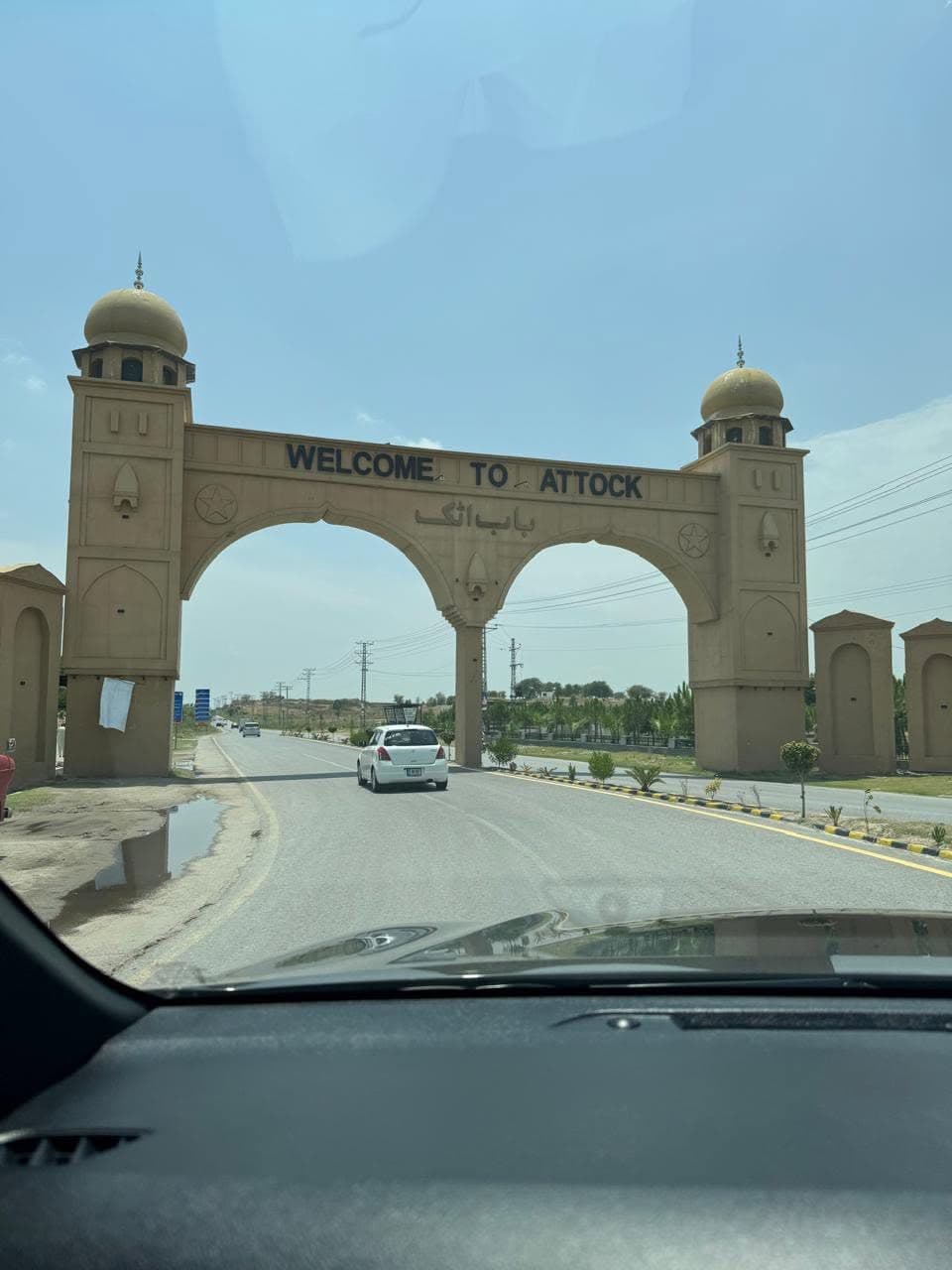
It is remarkable how much the area has transformed. Yet, amid all the development, one can still see peanut fields stretching into the distance. Huge marriage halls and restaurants have appeared along the way, and I was amused to even see Kababjees from Karachi there.
As we entered Attock city via Attock–Kamra Road, what I remembered as a small and crowded bazaar had transformed into a surprisingly neat commercial centre. There were proper footpaths, organised bus stops and a visibly improved transport system.
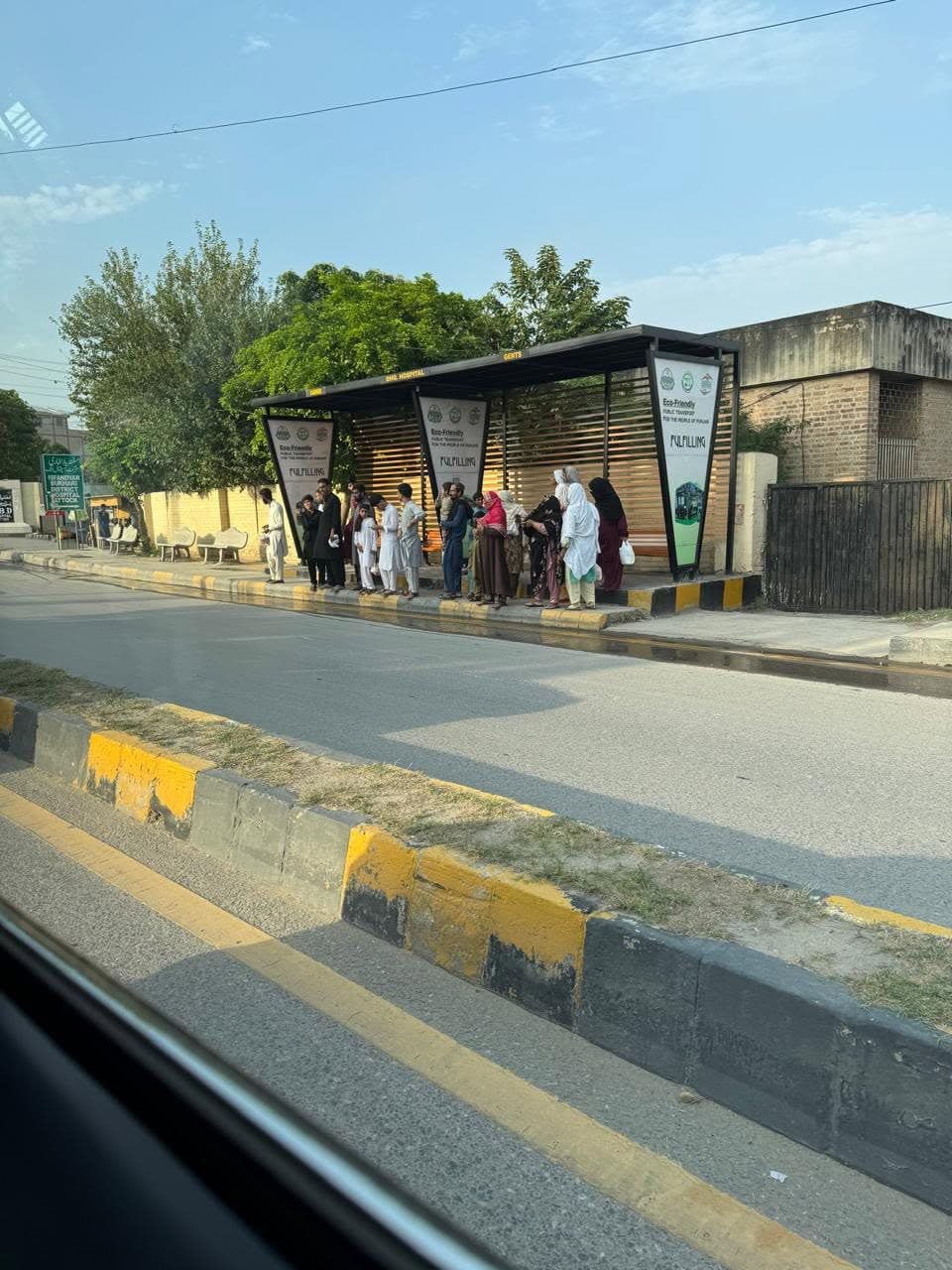
I must also appreciate Suthra Punjab, whose workers I frequently see active in our villages and cities. I sometimes wonder what our surroundings would look like without such efforts, given that, socially, we still have a long way to go in developing a collective sense of cleanliness.
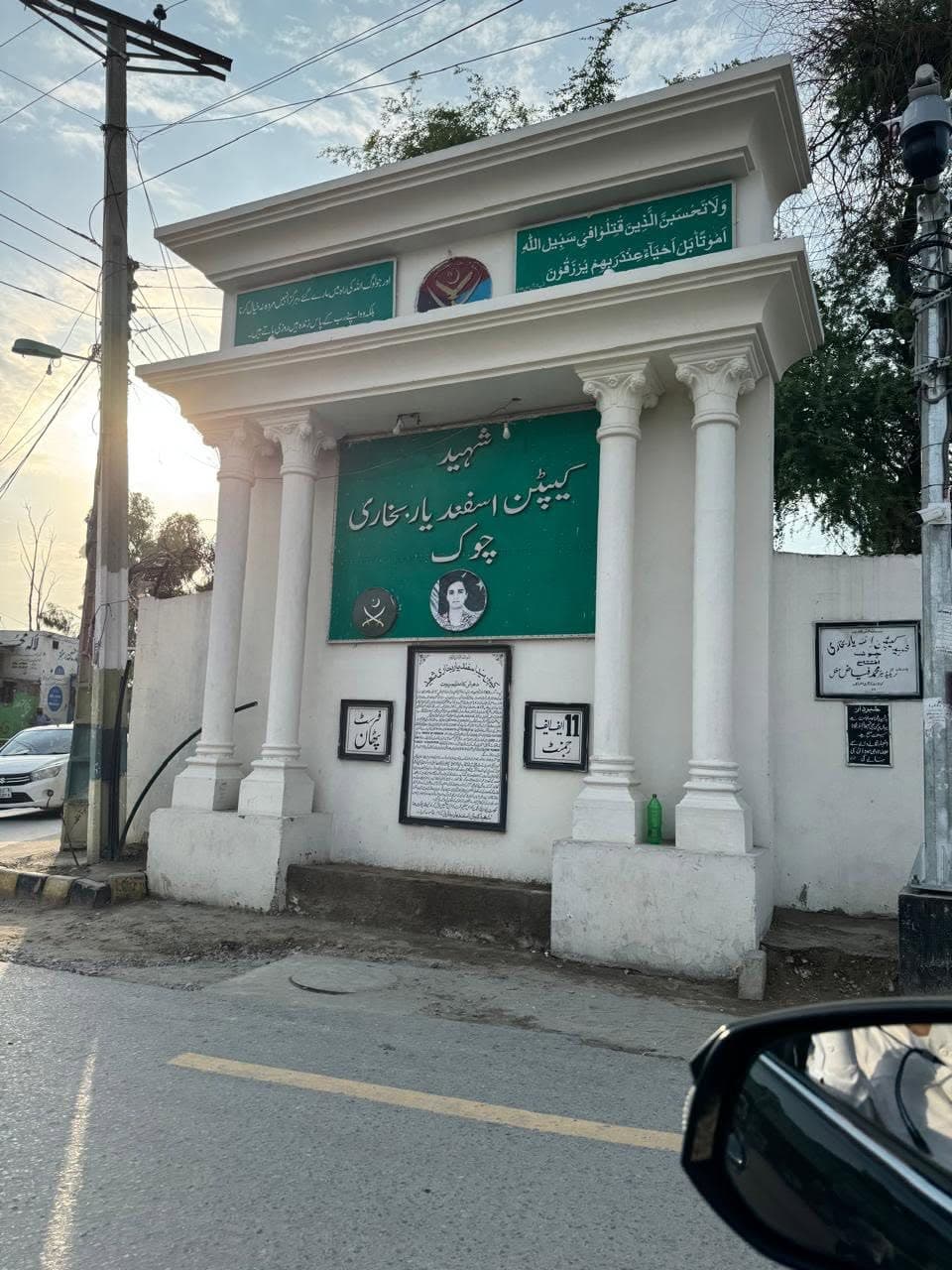
I also noticed that the city proudly carries the name of Shaheed Captain Asfandyar Bokhari, who was martyred while actively pursuing terrorists in Peshawar. I remember attending his janaza, when almost the entire city seemed to have turned out. These are martial areas with a deep tradition of military service, and people rightly take pride in it.
Leaving Attock city, we turned north onto a smaller road known as Choi Road and reached our rendezvous point: Imran’s office at the Union Council of Sheen Bagh, where he works.
We stopped to meet him and asked him to join us in our jeep.
Imran is a sturdy man in his early forties and deeply passionate about historical research. One could not help asking what had inspired him to write about tribal history at this stage of his life. His answer was simple: the passion had developed in early childhood and had stayed with him ever since.
It is rare to find people with such knowledge of land, revenue records, history, different eras and personalities, together with an understanding of geography and its relationship with anthropology — and, above all, the ability to document it all in writing.
As we talked, we headed towards the Kala Chitta Range, now clearly visible ahead of us. The road twisted through a gorge and gradually climbed into the dense forests of Kala Chitta.
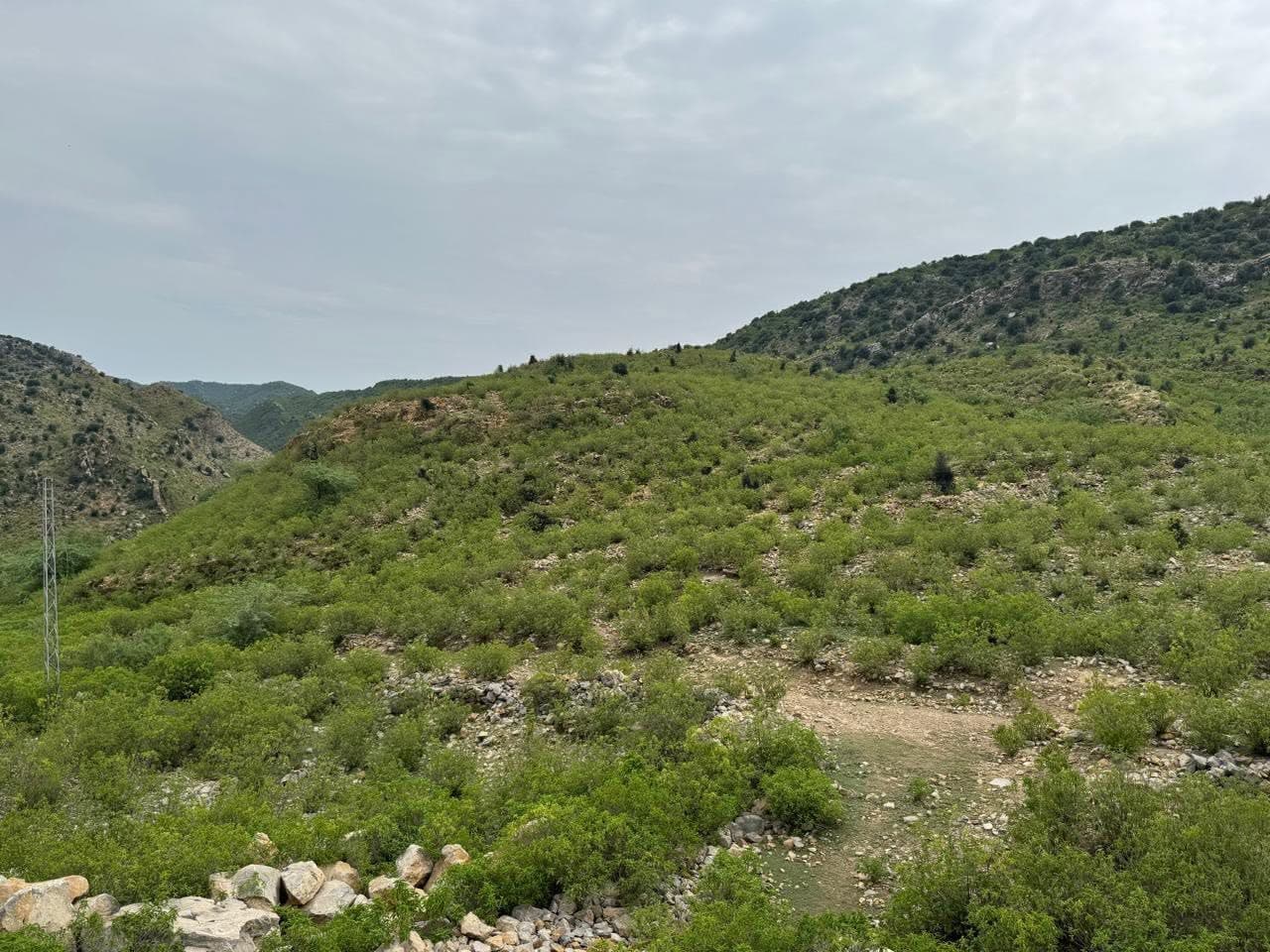
My memory lane came alive once again. I remembered my father coming here for shikar, or hunting, and particularly the famous incident when local people called him to hunt a leopard that had become dangerous. A newspaper clipping carrying his photograph remained displayed in our ancestral home for years.
This was not my first visit to Kala Chitta, but it was my first journey to Bagh Nilab.
As we approached the village of Basal, we turned east onto a newly constructed narrow road leading towards Bagh Nilab. There was hardly any population, and the kikar forests became increasingly dense.
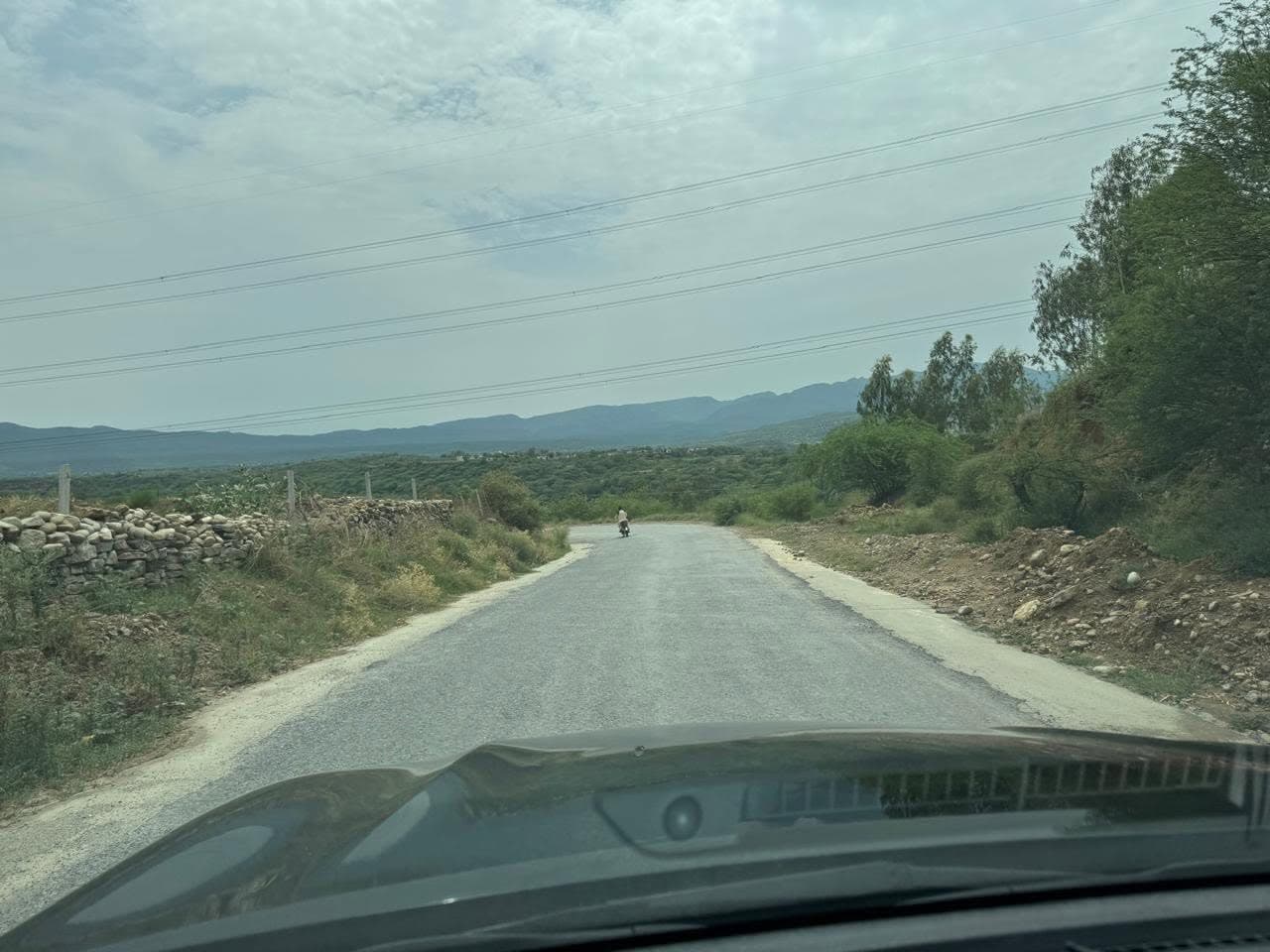
The Kala Chitta Range is now recognised as the Attock Kala Chitta National Park and spreads over a vast area. It is known for its biodiversity, with thick growth of local acacia and wild olive. The range cuts into the Potohar region, creating a distinctive and striking landscape.
Like many high places, Kala Chitta also carries legends of love and tragedy, including that of Rani Tarot and Raja Rasalu. According to local tradition, after the prince was beheaded, Rani Tarot jumped to her death. I hope to visit the location someday, as it appears to be an interesting climb.
The landscape is rugged and beautiful and, in places, reminded me of North and South Waziristan.
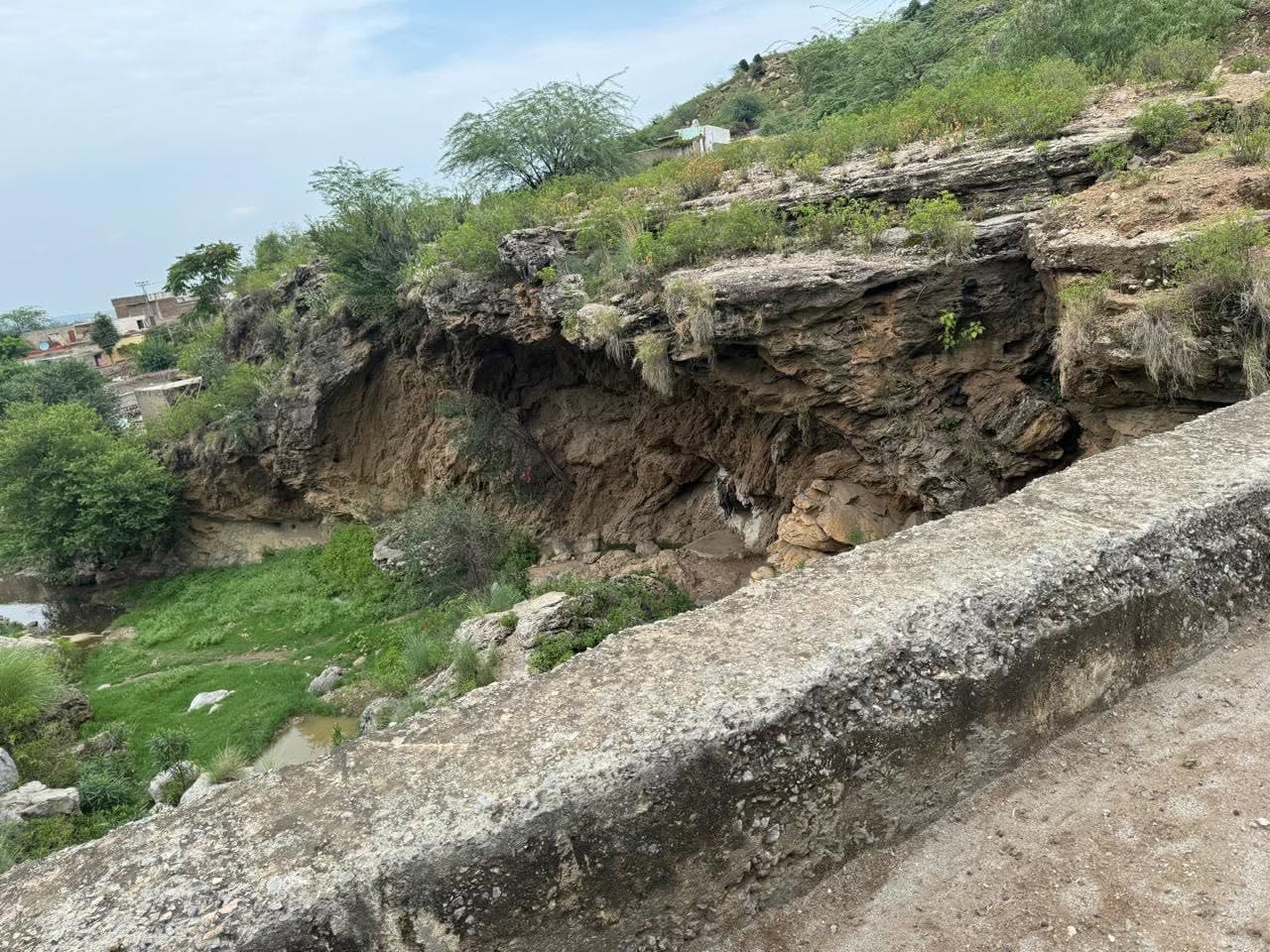
For those unfamiliar with it, the Kala Chitta Range is also internationally known for the Kuldana Formation and its fossils. Without going too deeply into geology, these formations date back millions of years. Researchers have studied fossils from the area to understand ancient forms of life, including early whales such as Pakicetus.
It makes one realise how little we know about our own country.
After travelling for about an hour from Attock, we finally entered Bagh Nilab.
An isolated house stood away from the main village. Imran told us that he had originally built it for visitors, but it had now become his own residence in Bagh Nilab.
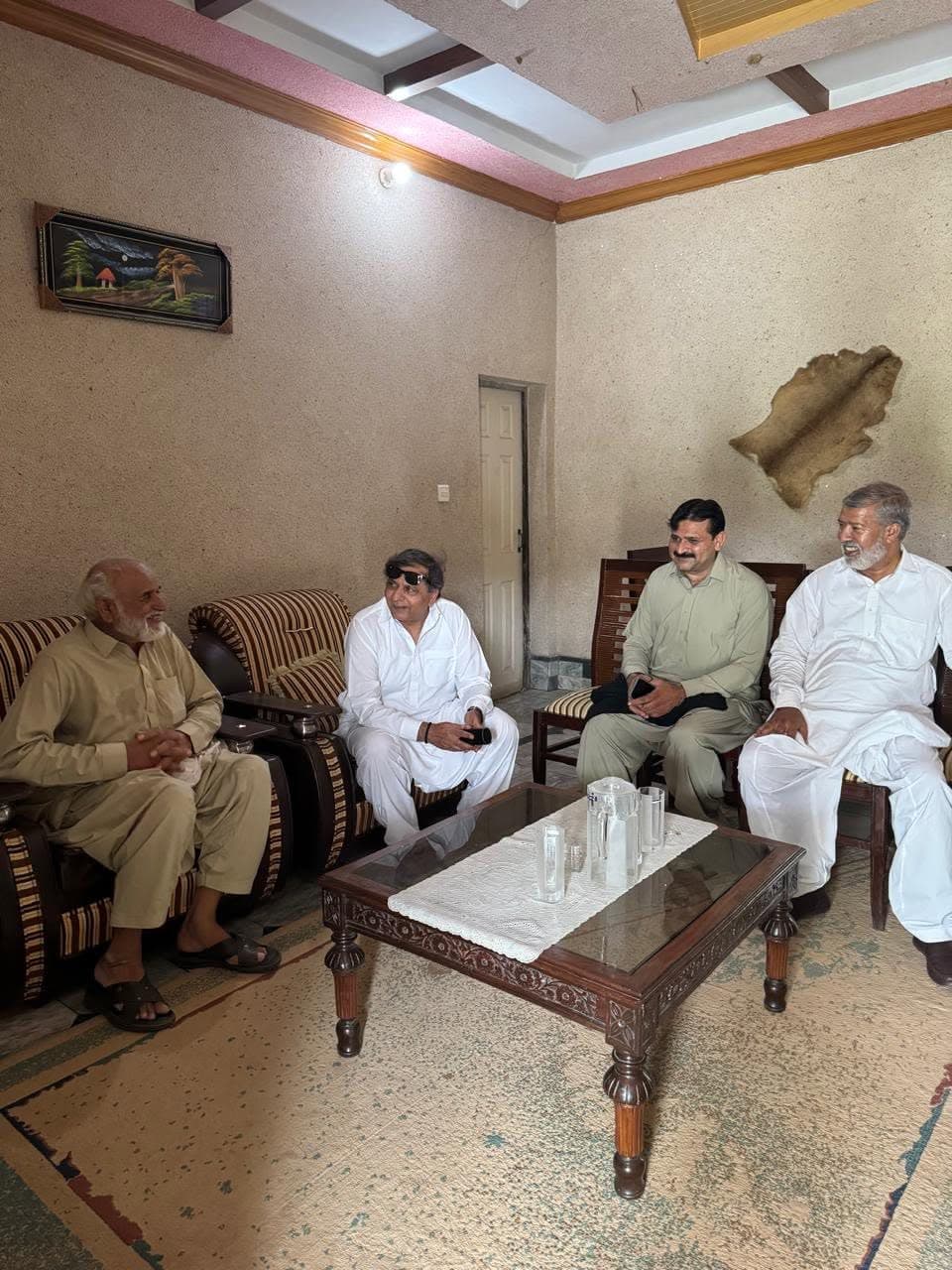
We were welcomed by his father, Sajjad Khan, a tall and sturdy Khattar gentleman who, mashallah, appeared to be well into his seventies. He had spent 44 years in the teaching profession and was now retired. He spoke proudly of his two sons; the other, who later joined us, works in the Forest Department.
Being an ardent shikari himself, I naturally asked him about leopards, locally known as Parla. He told me that they still exist in the surrounding forests, along with deer and other wildlife.
The monsoon heat could be felt, with the Kala Chitta forests on one side and the mighty Indus on the other, but inside the house, under the cooler, it was comfortable as we talked about different periods of history.
Bagh Nilab is an extraordinary place. I have always felt that it is deeply underpinned by history.
For centuries, this region served as an important crossing point for travellers, armies and invaders coming from Khurasan — encompassing areas of present-day Afghanistan and Iran and connecting further towards Central Asia.
We generally associate historic crossings of the Indus with Attock Khurd, particularly because of its later prominence along the Grand Trunk Road. However, Bagh Nilab was also an important crossing point, where the Indus becomes comparatively calmer after descending from the mountains.
Boats could be anchored here more easily, facilitating movement across the river. According to historical traditions and writings, numerous rulers and armies passed through this region over the centuries.
Bagh Nilab was once a much larger settlement, almost like a town, with transportation and communication relying heavily on waterways and routes through the surrounding valleys. I recalled my discussions with Professor Naqvi, who has extensively studied the Indus and its historical use as a transportation route.
The area contains enormous old graveyards. At my request, we later went to see them. Their scale gives some indication of how many generations and communities must have lived and passed through this region.
Interestingly, Imran told me that during local exploration he had discovered coins and millstones dating to the Kushan period. He also spoke of a coin associated with Alexander’s era, although Alexander himself is believed to have crossed the Indus further upstream at Hund.
From Imran’s dera/hujra, we travelled towards the village centre to take in the breathtaking view of Bagh Nilab.
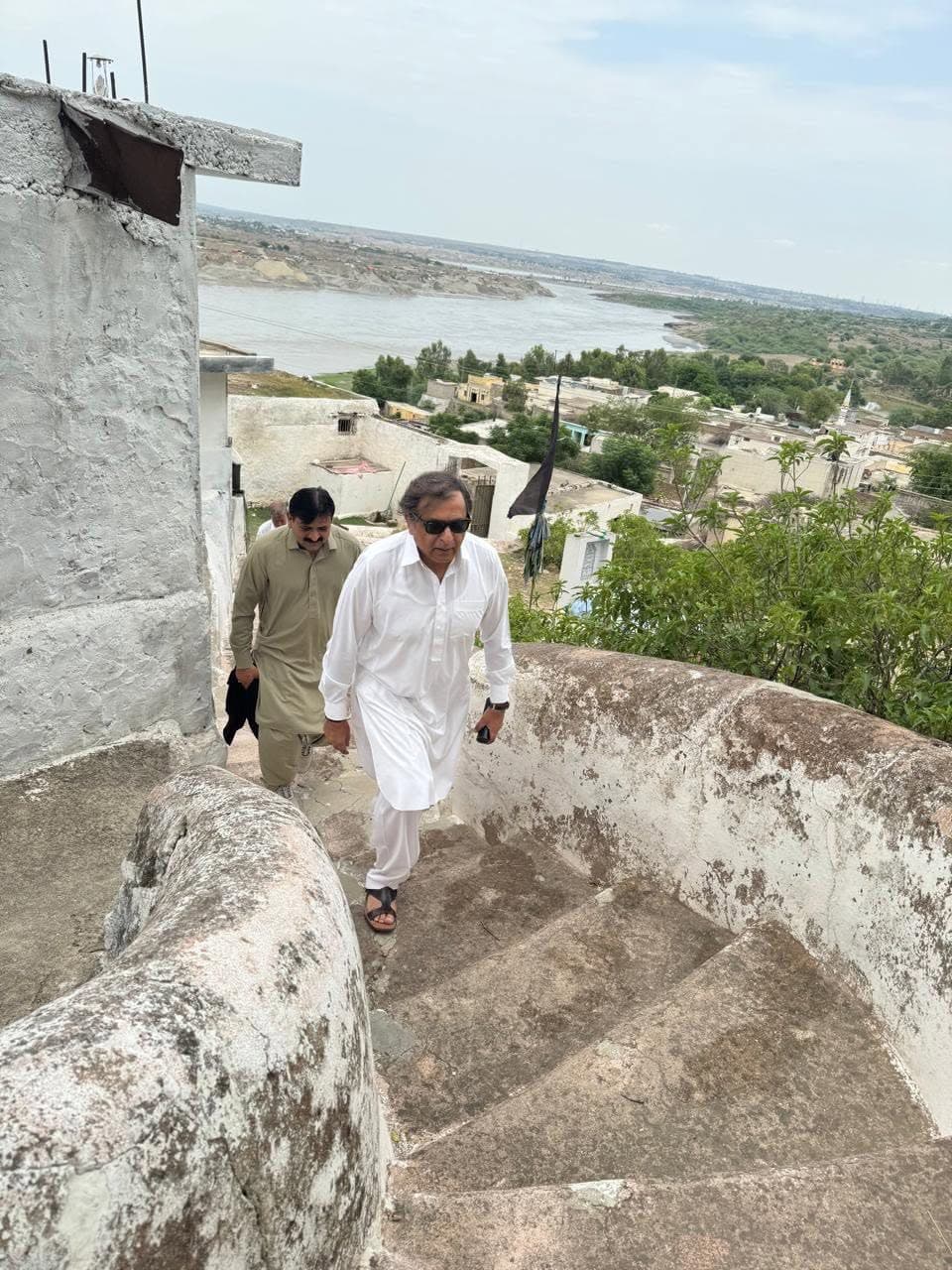
The name itself is evocative: Neel means blue and aab means water — hence, blue water. The Indus can indeed appear beautifully blue here, although we had arrived during the monsoon season.
Standing in the middle of the village, Imran explained its remarkable geographical position, close to the meeting points of areas connected with Nowshera, Kohat, Jand and Chhachh.
I asked him about Ghora Tarap, literally interpreted locally as “a horse across,” which is associated in local tradition with the famous pursuit of Jalaluddin Khwarazm Shah by Genghis Khan.
According to the story, when Jalaluddin was surrounded, he rode his horse into the Indus and escaped across the river, prompting Genghis Khan to admire his courage.
I wanted to visit the place, but we decided to leave it for our next trip because the high monsoon waters of the Indus made access difficult. It lies a few kilometres beyond Bagh Nilab and is also associated locally with an outpost from the period of Sher Shah Suri.
We next decided to climb to the famous shrine of Shah Abdul Wahab Bokhari, commonly known as Nuri Sultan.
His period is associated with the era of Emperor Babur, and he had strong links with the Khattars. He is also remembered as the murshid of Neeli Khan, who is sometimes referred to as Khattar Khan.
I am deliberately avoiding too much detail about the origins of the Khattars here, otherwise the travelogue may turn into a genealogical essay.
There are several theories concerning Khattar origins. One tradition connects them with migration from the west through Khurasan before their settlement around Kala Chitta. Another links their migration to the Ghaznavid and Ghaurid periods and Kandahar. These stories contain many layers that require much deeper study.
I asked Imran about his DNA test. His result was R-M198, and I am also considering having mine done.
His results indicate an Indo-Aryan genetic lineage. My own belief is that our ancestors may have lived in this region for thousands of years, changing religions and identities over different historical periods.
Other genealogical traditions connect the Khattars with Qutb Shahi lineage and ultimately with Hazrat Ali (RA). However, Bagh Nilab itself is said to have witnessed repeated migrations and displacement during periods of conflict. Communities moved towards Khurasan and later returned, particularly during the period associated with Neeli Khan, eventually spreading across Attock and into other parts of the subcontinent.
Being from Ferozal, near Fateh Jang, I trace my own ancestry seven generations back to Neeli Khan. My forefathers were among the generations that later established Jalalsar, now known as Wah.
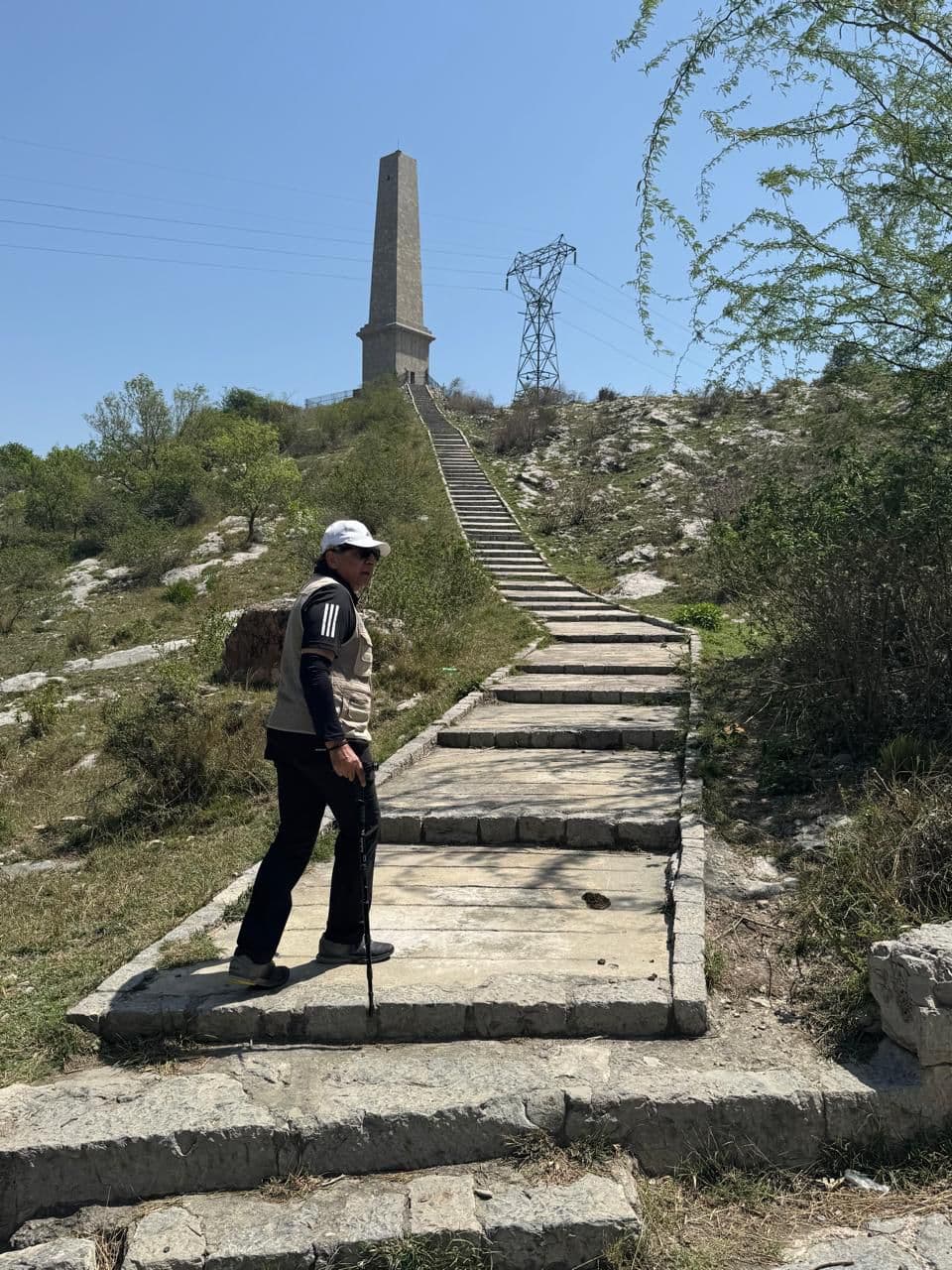
We then began climbing the steps towards the shrine of Nuri Sultan.
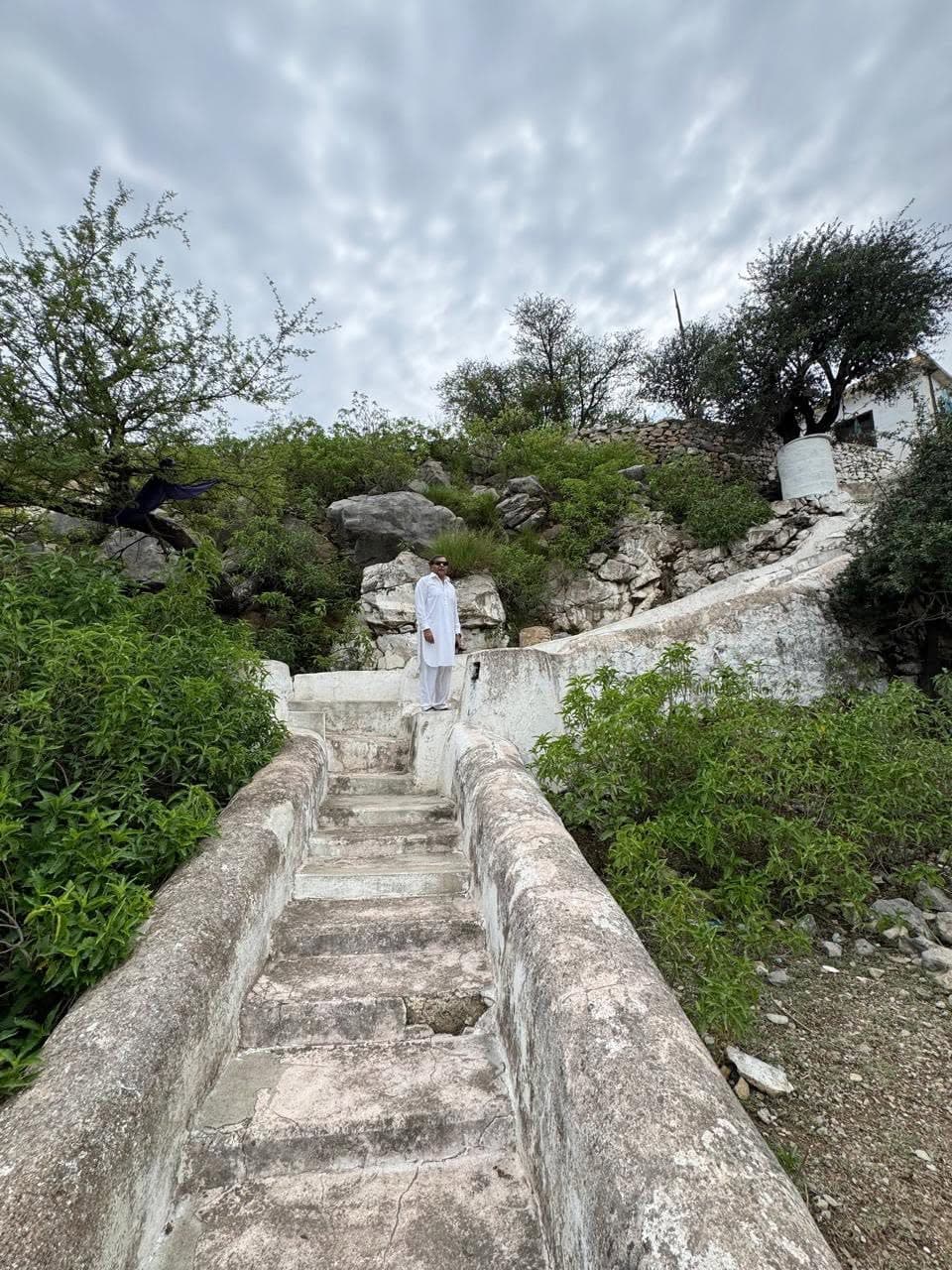
Situated at an elevation, the shrine offers commanding views of the surrounding countryside. Local tradition associates the stairs and the small mosque there with the period of Emperor Akbar.
Nuri Sultan’s forefathers are said to have migrated from Uch Sharif to Balot in Dera Ismail Khan and later to Bagh Nilab. His spiritual lineage is associated with Jalaluddin Surkh-Posh Bukhari of Uch Sharif.
Tradition also associates Emperor Babur closely with Nuri Sultan and holds that Babur stayed with him during his time in the region.
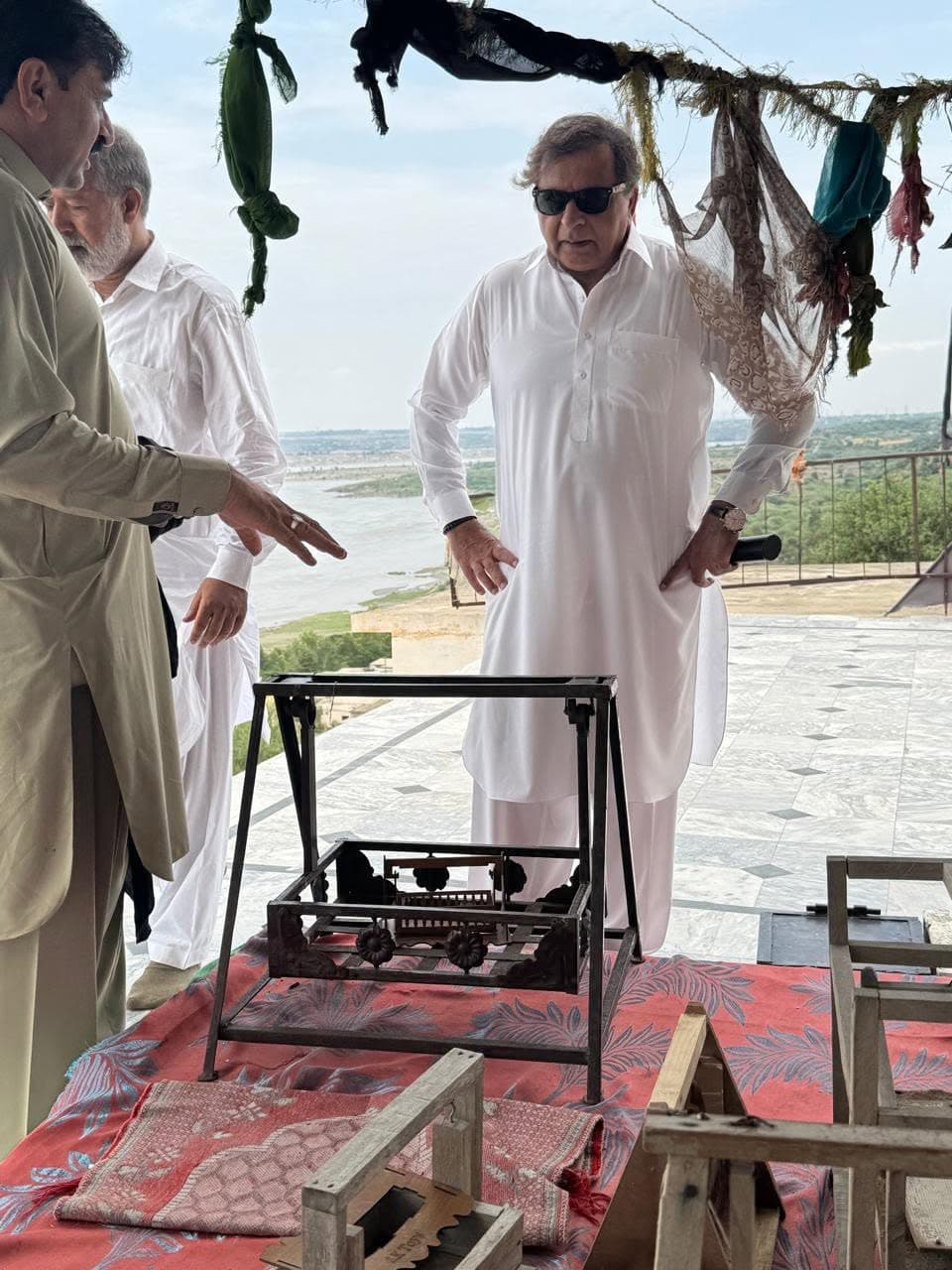
A famous spring supplying water to Bagh Nilab is linked with Bibi Rakhi, the wife of Nuri Sultan, and continues to exist. One of Nuri Sultan’s sons is also said to have guided Emperor Akbar in connection with the construction of the fort at Attock Khurd.
Local historical tradition further associates Nuri Sultan with religious movements of the period, particularly in response to the Jogis connected with Tilla Jogian. A place in Bagh Nilab where a Jogi is said to have lived is still known as Jogian Wala.
Whatever the precise historical details, there is no doubt that Sufism and religious personalities have played a significant role in shaping the social history of this region.
The views from the top, overlooking the river and surrounding countryside, were magnificent.
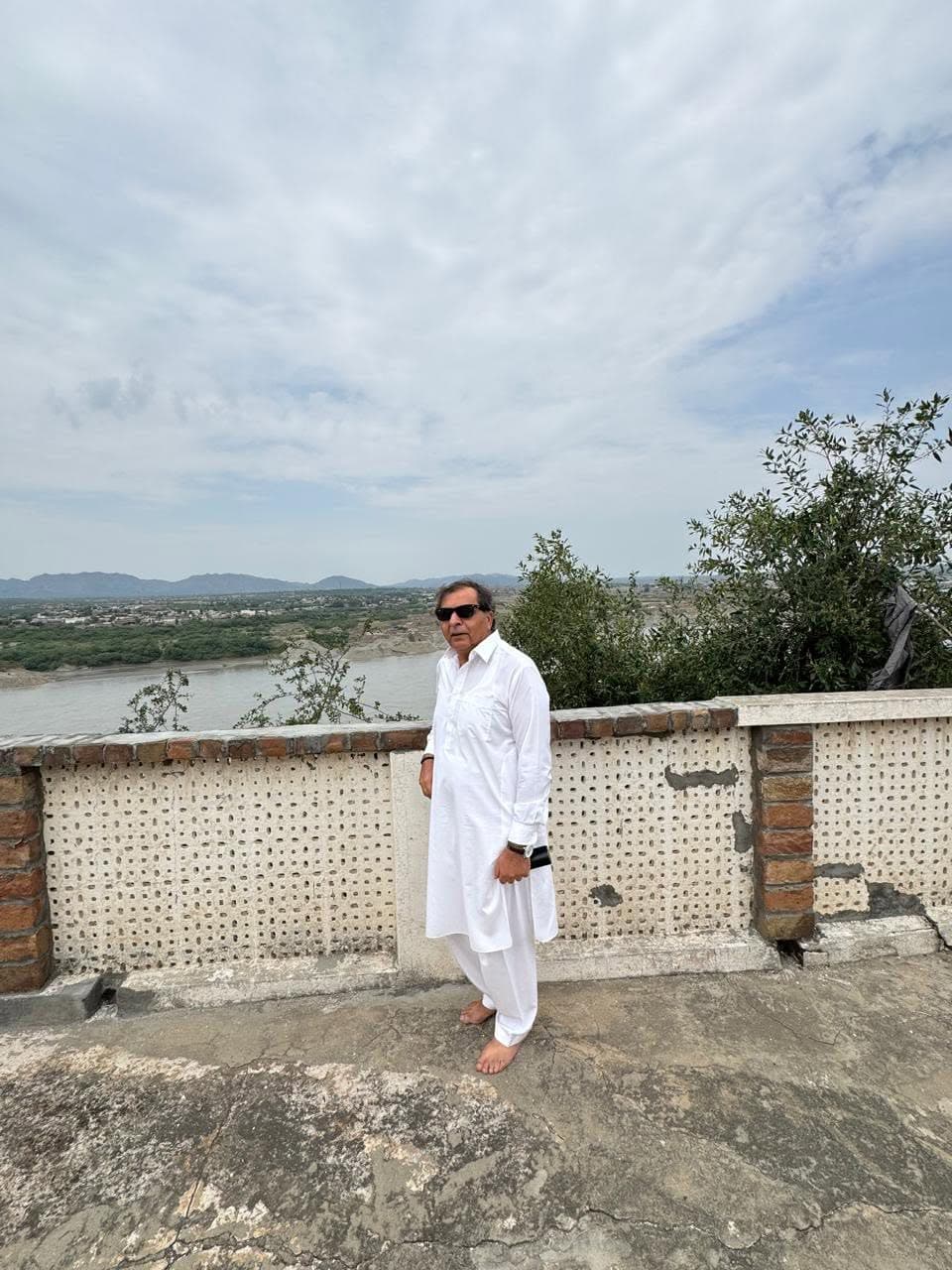
However, something else immediately caught my attention. Particularly on the Khyber Pakhtunkhwa side, numerous excavators could be seen operating along the Indus, apparently engaged in the extraction of gold-bearing material from the riverbed.
The scale of the activity was striking — along with the noise, environmental degradation and disturbance it appeared to be causing to what otherwise seemed a peaceful landscape.
A couple of weeks earlier, a relative of mine who owns land along the Indus near Makhad had remarked jokingly, “Why does the government not collect or buy gold from these people? Pakistan might be able to pay back its debts!”
But behind the humour lies an important question: Who is carrying out this activity, under what legal authority, and where does the extracted gold ultimately go?
We eventually returned to Imran’s house.
Despite our repeated requests not to trouble themselves, food was served. The taste of locally prepared meat, farm chicken and fresh curd was outstanding.
After saying goodbye to Imran’s father, we headed towards what is locally described as Akbar’s fort and then towards the banks of the Indus in search of ancient petroglyphs.
The kacha track eventually ended, and we continued on foot through the kikar forest along the banks of the Indus in the hot and humid afternoon.
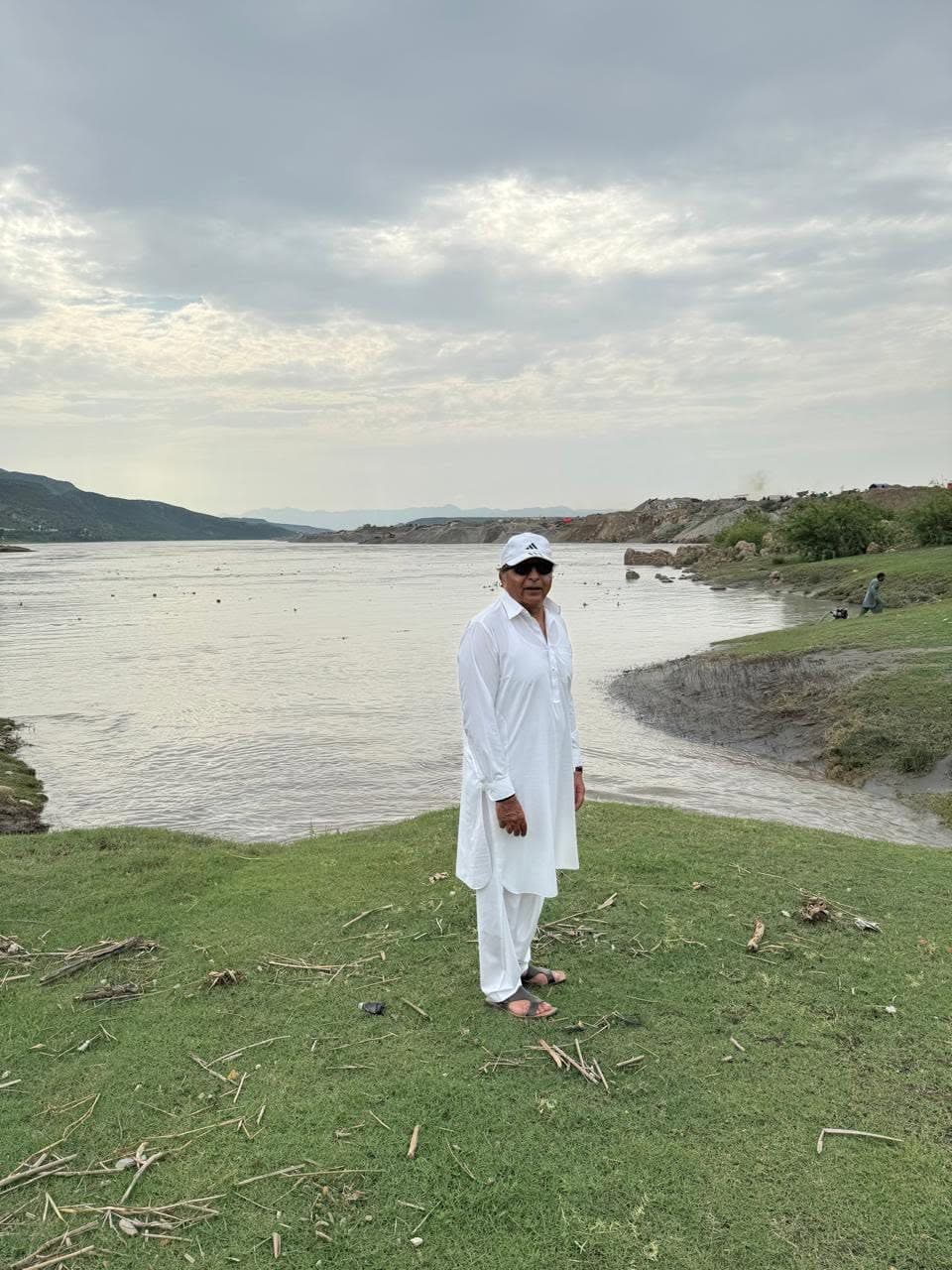
It took us nearly 40 minutes to locate the remains of the fort.
Sadly, very little of it survives. It appears to be on the verge of disappearing altogether. I hope the Archaeology Department can take measures to preserve whatever remains before it is lost completely. The surrounding area is extensive, and a number of old graves can also be seen.
We also located the grave of Neeli Khan Khattar.
From there, it took us almost another 40 minutes to find the petroglyphs. Imran told us that around 30 have been identified in the area, although we managed to see only two.
By then, we had been walking in the heat for nearly two hours and were completely drenched in sweat.
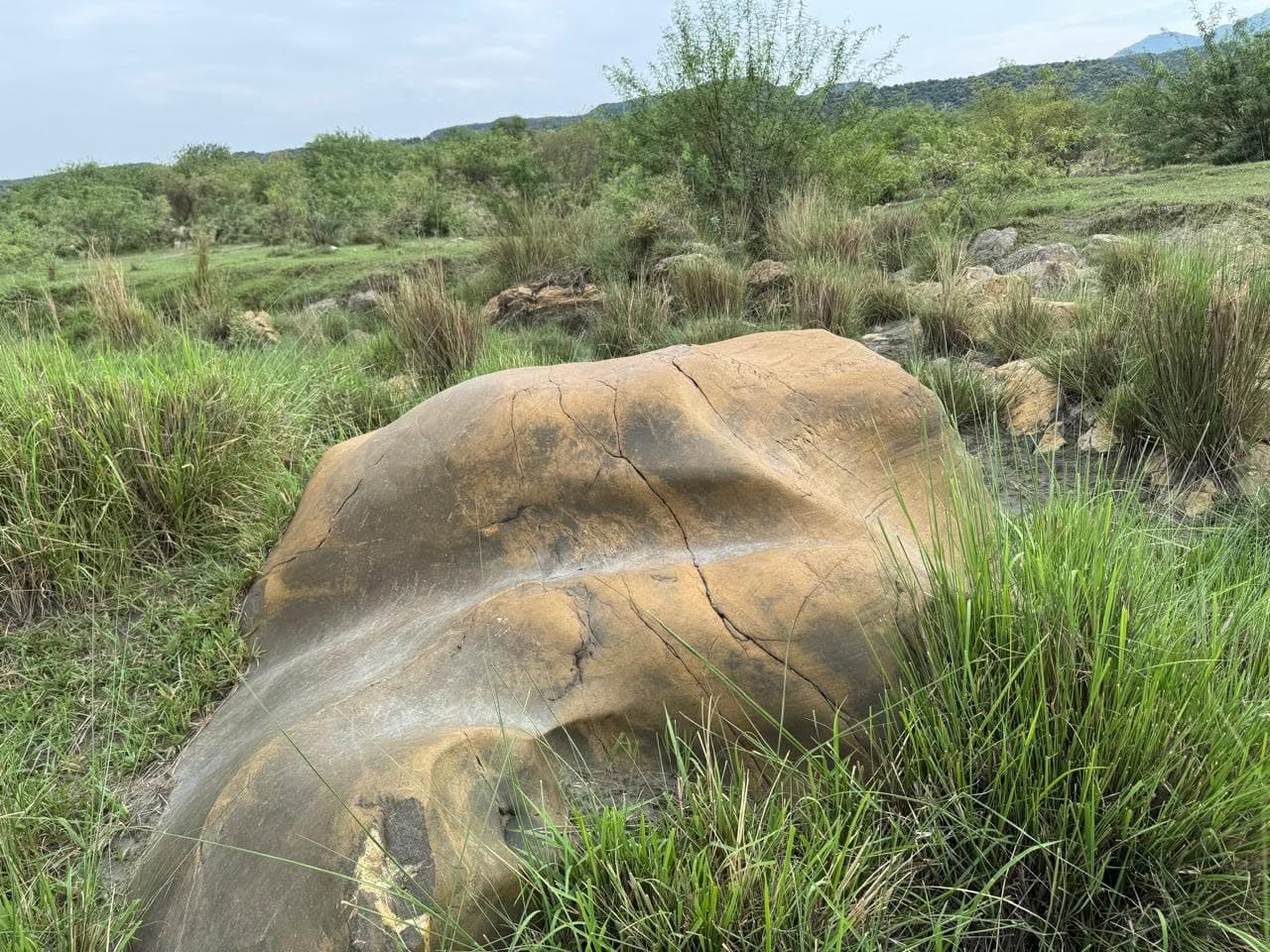
The dark stones carry prehistoric-looking engravings and images. Imran, together with anthropologist Dr Zulfiqar Ali Kalhoro, has made efforts to document them, but many remain vulnerable.
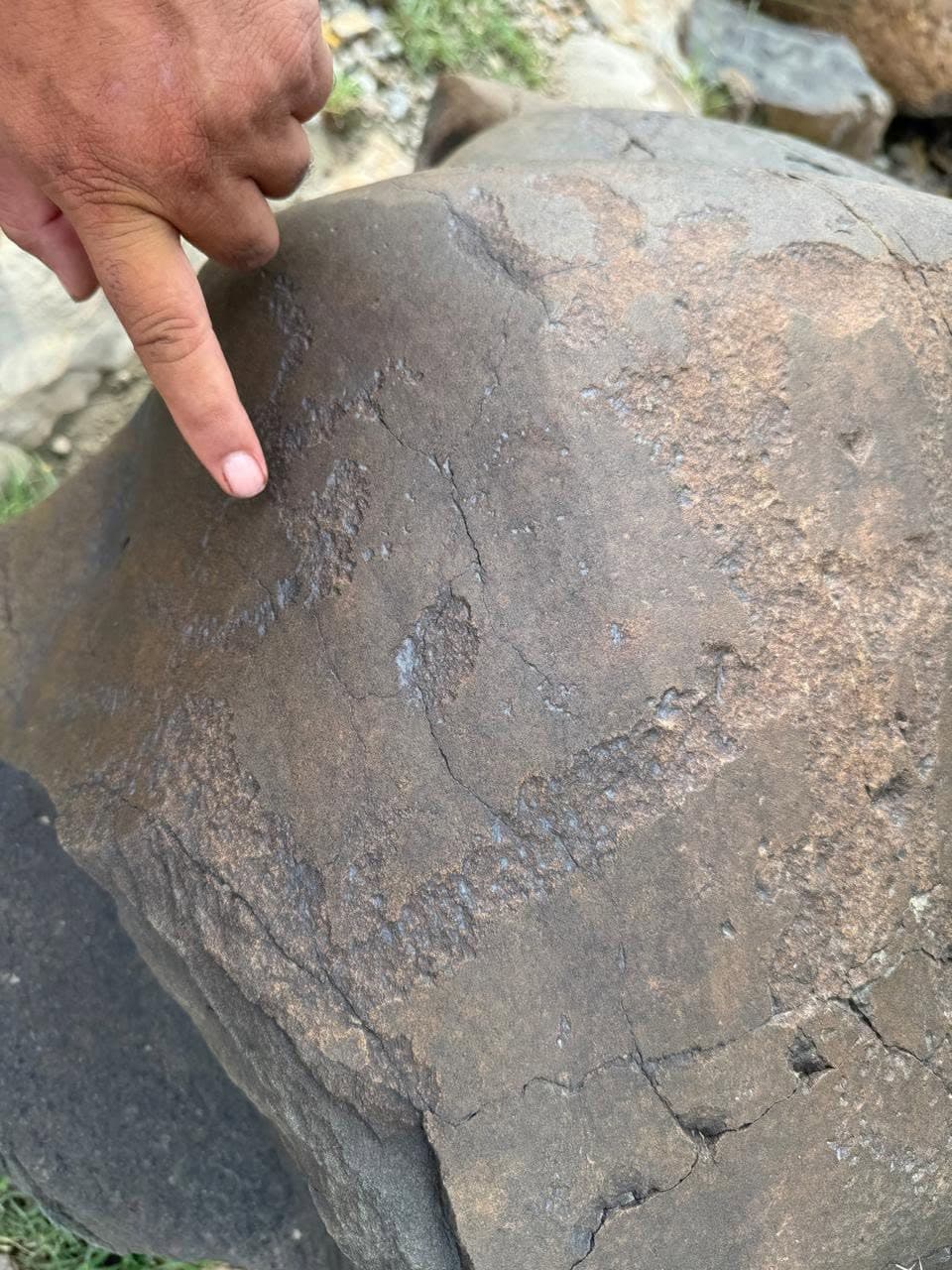
I found myself wondering about their possible relationship with the famous rock carvings of Chilas, or whether they belong to an entirely different prehistoric tradition.
This area remains largely outside the attention of both government institutions and mainstream tourism, although a number of independent researchers continue to work on it.
I only hope that proper attention is given to these remains before we lose them forever.
We eventually said goodbye to Imran’s brother and began our journey back towards Attock. It was almost 5:00 pm.
Retracing our route, we returned to Imran’s office at the Sheen Bagh Union Council, where he presented me with two of his books: “Indus Rock Art” and “Nilab-o-Khattar”.
We discussed his forthcoming work on the Khattars at length, particularly the family genealogy. I also shared my own family-tree research with him, and we exchanged information and findings.
We agreed that I would provide him with material on Wah for inclusion in his book and that our second meeting would be held in Wah, as several gaps still remain — particularly concerning the origins of the Khattars and their journey from Bagh Nilab to the eventual establishment of Wah.
When I returned home and discussed the visit with my family, they had endless questions.
It made me realise that perhaps we have gradually stopped discussing our history with one another. Social media has, in many ways, taken over those conversations.
Inshallah, I will return to Bagh Nilab.
I doubt many people would attempt such an expedition in the scorching monsoon heat — but I thoroughly enjoyed every moment of it.