
 Photo: Department of Archaeology & Museums, Government of Pakistan
Field guides / Punjab / Lahore / Tomb of Allama Iqbal
Field guide · Heritage
Lahore
Lahore District · Punjab, Pakistan
Tomb of Allama Iqbal
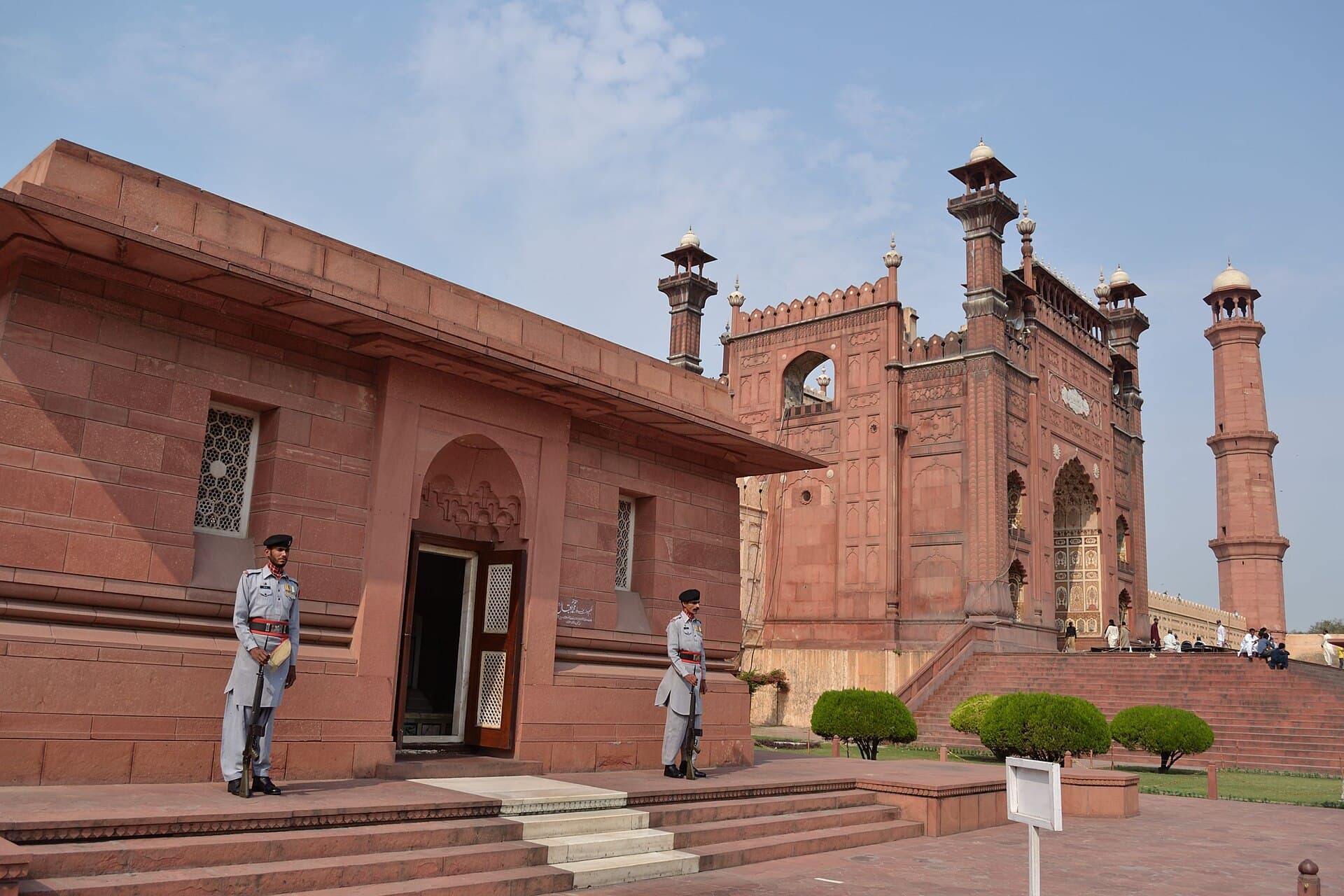
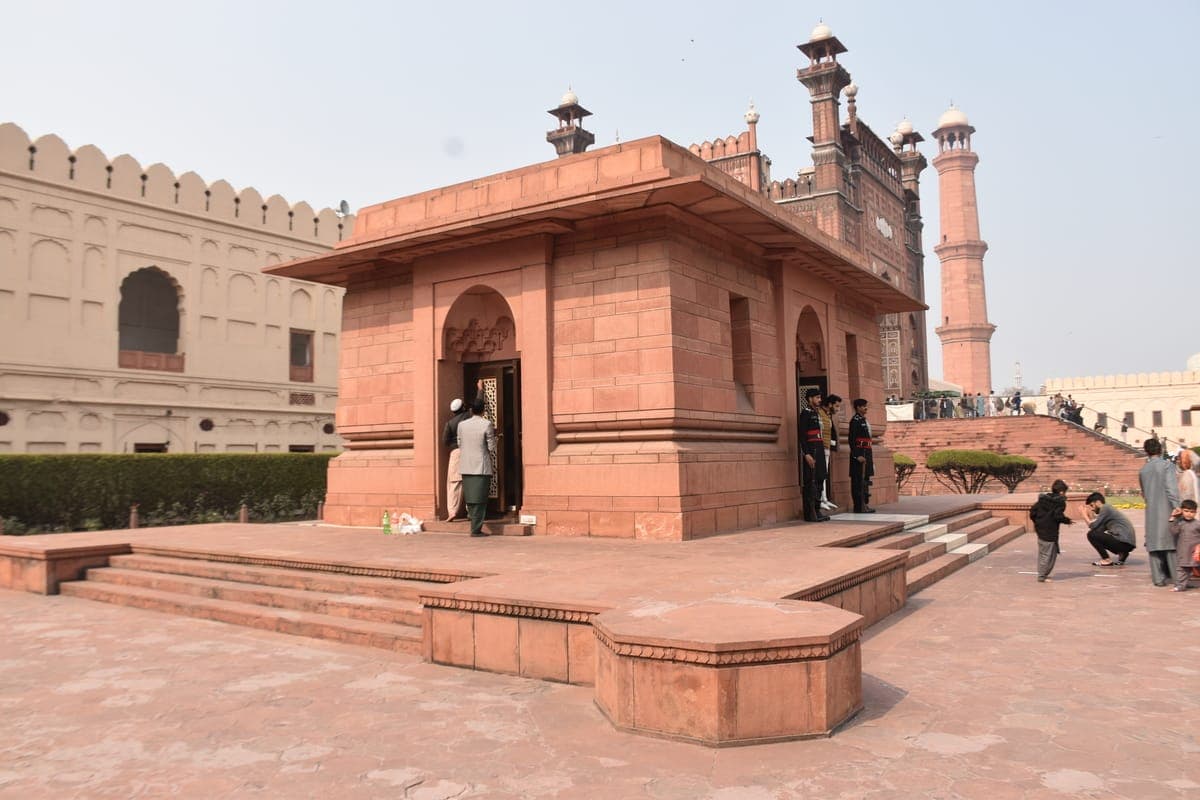
The red-sandstone mausoleum of national poet-philosopher Muhammad Iqbal, built in 1951 in the Hazuri Bagh between Lahore Fort and Badshahi Mosque, with a marble cenotaph and a ceremonial guard on permanent duty.
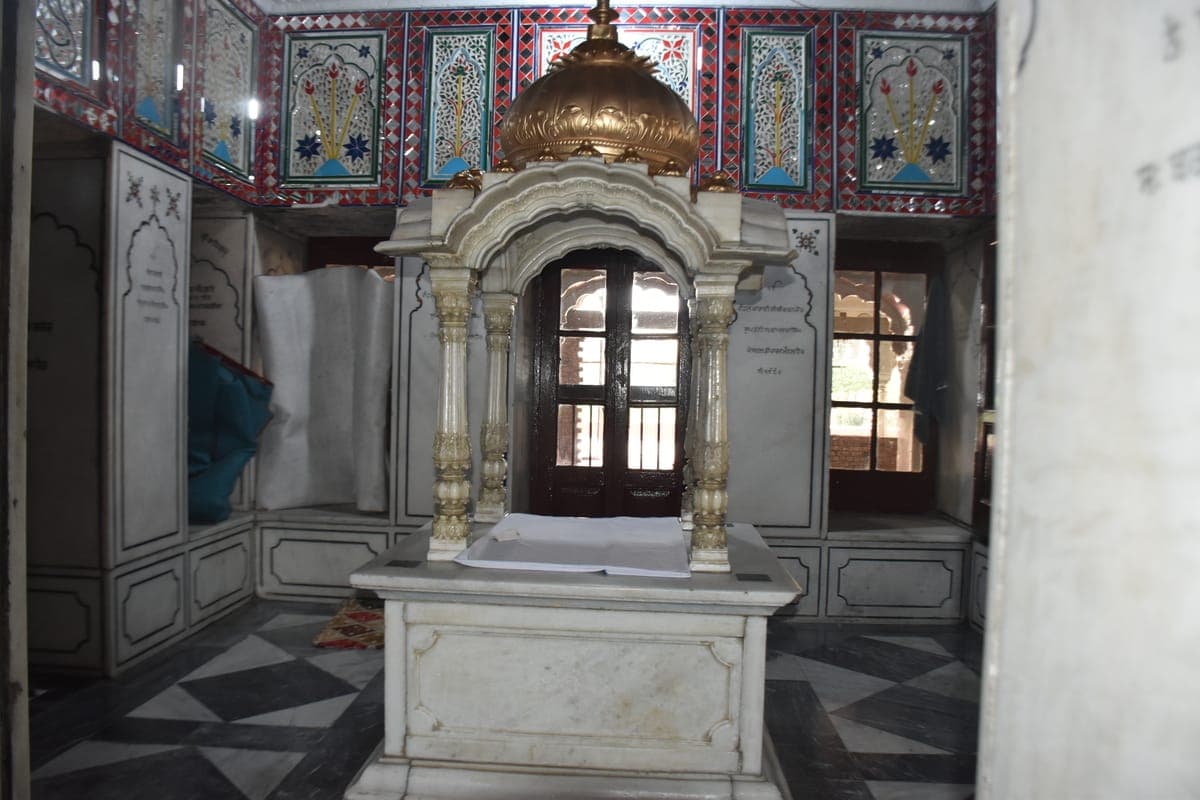
Muhammad Iqbal, Pakistan's national poet-philosopher, is buried in a red-sandstone mausoleum built in 1951 in the Hazuri Bagh, the garden square between Lahore Fort and Badshahi Mosque. Designed in a Mughal-Afghan style with a plain marble cenotaph, the tomb is watched over by a ceremonial guard and draws a steady stream of visitors from the adjoining mosque courtyard.
Why go
- ✦Tomb of national poet-philosopher Muhammad Iqbal
- ✦Built 1951 in Mughal-Afghan style
- ✦Marble cenotaph, ceremonial guard on duty
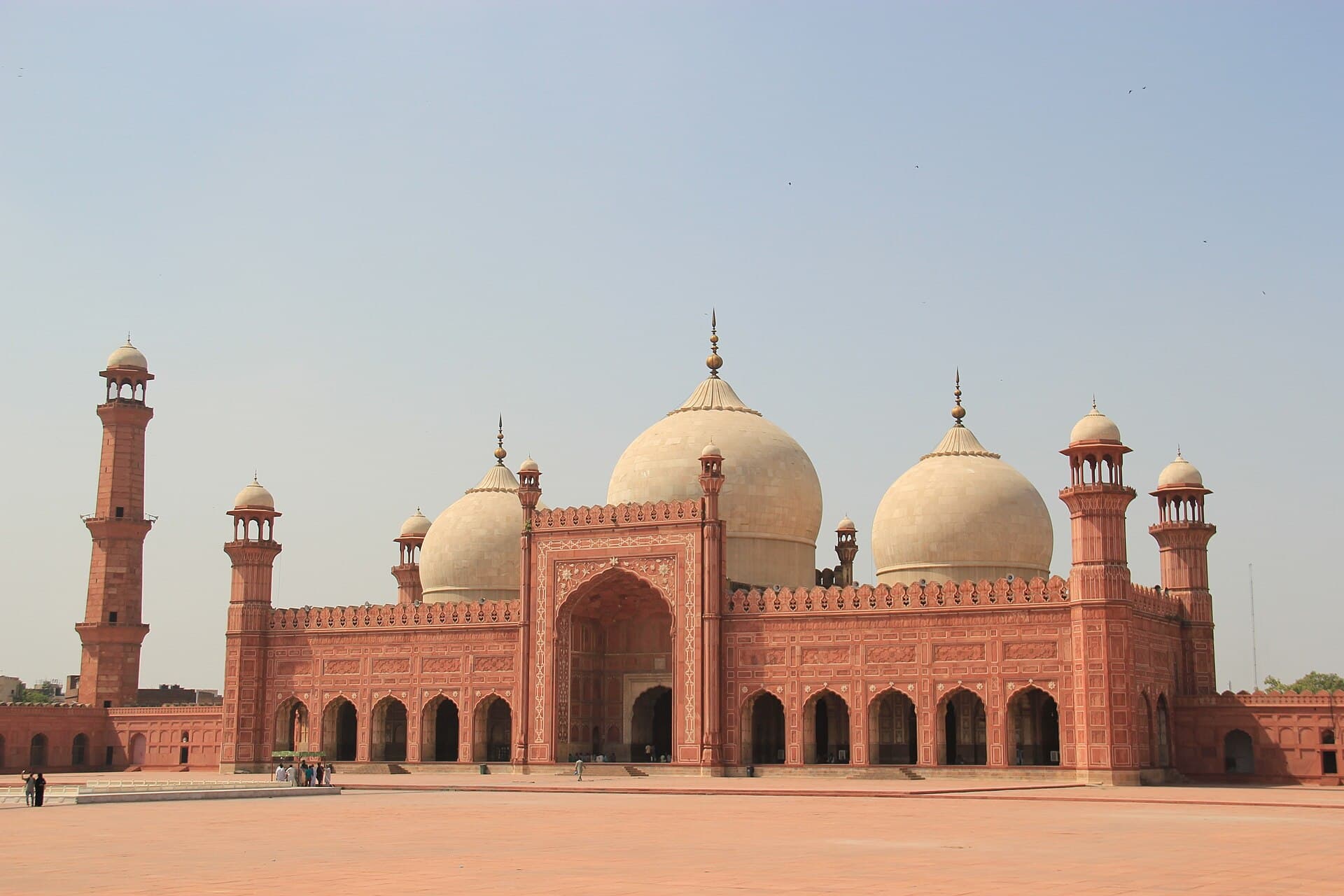
- ✦Sits between Lahore Fort and Badshahi Mosque
Iqbal's Legacy
Muhammad Iqbal's Urdu and Persian poetry and his political philosophy are widely credited with shaping the intellectual case for a separate Muslim homeland in South Asia, giving him status as the country's national poet.
Architecture and Setting
The tomb's sandstone and marble design deliberately echoes Mughal funerary architecture, placed in the same Hazuri Bagh square as the fort and mosque so all three sit within a single, walkable heritage cluster.
Pairing with the Fort and Mosque
Almost every visitor combines the tomb with Lahore Fort and Badshahi Mosque in one walking loop, since all three share the same Hazuri Bagh courtyard entrance.
Planning tip
Best Time to Visit, Year-round, best combined with a Badshahi Mosque/Lahore Fort visit.
Getting there, In the Hazuri Bagh, between Lahore Fort's main gate and Badshahi Mosque's courtyard, within the same walled-city complex.
Allow, 20-30 minutes.
What to Do
Nearby
Straight-line distance from Tomb of Allama Iqbal, within 5 km.