
Field guides / Punjab / Tomb of Noor Jahan
Field guide · Heritage
Tomb of Noor Jahan
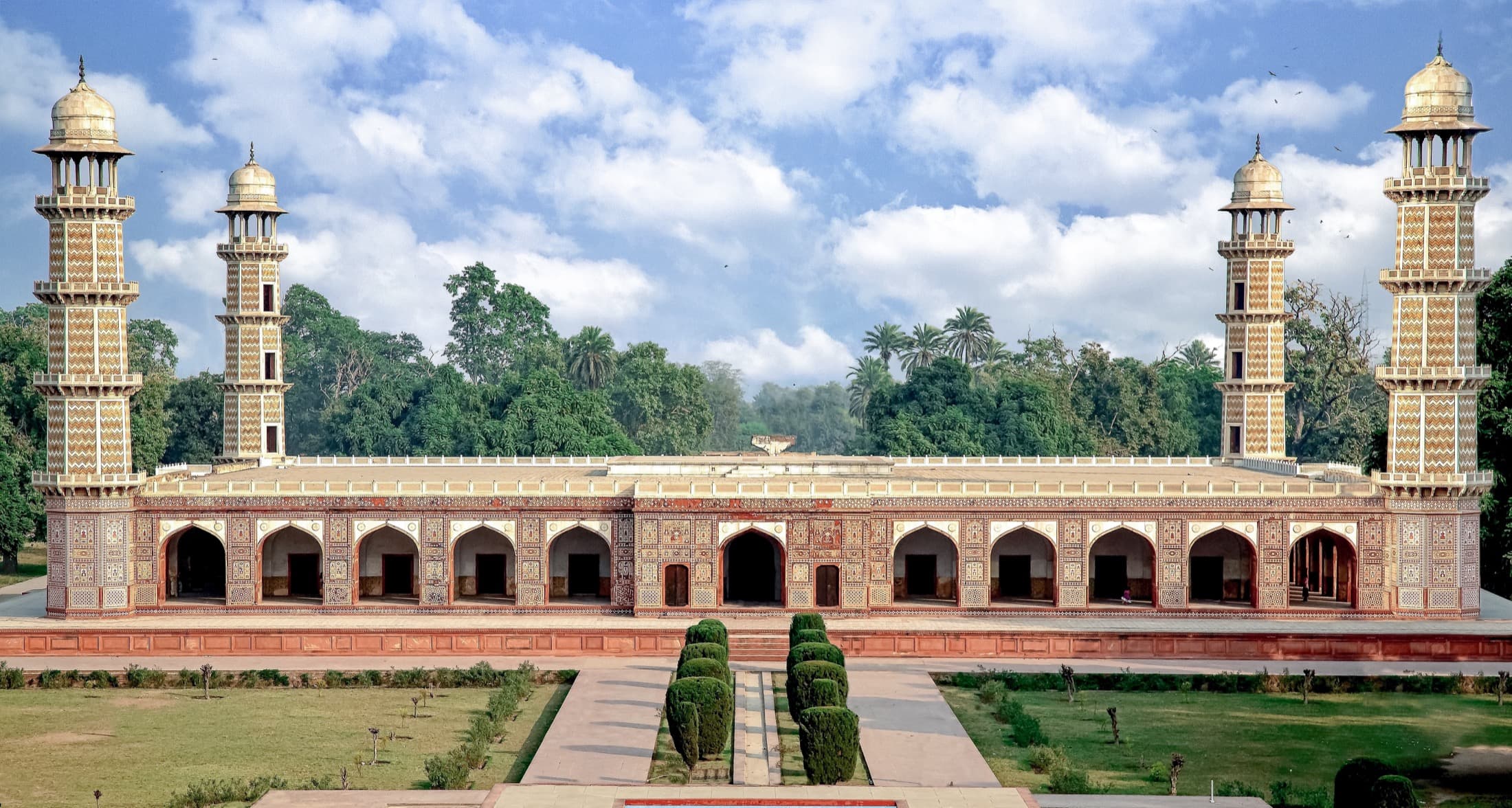
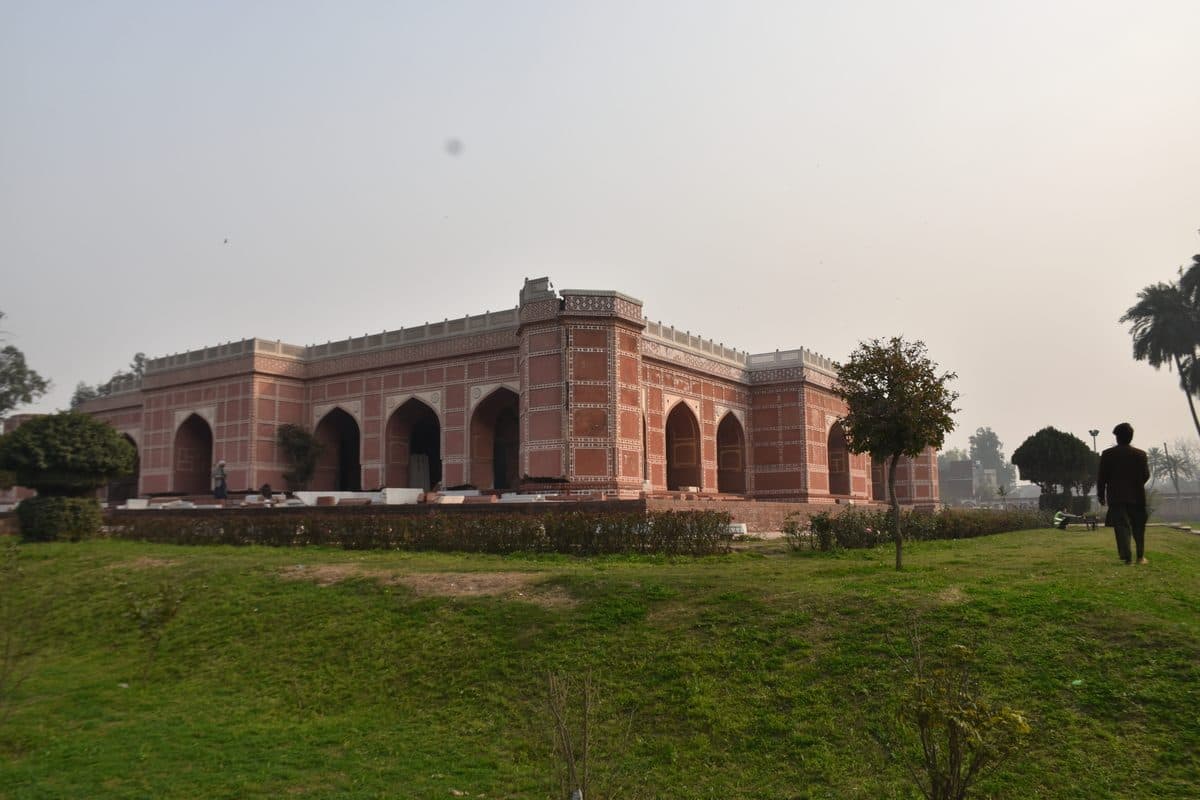
The tomb of Nur Jahan (Mehrun Nisa Begum) was built by her during her lifetime, standing on a platform 48 m square.
The tomb measures 12.4 sq.m and 6 m high. The interior was originally lime plaster bearing floral fresco paintings. The minute paintings were done in different positions in the honeycombed cornices of some of the rooms. The original cenotaphs over the graves of Nur Jahan and her daughter Ladli Begum, which are said to have been of marble, have disappeared, probably robbed during the Sikh rule.
Why go
- ✦Built by the Mughal empress for herself, in her own lifetime
- ✦Stands on a platform 48 metres square
- ✦Minute floral fresco worked into honeycombed cornices
- ✦Nur Jahan and her daughter Ladli Begum both buried here
- ✦In Shahdara, beside Jahangir's tomb and Asif Khan's
History
She was first married to the Persian soldier Sher Afghan Ali Quli Khan, by whom she had a daughter, Ladli Begum; he died in 1607 and she married Jahangir afterwards. Both women are buried here. During the Sikh period the tomb was stripped of its marble and decorative stone, which was carried off to Amritsar for the Golden Temple. What remains is the red sandstone structure and traces of the fresco that once covered the interior.
Historical Significance
Part of the Shahdara ensemble — with Jahangir's tomb, Asif Khan's tomb and the Akbari Sarai — the most important group of Mughal funerary buildings in Pakistan.
Architecture
It stands on a platform 48 metres square, the tomb itself some 12.4 metres square and 6 metres high. The interior was lime-plastered and painted with minute floral fresco, worked into the honeycombed cornices of several of the rooms. The original cenotaphs over the graves of Nur Jahan and her daughter Ladli Begum, said to have been marble, are gone — probably taken during the Sikh period.
Why Visit
The empress who ran an empire, buried in a tomb she designed herself, stripped bare of its marble. The loss is part of the story.
Interesting Facts
- She designed and built her own tomb during her lifetime
- Her marble was taken during the Sikh period to decorate the Golden Temple at Amritsar
- Her daughter Ladli Begum, from her first marriage, is buried here with her
- She died in Lahore on 18 December 1645
Planning tip
Best Time to Visit, October to March. Lahore's summer is fierce and the Walled City offers little shade; December and January can be heavily smog-bound.
Getting there, All within Lahore. The Walled City monuments — the gates, Mariam Zamani, Wazir Khan's Baradari and Hammam — sit close enough to walk between; Shahdara, Baghbanpura and Mughalpura are a short drive out.
Allow, Thirty minutes to an hour at each; a full day for the Walled City circuit.
What to Do
Make Tomb of Noor Jahan Part of a Trip
GreenPak resorts within reach, and the journeys that travel this region.
Nearby
Straight-line distance from Tomb of Noor Jahan, within 30 km.