
Choose Hunza for your first trip to northern Pakistan: old forts and villages, Attabad Lake and the Karakoram Highway up to Passu and Khunjerab, all within a few hours of Karimabad. Choose Skardu if you want wide, wild landscapes: Deosai plateau, the Kachura lakes, Shigar, and the road toward the Baltoro Glacier and K2.
Both are in Gilgit-Baltistan, both can be reached by air from Islamabad when the weather allows, and both are at their best from spring to autumn. The difference is character: Hunza is a lived-in valley of villages and forts strung along a famous highway; Skardu is a wide basin of sand, lakes and huge mountains, and the jumping-off point for the Karakoram's great treks.
| Hunza | Skardu | |
|---|---|---|
| Getting there | Fly Islamabad–Gilgit (weather permitting), then about 2–3 hours by road to Karimabad; or the Karakoram Highway by road, usually over two days | Fly Islamabad–Skardu (weather permitting); or by road via the Karakoram Highway and the Baltistan Highway from near Jaglot |
| Altitude | Karimabad about 2,500 m | Skardu about 2,228 m |
| Season | April to October; blossom in late March and April, colour in October | April to October; Deosai only early July to mid-September |
| Signature sights | Baltit and Altit forts, Eagle's Nest, Attabad Lake, Passu Cones, Hussaini bridge, Khunjerab Pass | Shangrila and Upper Kachura lakes, Satpara Lake, Shigar Fort, Deosai, the road to Askole and the Baltoro |
| Best for | Culture, first-timers, a classic highway road trip | Big landscapes, high plateaus, trekking and mountaineering |
| GreenPak stays | GreenPak Hotel Hunza | K2 GreenPak Hotel Skardu |
Why choose Hunza
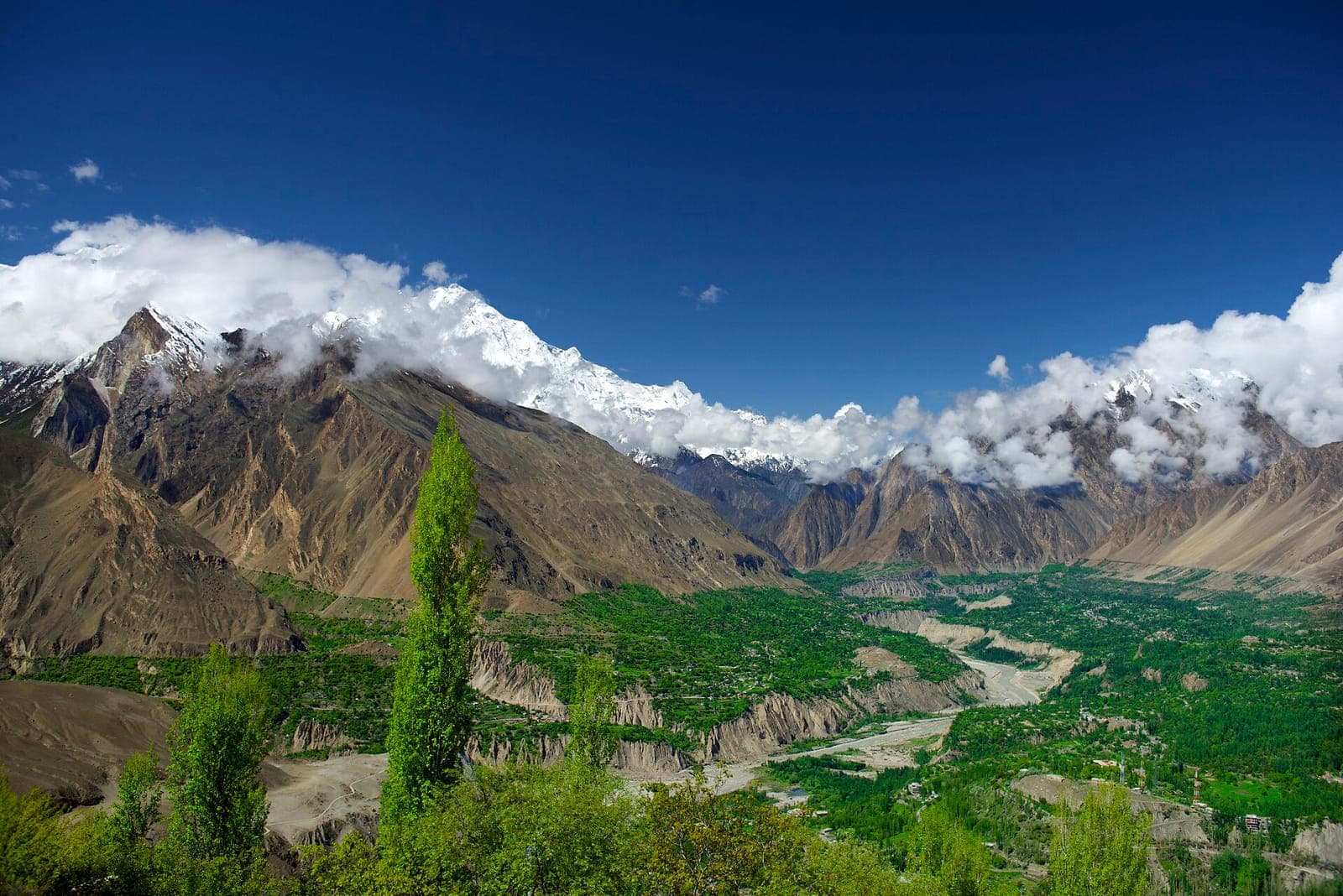
Karimabad, at about 2,500 m, is the heart of central Hunza. Above it stands Baltit Fort, built in the 17th century and restored between 1990 and 1996; Altit Fort is 3 km away, and Ganish, the oldest settlement on the Silk Road in the valley, is just below. The Eagle's Nest viewpoint above Duikar is the classic place for sunrise over Rakaposhi and Ultar.
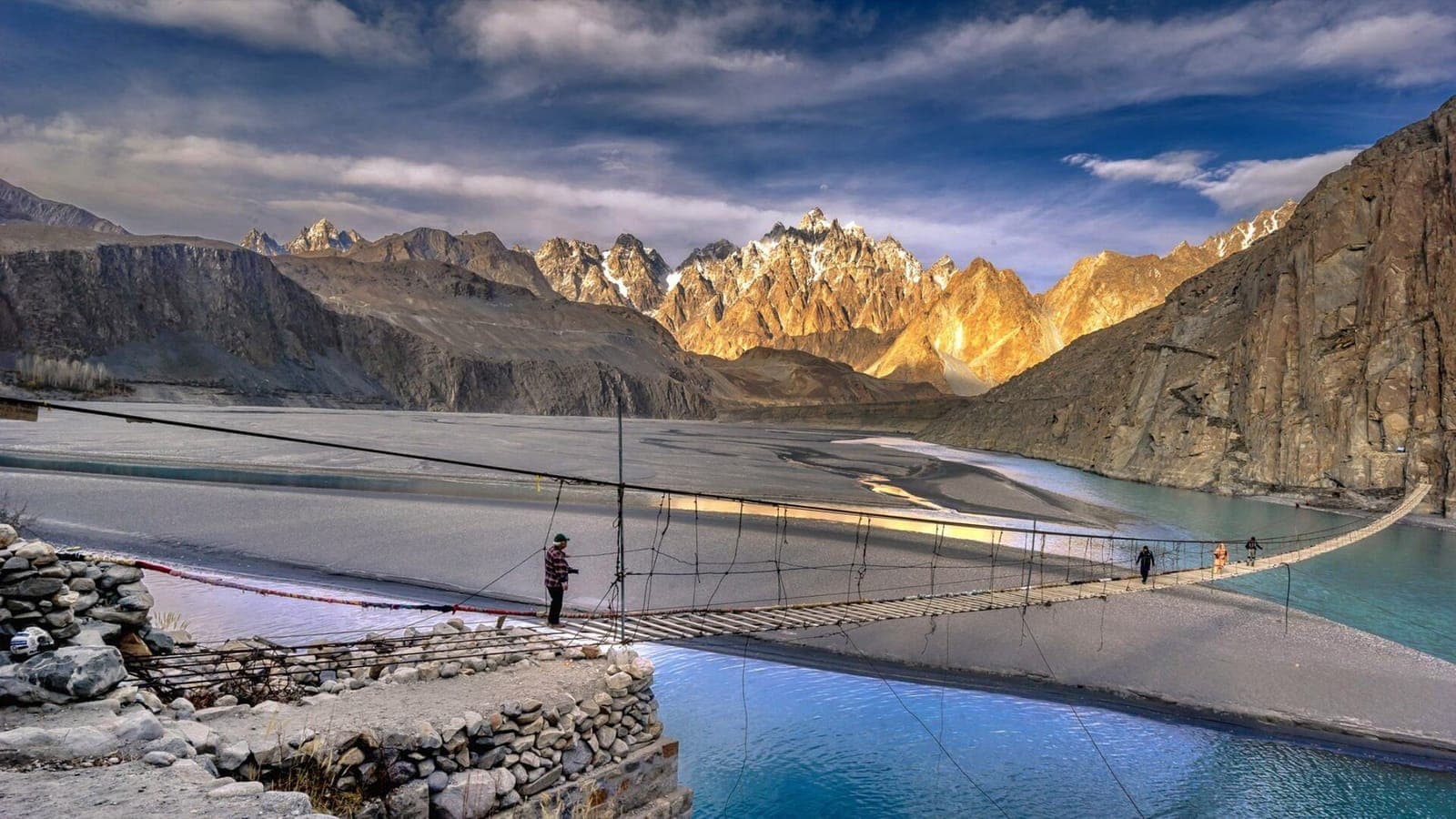
North along the Karakoram Highway, Attabad Lake, formed in 2010, is about half an hour from Karimabad, and beyond it lie the jagged Passu Cones and the Hussaini suspension bridge. The highway ends at Khunjerab Pass on the China border, about four hours from central Hunza, open from May to October.
Why choose Skardu
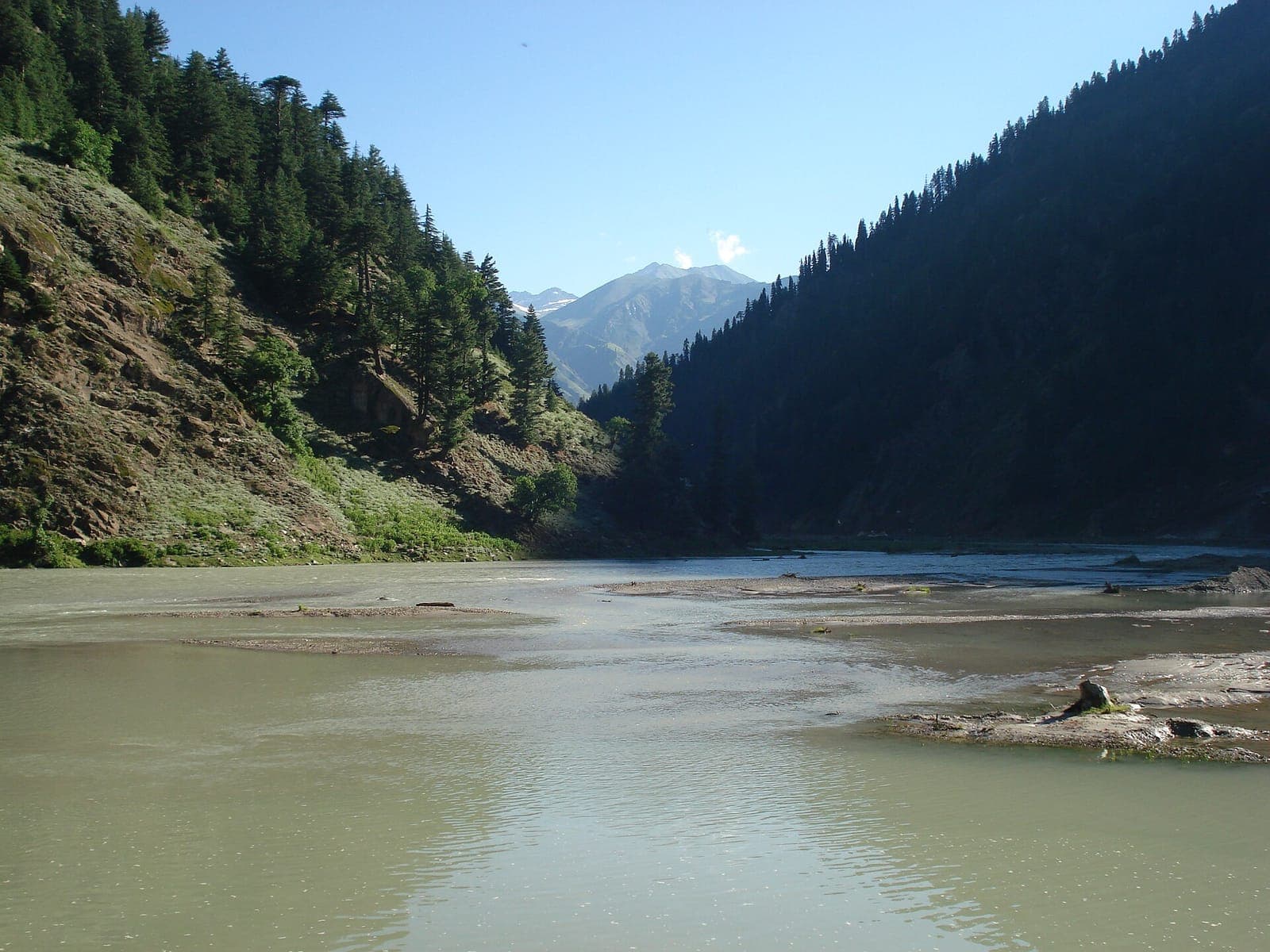
Skardu, at about 2,228 m, lies in a wide basin where the Shigar valley meets the Indus. Its airport was re-opened as an international airport in 2021. Shangrila and Lower Kachura Lake are about 20 km away, Satpara Lake is about 10 km from town, and Shigar Fort is about an hour's drive up the Shigar valley.
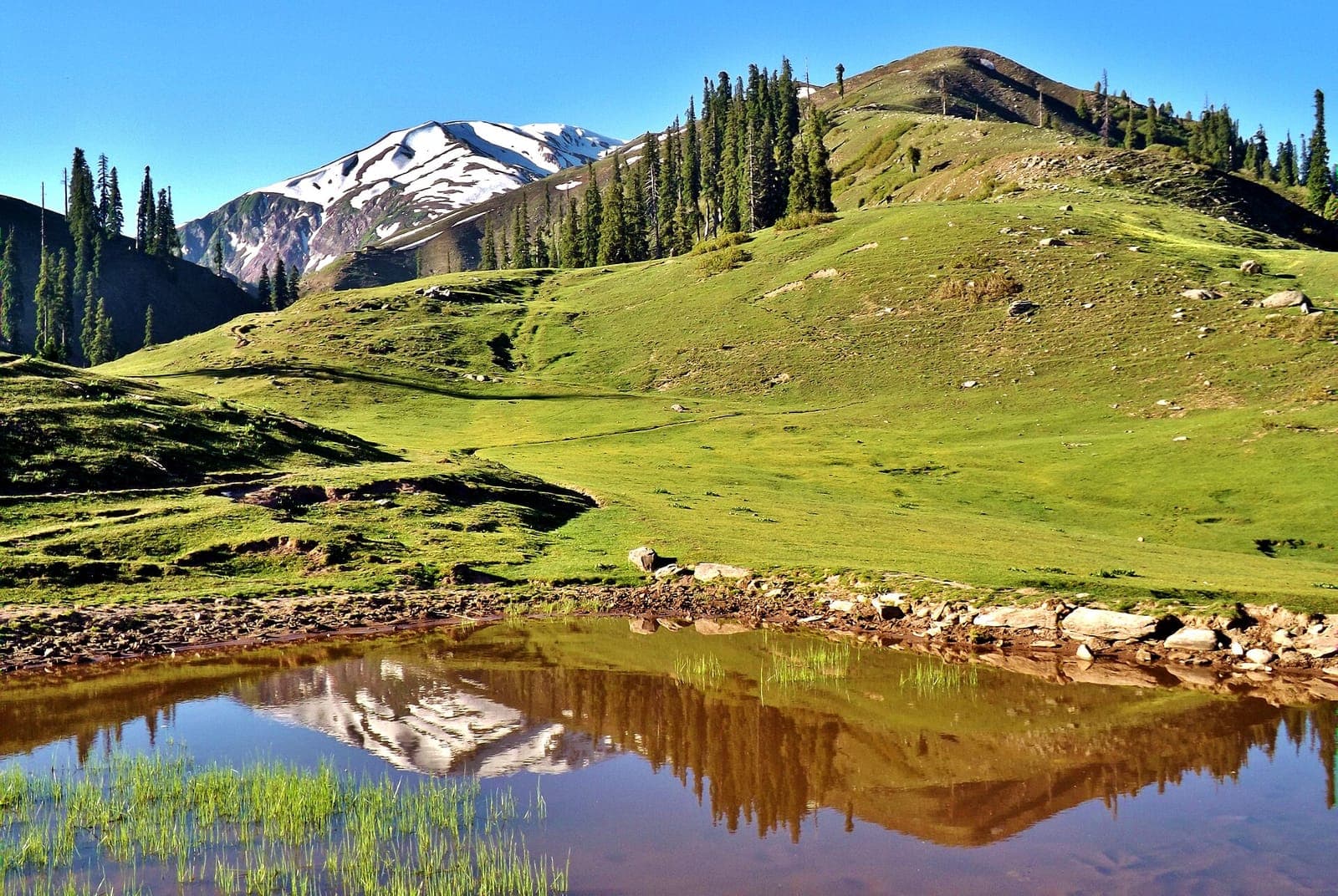
Skardu's great draw is Deosai, one of the highest plateaus in the world, reached in two to three hours by 4×4 via Satpara and open only from early July to mid-September. Skardu is also the gateway to Askole and the Baltoro Glacier, the route to Concordia and K2 Base Camp.
Good to know: Flights to both Gilgit and Skardu need clear weather and are sometimes cancelled. Keep a spare day in your plans, especially for the flight home.
Which is better for…
1. A first trip to the north
Hunza. Everything is close to Karimabad, the road is good, and forts, villages and lakes fill four or five days easily.
2. Wilderness and wide views
Skardu, especially in July and August when Deosai is open.
3. Trekking toward K2
Skardu, the starting point for the jeep to Askole and the Baltoro Glacier trek.
4. Both in one trip
Possible in ten days or more: the two valleys are linked by road through Gilgit, so you can fly into one and leave from the other.
Planning tip: Spring blossom (late March to April) and autumn colour (October) are Hunza's most beautiful seasons; Skardu is at its fullest in July and August, when Deosai is open.