
Region
Punjab
When to go
November to February. Multan's summers are among the hottest in Pakistan, and Urs days bring very large crowds to each shrine.
Getting there
Direct flights from Karachi, Lahore and Islamabad; the city centre is about 15 minutes from the airport. The main shrines are within a few kilometres of each other.
Spots
3 key places
Overview
About Multan
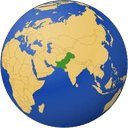
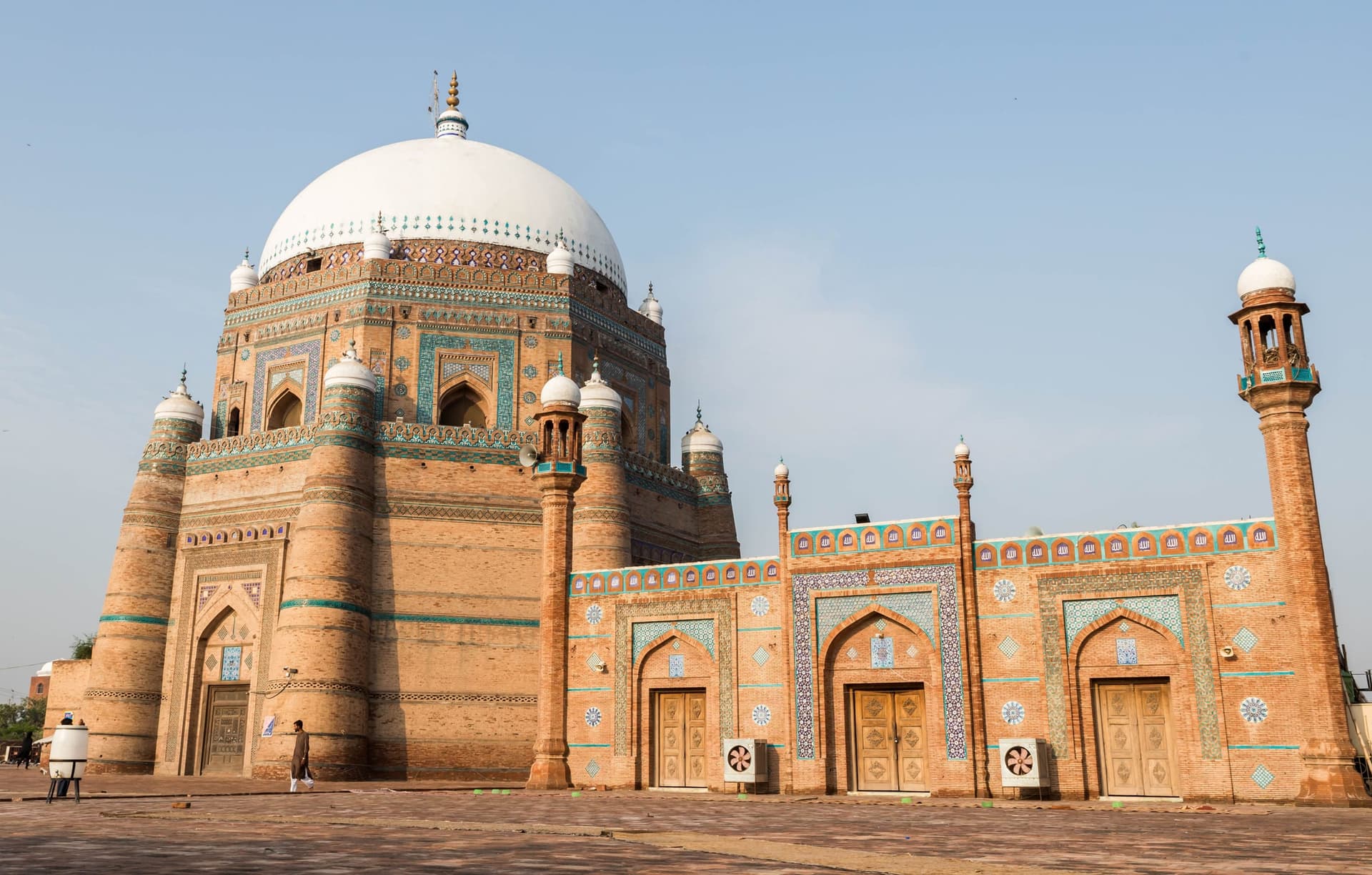
Multan, on the eastern bank of the Chenab, is one of the oldest continuously inhabited cities in Asia and the spiritual capital of the southern Punjab. Its old fort mound carries the shrine of Bahauddin Zakariya and the tomb of Shah Rukn-e-Alam, whose octagonal glazed-tile design set the template for the region's shrines.
Direct flights from Karachi, Lahore and Islamabad; the city centre is about 15 minutes from the airport. The main shrines are within a few kilometres of each other.
The fort mound
Most of the fort walls were destroyed in 1848-49, but the mound still holds the shrines, the Qila-e-Kohna mosque, the Damdama platform and the ruined Prahladpuri Temple. It is walkable in a morning.
City of saints
Beyond the mound, the city is dense with Sufi tombs, including Shah Ali Akbar's to the north-west. Visit outside the heat of the day, and dress modestly for the shrines.
Field Guides
All places →Tomb of Shah Rukn-e-Alam
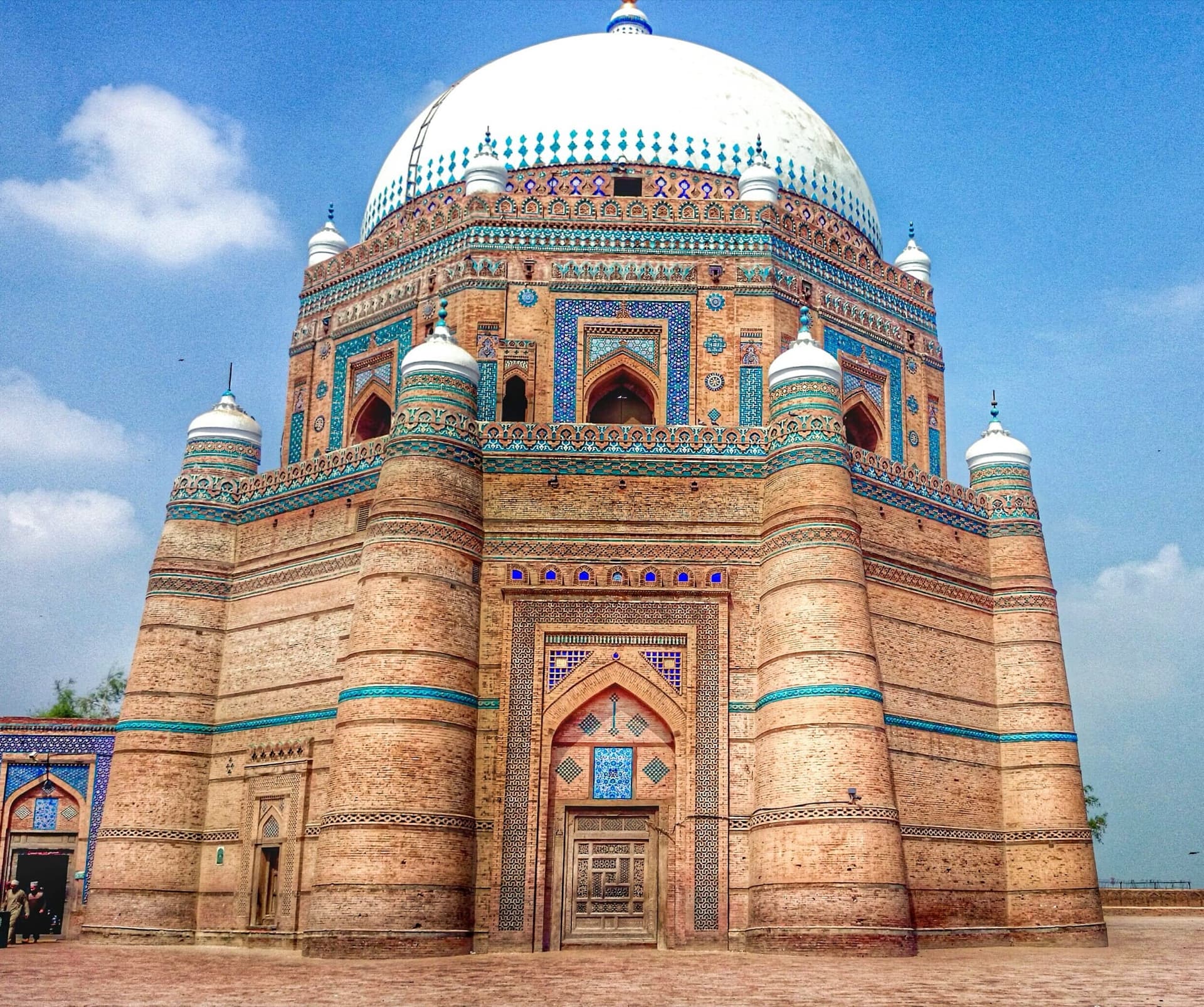
The tomb of Shah Rukn-e-Alam rises inside Multan Fort as one of the largest and earliest surviving examples of Tughlaq-era funerary architecture in South Asia, built in the early 14th century for the revered Sufi saint. Its octagonal brick body and turquoise-and-blue glazed tilework set the template that Multan's ceramic tradition has followed ever since.
Shrine of Bahauddin Zakariya
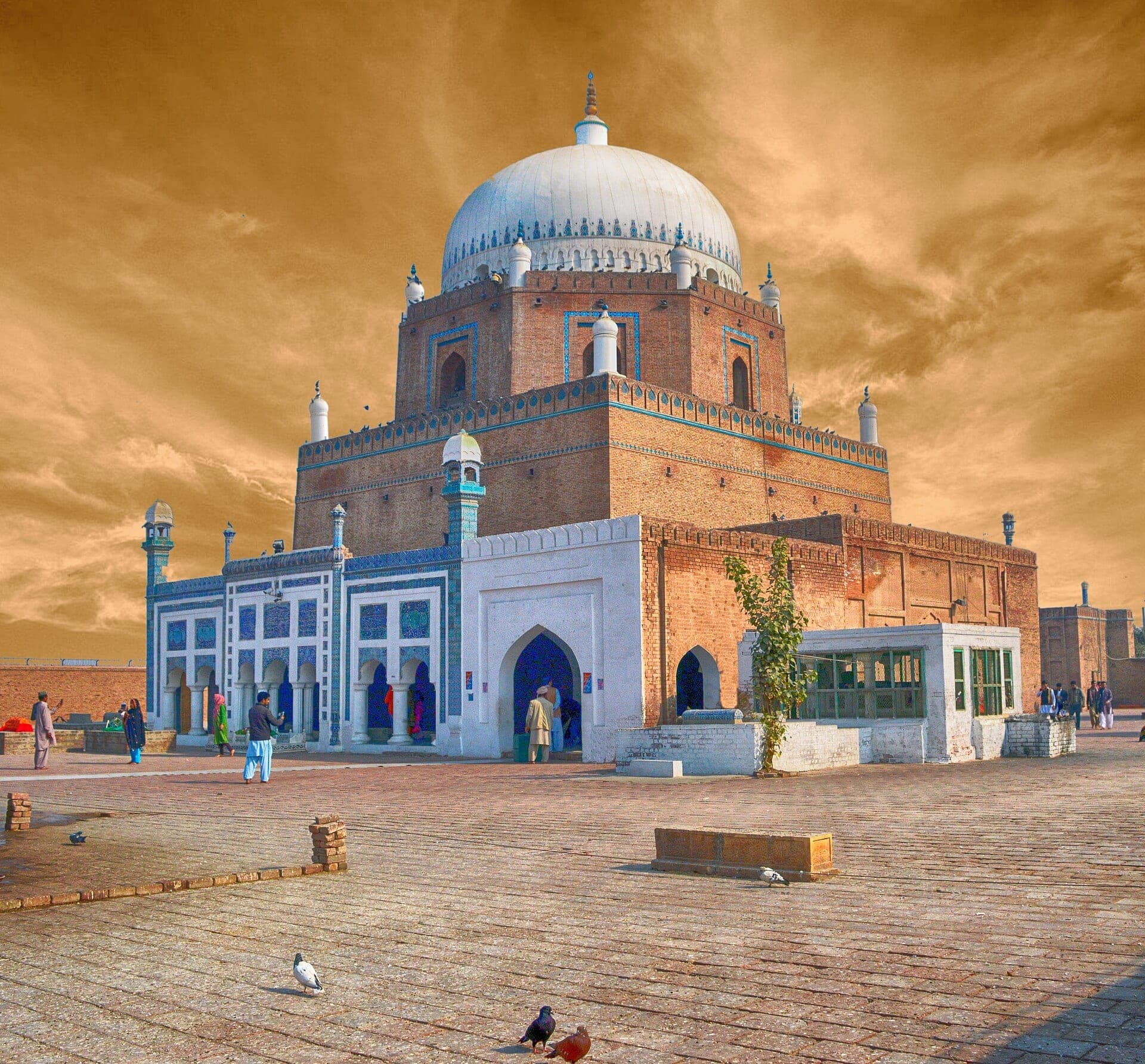
The shrine of Bahauddin Zakariya crowns the old fort mound in Multan, a 13th-century Suhrawardi Sufi mausoleum at the heart of a city so dense with saints' tombs it is known as the “City of Saints”.
Multan Fort (Qila Kohna)
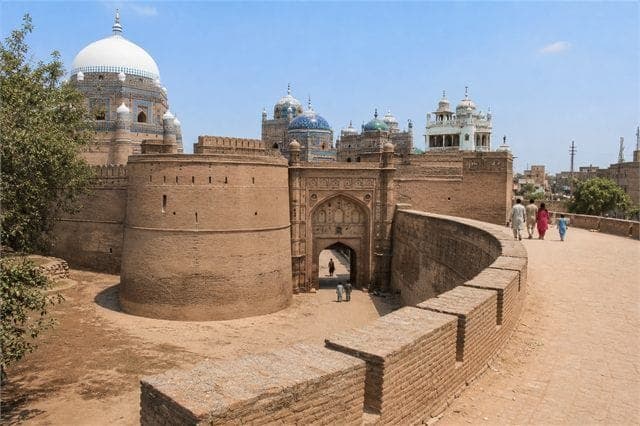
Multan Fort, known locally as Qila Kohna or Qasim Bagh, was once reckoned among the strongest forts in the subcontinent before Anglo-Sikh wars and British demolition in 1848-49 reduced most of its walls to the citadel mound seen today. The surviving Qila-e-Kohna mosque, the Damdama platform, and sweeping views over Multan's old city are what remain of a fortress with a history stretching back over a thousand years.
Multan, City of Saints
Multan is one of the oldest cities in the world, estimates place continuous occupation at over 5,000 years, and Alexander the Great is recorded to have been severely wounded during its siege in 326 BCE. Today it is Pakistan's fifth-largest city and the undisputed spiritual capital of the Punjab, famous for its Sufi shrines, blue-tilework architecture, and the intensity of its religious culture. The 'City of Saints' (Shehr-e-Aulia) holds the shrines of Bahauddin Zakariya, Shah Rukn-e-Alam, and Shah Shams Tabrez, three of South Asia's most important Sufi figures, within walking distance of each other.
Prahladpuri Temple
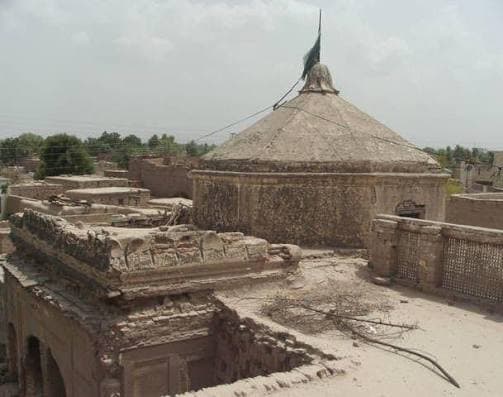
Prahladpuri Temple is a ruined Hindu temple standing on the Multan Fort platform, dedicated to Narasimha and tied by tradition to the Prahlad-Holika legend regarded as the mythological origin of the Holi festival. Though largely in ruins today, it remains a significant Hindu-heritage site in a city otherwise known for its Sufi shrines.
Resorts
All resorts →GreenPak stays in this area are listed on the region guide.